
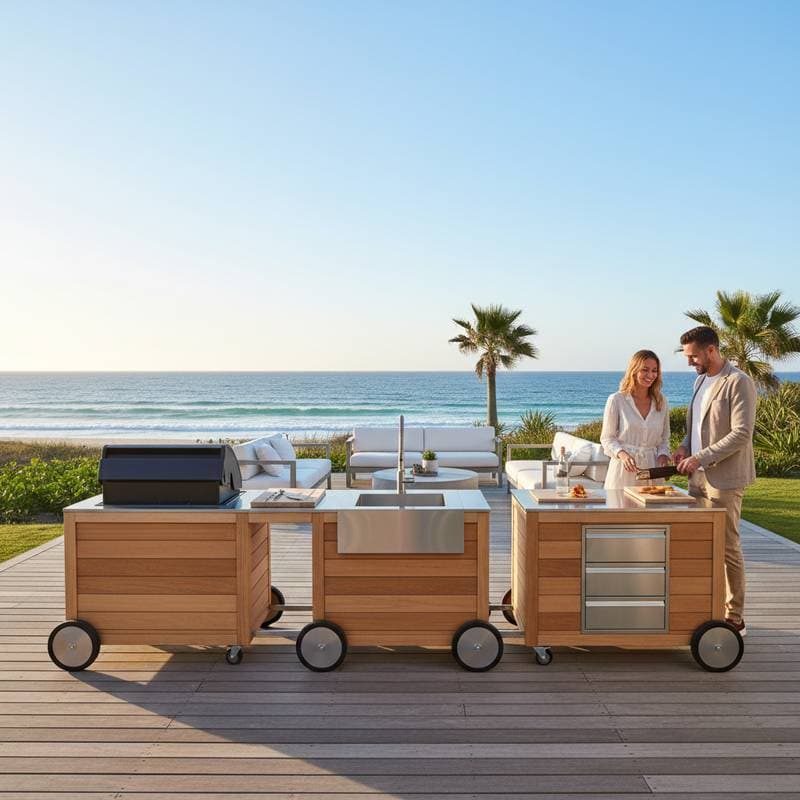
Why Coastal Homes Are Choosing Portable Kitchens
Coastal living offers unique opportunities for outdoor enjoyment, yet it presents challenges like shifting weather patterns and limited space. Homeowners in these areas increasingly turn to portable kitchens as a solution. These movable setups provide versatility without the permanence of traditional installations.
Portable kitchens consist of modular components such as grills, counters, and storage units that assemble and disassemble easily. They withstand salty air and high winds while allowing relocation as needed. This approach suits the dynamic nature of seaside properties.
1. Unmatched Flexibility for Changing Spaces
Seaside properties often feature evolving layouts due to erosion, renovations, or seasonal use. Portable kitchens adapt to these changes by allowing repositioning. For instance, move the setup from a patio to a dockside area in minutes.
This mobility prevents the need for costly redesigns. Users configure elements around furniture or landscaping without structural alterations. Such adaptability ensures the kitchen serves multiple purposes throughout the year.
2. Built to Withstand Coastal Elements
Exposure to salt spray, humidity, and UV rays demands robust construction. Portable kitchens use marine-grade materials that resist corrosion and fading. Models with powder-coated steel frames and weatherproof seals endure harsh conditions.
These designs include features like elevated bases to avoid flooding and quick-drain surfaces for rain. Homeowners report that quality units maintain functionality after years of exposure. This resilience extends the lifespan of the investment.
3. Cost Savings Without Compromising Quality
Initial costs for portable kitchens range from $1,000 to $5,000, depending on size and features. These prices vary based on materials, brand, and accessories, but they remain significantly lower than fixed outdoor kitchens, which can exceed $20,000.
Ongoing expenses decrease as well, since repairs involve simple part replacements rather than full rebuilds. Financing options from manufacturers often include warranties covering coastal wear. This affordability makes premium outdoor cooking accessible to more households.
4. Ideal for Renters or Seasonal Homes
Many coastal residents manage vacation homes or rental properties with short-term occupancy. Portable kitchens suit these scenarios by enabling temporary setups. Owners install units for peak seasons and store them during off-periods.
This approach avoids violations of lease terms that prohibit permanent fixtures. Tenants appreciate the convenience of ready-to-use cooking spaces. When relocating, transport the components to a new property with minimal effort.
5. Fosters a Lifestyle Connected to Nature
Cooking outdoors enhances appreciation for coastal surroundings. Portable kitchens facilitate setups in varied locations, such as near gardens, pools, or terraces. This mobility promotes frequent use and deeper engagement with the environment.
Families gather around movable grills for meals with ocean vistas. The ease of adjustment encourages spontaneous entertaining. Over time, this setup cultivates habits that prioritize fresh air and natural beauty.
Photo: A family sharing a meal on a terrace, with a portable grill and expansive ocean backdrop.
Design Strategies for Portable Coastal Kitchens
Creating an effective portable kitchen requires thoughtful planning. Focus on modularity, durability, and integration with the surroundings. These elements ensure the setup enhances both functionality and aesthetics.
Modular Configurations for Versatility
Begin with a central cooking appliance, such as a propane grill or smoker. Attach compatible modules like cutting boards, utensil holders, or beverage coolers. Form a linear arrangement for compact spaces or a clustered design for group activities.
Secure connections with locking mechanisms to maintain stability during use. Test different formations to match daily routines. This system allows evolution as needs change, from quick weeknight meals to elaborate gatherings.
Materials Engineered for Harsh Environments
Select components with proven resistance to coastal stressors. Countertops in solid-surface composites repel stains and heat. Hardware made from anodized aluminum prevents rust in humid conditions.
Incorporate textured flooring to reduce slip risks near water. Lighter composites ease transport while providing strength comparable to heavier alternatives. Annual inspections identify wear early, preserving the setup's integrity.
Integrating Coastal Aesthetics
Align the kitchen's appearance with the property's style. Neutral palettes in soft grays or beiges blend seamlessly with sandy landscapes. Incorporate nautical details, such as knotted rope accents or ceramic tiles mimicking seashells.
Lighting options like solar-powered lanterns add ambiance without wiring. Fabric elements, such as weather-resistant cushions, introduce color pops. This cohesive design elevates the outdoor area into an extension of the home.
Advantages and Limitations of Portable Kitchens
Portable kitchens offer clear benefits for coastal settings, though they include trade-offs. The following table summarizes key aspects to inform decisions.
| Advantages | Limitations |
|---|---|
| High portability for repositioning | Less extensive personalization options than permanent structures |
| Lower upfront and maintenance costs | Needs designated storage during inclement weather |
| Simplified cleaning and repairs | Compact sizes may limit cooking capacity |
| Suited to variable coastal climates | Positioning challenges on irregular ground |
Maintenance Routines for Longevity in Coastal Areas
Routine care protects against environmental damage. After every session, clean surfaces with mild soap to remove salt buildup. Dry components thoroughly to prevent moisture-related issues.
Inspect seals and joints quarterly for cracks. Reapply protective coatings to exposed metals biannually. Store disassembled units in dry, ventilated spaces during storms. These steps minimize downtime and extend usability.
Common Questions About Portable Kitchens
Do portable kitchens support intensive cooking tasks?
Affirmative. Advanced models incorporate multiple burners, searing stations, and specialty inserts like rotisserie attachments. Verify ratings for wind resistance and heat output to match demanding recipes.
Is utility integration possible with portable units?
Certain designs feature adapter kits for natural gas lines or water sources. Propane tanks connect via standard valves, while hoses link to outdoor faucets. Consult local regulations and professional advice for compliant installations.
What setup is required for portable kitchens?
Assembly typically involves basic tools and follows included diagrams. Position on level ground and anchor if winds exceed moderate levels. Most users complete preparation in under an hour without specialist help.
How should one protect a portable kitchen from severe weather?
Relocate to sheltered areas like covered porches or storage buildings. Employ fitted tarps or custom enclosures to shield from rain and debris. Elevate off the ground to avoid ground moisture during floods.
Integrating a Portable Kitchen into Coastal Routines
Adopting a portable kitchen transforms daily life by the sea. It supports efficient space use and promotes consistent outdoor activities. Evaluate current habits to customize the setup effectively.
Begin with essential pieces and expand based on experience. Track usage patterns to refine arrangements. This investment yields enduring enjoyment and practical benefits for seaside dwellers.