
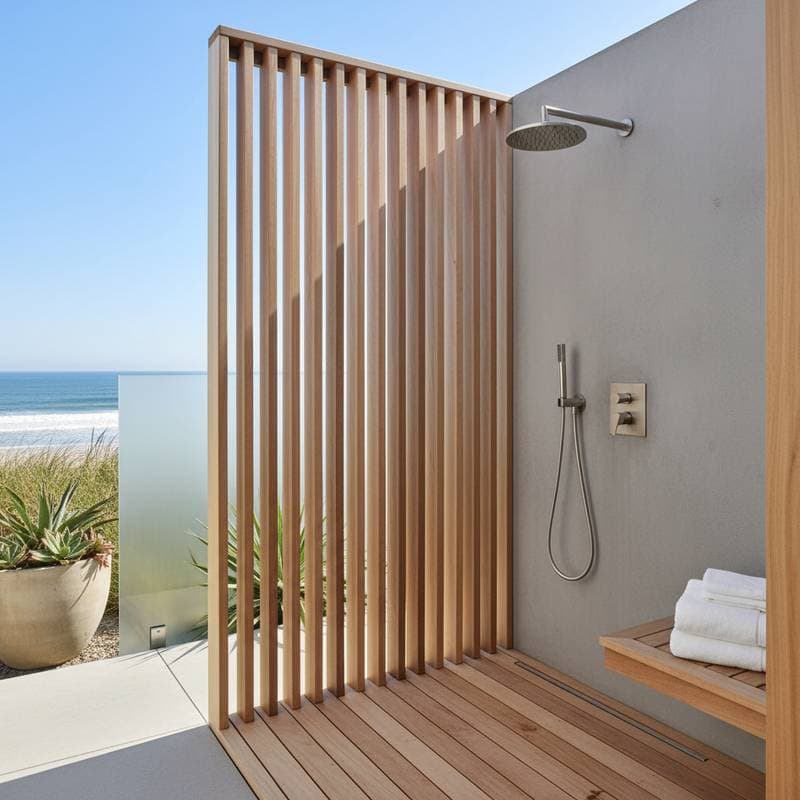
9 Essential Building Codes for Safe and Legal Coastal Outdoor Showers
Installing an outdoor shower represents a significant enhancement for coastal properties. Homes near the beach benefit from the convenience of rinsing off sand and salt without tracking it indoors. However, such projects must comply with rigorous building and plumbing regulations designed to safeguard structures and ecosystems.
Coastal environments present unique challenges, including high winds, saltwater exposure, and flood risks. Local codes address these factors to prevent damage and environmental harm. Homeowners who overlook these requirements often face expensive rework or fines. This guide outlines nine fundamental codes, explaining their purpose and implementation to support a successful remodel.
Understanding these regulations allows for a design that balances aesthetics with functionality. Professional consultation ensures adherence from the outset. The following sections detail each code within relevant categories, providing practical guidance for compliance.
Structural and Location Requirements
1. Proper Setbacks from Property Lines
Setback requirements specify the minimum distance between structures and property boundaries. In coastal areas, these rules prevent overcrowding and maintain visual access to the shoreline. Outdoor showers qualify as accessory structures, subject to the same zoning restrictions as decks or patios.
Review your local zoning ordinance or consult the planning department for exact measurements. Distances typically range from five to fifteen feet, varying by lot size and coastal zone designation. Measure from the exterior of the shower enclosure to avoid violations that could necessitate demolition.
Pro Tip: Incorporate setbacks into your site plan early to optimize space for privacy screens or landscaping.
2. Elevation Above Flood Levels
Coastal properties face heightened flood risks from storms and rising tides. Building codes mandate elevating outdoor structures above the base flood elevation (BFE) to minimize water damage. This applies to shower bases and plumbing to protect against submersion.
Determine your property's BFE through FEMA flood maps or local floodplain management offices. Elevate the shower floor at least one foot above the BFE using piers, posts, or raised platforms. Such measures also facilitate drainage and reduce corrosion from standing water.
3. Foundation and Anchoring Standards
Stable foundations prevent shifting in sandy soils common to coastal regions. Codes require anchors or footings that resist uplift from high winds and erosion. For outdoor showers, this often involves concrete footings or helical piles suited to unstable ground.
Engage a structural engineer to assess soil conditions and recommend anchoring methods. Ensure all components, including posts and frames, meet wind-load specifications outlined in the International Building Code (IBC). Proper foundations extend the lifespan of the installation and comply with seismic considerations in some areas.
4. Enclosure and Privacy Compliance
Enclosures must provide adequate privacy while allowing ventilation to prevent mold growth. Regulations limit enclosure heights and materials to preserve ocean views and neighbor aesthetics. Openings should face away from property lines to minimize visual intrusion.
Select semi-permanent materials like lattice panels or frosted glass that meet height limits, usually under six feet. Verify that enclosures do not exceed lot coverage percentages in your zoning district. These elements contribute to both functionality and community harmony.
5. Backflow Prevention
Backflow preventers safeguard potable water supplies from contamination through outdoor fixtures. Coastal codes enforce their use on all exterior plumbing to block reverse flow from potentially polluted sources like irrigation runoff. This device maintains system integrity and public health.
Install a reduced pressure zone (RPZ) or double-check valve assembly at the point of connection. These units cost between twenty and fifty dollars and require annual testing by certified professionals. Placement near the main water line simplifies maintenance and inspection.
6. Water Pressure and Shutoff Valves
Regulations demand shutoff valves for outdoor lines to enable isolation during repairs or winterization. Anti-scald devices protect users from sudden temperature changes due to pressure variations. Coastal storms can exacerbate these issues, making reliable controls essential.
Position the shutoff valve indoors or in a weatherproof box adjacent to the shower. Opt for thermostatic mixing valves that maintain consistent temperatures. This configuration supports seasonal draining to prevent pipe bursts in cooler months.
Environmental and Safety Compliance
7. Approved Materials for Coastal Durability
Exposure to salt air and humidity demands corrosion-resistant materials. Codes specify options that withstand marine environments without leaching harmful substances. Selecting appropriate components ensures longevity and reduces environmental impact.
Prioritize marine-grade stainless steel for hardware and fixtures, PVC or PEX for pipes, and composite or natural stone for surfaces. These choices resist rust and fading better than galvanized metals or untreated wood. Inspectors often mandate textured, non-slip floors to enhance safety on wet surfaces.
[Image: Example of stainless steel outdoor shower fixtures]
8. Electrical and Lighting Safety
Any electrical additions, such as lights or heaters, must adhere to National Electrical Code (NEC) standards for wet locations. Ground-fault circuit interrupters (GFCIs) protect against shocks in damp conditions. Coastal humidity increases the need for robust, sealed installations.
Route wiring through conduit rated for outdoor use and avoid exposed connections. Licensed electricians should perform all work, including bonding metal parts to ground. Submit electrical plans for department approval to confirm compliance before energizing the system.
9. Environmental Protection and Runoff Control
Stormwater rules in coastal zones prohibit untreated discharge into sensitive habitats. Shower water, laden with soaps and salts, requires management to avoid polluting beaches or groundwater. Contained systems filter contaminants before release.
Direct runoff to a dry well or bioswale filled with gravel and plants that absorb pollutants. Use only biodegradable, phosphate-free products to minimize ecological harm. Some jurisdictions allow greywater diversion to landscape irrigation, provided it meets health department guidelines.
Practical Steps for Implementation
Secure permits at the project's inception to streamline the process. Engage contractors familiar with coastal regulations for accurate execution. Document all approvals and inspections for resale value.
Schedule regular upkeep, including rinsing fixtures to remove salt buildup and inspecting seals annually. These habits preserve functionality amid harsh conditions. Budget for initial costs ranging from one thousand to five thousand dollars, factoring in custom features.
Common Questions Addressed
Does every outdoor shower require a permit?
Local authorities typically mandate plumbing and building permits, regardless of scale. Contact your department to verify requirements and submit detailed plans.
Is yard drainage permissible for shower water?
Permitted only with eco-friendly products and no direct connection to septic systems. Route to approved drains otherwise to prevent contamination.
Which materials endure ocean proximity best?
Stainless steel, PVC composites, and sealed concrete excel in saline settings. Steer clear of aluminum or cedar that degrade quickly.
What budget should homeowners anticipate?
Costs vary from one thousand five hundred to four thousand dollars, influenced by size, materials, and site preparation.
Do solar options comply in coastal areas?
Affirmative, provided installations follow plumbing and energy codes. They offer sustainable heating with minimal grid reliance.
Achieving Lasting Coastal Appeal
Compliance with these nine codes transforms an outdoor shower into a resilient asset. The investment yields years of enjoyment, from post-swim rinses to serene evenings under the stars. Prioritize expert guidance to realize a feature that harmonizes with your seaside lifestyle.