
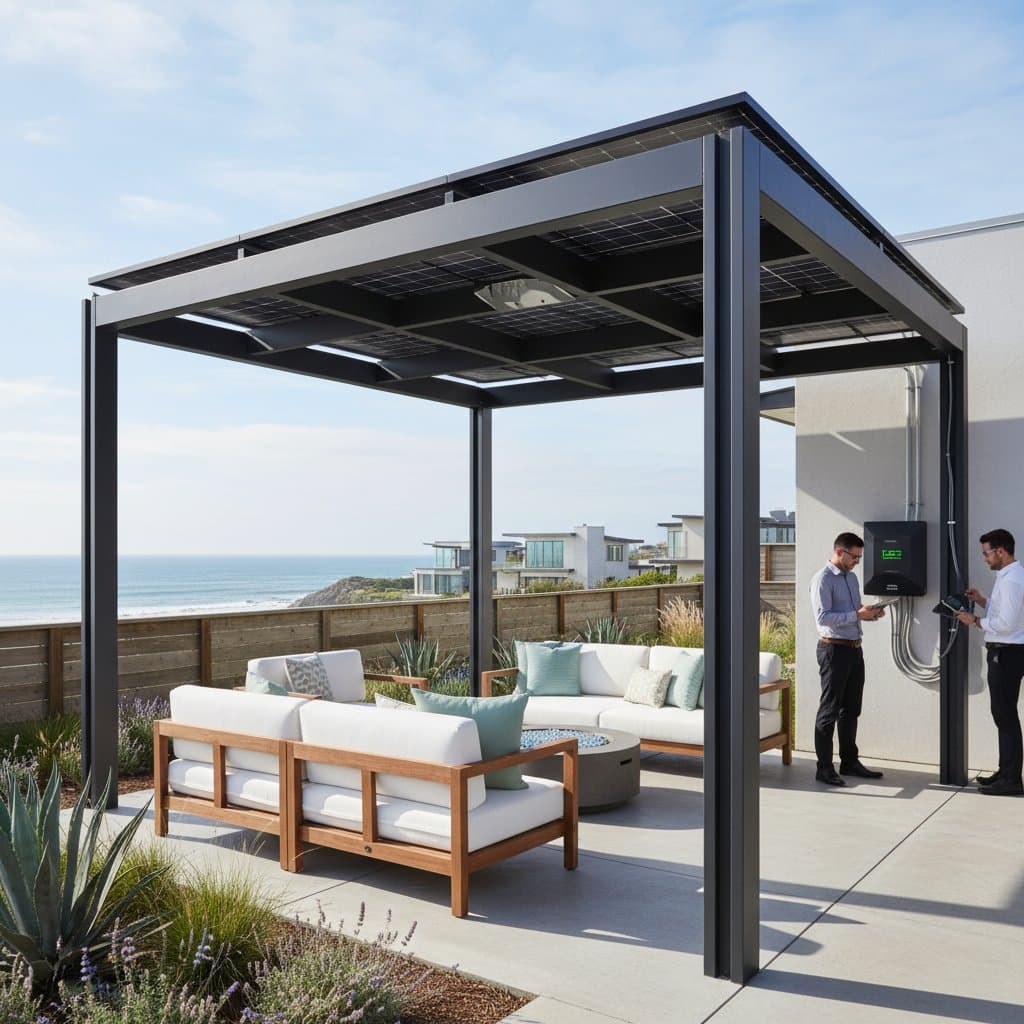
Solar Pergolas Reduce Energy Bills by 60 Percent in Coastal Yards
Homeowners in coastal regions increasingly choose solar pergolas to combine aesthetic appeal with sustainable energy production. These installations integrate shade structures with photovoltaic panels, potentially lowering household electricity costs by up to 60 percent. In areas with consistent sunlight and emphasis on outdoor lifestyles, solar pergolas serve as versatile additions that generate power while enhancing backyard usability.
This overview details the expenses, advantages, setup procedures, and enduring financial benefits of solar pergolas. Readers upgrading outdoor areas or aiming to counter escalating energy prices will find practical insights to support informed choices.
Typical Expenses for Solar Pergolas
Expenses for a solar pergola vary from $12,000 to $35,000, influenced by dimensions, construction materials, customization level, and energy output capacity. A standard mid-range setup averages $22,000, encompassing the framework and embedded solar components.
| Project Scale | Typical Installed Price | Common Area | Electricity Offset Capacity |
|---|---|---|---|
| Compact (1.5–2 kW) | $12,000–$18,000 | 100–150 sq. ft. | 25–35 percent of household needs |
| Standard (3–5 kW) | $18,000–$26,000 | 200–300 sq. ft. | 40–60 percent of household needs |
| Expansive (6–8 kW) | $26,000–$35,000+ | 350–500 sq. ft. | 60–80 percent of household needs |
Beyond direct reductions in utility payments, solar pergolas elevate real estate worth by 3 to 5 percent. This uplift stems from the desirability of eco-friendly features and improved exterior amenities.
Expenses Based on Construction Materials
The choice of materials affects appearance, longevity, and overall expenditure. Options such as aluminum, wood, and steel each offer unique attributes.
| Material | Cost per Square Foot | Longevity | Upkeep Needs | Aesthetic Quality |
|---|---|---|---|---|
| Aluminum | $40–$60 | Superior, resists rust | Minimal | Sleek and modern |
| Wood | $30–$50 | Solid with protective treatments | Regular | Natural and inviting |
| Steel | $50–$70 | High structural integrity | Minimal to regular | Bold and modern |
Aluminum proves ideal for seaside settings due to its resistance to saline corrosion and low maintenance demands. Those preferring a rustic vibe may select treated cedar or redwood, which accommodate solar elements effectively.
Installation Labor and Procedures
Workforce expenses constitute 25 to 40 percent of the project total. The process combines structural assembly with photovoltaic integration.
- Structural build: $2,000–$6,000 for assembly and surface treatments
- Photovoltaic setup: $4,000–$10,000, based on electrical routing demands
- Approval and review fees: $500–$1,000 typically
Projects generally span three to seven days, contingent on groundwork, ground stability, and potential electrical modifications. Seaside locations may necessitate anti-corrosion fixtures or foundational adaptations to satisfy regional regulations.
Elements Affecting Overall Expenses
Multiple considerations shape the final outlay for a solar pergola:
- Photovoltaic efficiency and power rating: Advanced panels command higher prices yet maximize output in constrained areas.
- Dimensions and configuration: Tailored forms, integrated benches, or ornamental features raise expenses.
- Site positioning and solar access: Properties with unobstructed southern alignment achieve optimal returns.
- Power linkages: Residences needing fresh converters or panel enhancements incur extra charges.
- Authorization costs and design reviews: Essential in nearly all areas for security and adherence.
- Energy storage additions: Incorporating batteries adds $8,000–$15,000, granting off-grid capabilities.
Early evaluation of these aspects enables accurate budgeting and prevents surprises.
Mechanisms for Lowering Energy Expenses
Solar pergolas function similarly to roof-mounted arrays, capturing rays to produce electricity for home use or grid export. In sun-rich coastal zones, a 5 kW unit generates 6,000 to 8,000 kWh yearly.
Such production covers 50 to 60 percent of average family energy demands, yielding $1,200 to $1,800 in yearly reductions based on regional rates. Across a 20-year period, total gains surpass $25,000, excluding governmental credits or subsidies.
Strategies to Minimize Solar Pergola Costs
Practical approaches allow cost reductions while preserving efficacy:
- Select predefined dimensions. Ready-made frames cost less than bespoke versions.
- Schedule during quieter months. Service providers often extend reductions then.
- Integrate with complementary work. Pair with additional photovoltaic or yard enhancements to share labor.
- Pursue regional support. Areas frequently provide reimbursements or deductions for renewable setups.
- Employ phased growth. Initiate with modest capacity and expand as funds permit.
These methods typically trim expenses by 10 to 20 percent without sacrificing output.
Self-Installation Versus Expert Services: Evaluating Expenses and Advantages
Certain owners explore personal assembly to curb spending. Although feasible, self-directed efforts involve hazards.
| Factor | Self-Directed Setup | Expert Setup |
|---|---|---|
| Initial Outlay | $8,000–$15,000 | $18,000–$30,000 |
| Necessary Expertise | Advanced (woodworking, electrics, approvals) | Basic (supervision) |
| Assurance Scope | Restricted or absent | Comprehensive for equipment and labor |
| Security and Standards | Risk of rejection | Aligns with all norms |
| Durability Over Time | Inconsistent | Assured operation |
A balanced method suits many: Construct the frame independently and engage certified specialists for photovoltaic linkage and utility integration. This balances economy with regulatory compliance.
Pitfalls to Sidestep
Steering clear of frequent errors promotes optimal function and endurance:
- Misaligned positioning: Incorrect facing diminishes yield by 30 percent.
- Overlooking obstructions: Vegetation, barriers, or edifices cast shadows that cut efficiency.
- Bypassing approvals: Unauthorized work invites penalties or coverage denials.
- Selecting inferior photovoltaics: Budget options wear quickly and underperform long-term.
- Neglecting care: Accumulated salt or residue hampers output without routine cleansing.
Thorough planning addresses these issues, ensuring sustained reliability and fiscal benefits.
Common Inquiries on Solar Pergolas
Does a solar pergola require approvals?
Yes. Local authorities mandate construction and electrical clearances for photovoltaic projects. These verify stability and safety adherence. Established firms manage documentation routinely.
What is the durability of a solar pergola?
Quality builds endure 25 to 30 years, with panels retaining efficacy for 20 to 25 years. Periodic washing and checks prolong service life for framework and circuits.
Is future battery integration possible?
Yes. Compatible converters facilitate later additions for surplus storage. This proves valuable in storm-prone coastal zones.
What upkeep does a solar pergola demand?
Requirements remain light. Clean panels bimonthly to clear salt or particles, review linkages yearly, and treat wood elements periodically. Systems thrive under simple attention.
How effective is the shading from a solar pergola?
Panels obstruct 80 to 90 percent of direct rays, permitting diffused illumination. This creates a temperate, protected zone during intense daylight.
Does a solar pergola enhance real estate value?
Yes. Properties featuring renewables transact more swiftly and at premiums. The blend of green power and expanded exteriors attracts coastal purchasers.
Can a solar pergola support electric vehicle charging?
Yes, provided adequate generation and home wiring. Several owners position charging stations under the structure for ease.
Steps to Install Your Solar Pergola
Begin by assessing your yard's sunlight patterns and energy requirements through a professional audit. Select materials suited to coastal conditions, then secure quotes from licensed installers experienced in integrated systems. Apply for incentives early to offset costs, and plan maintenance from day one to maximize returns. With these steps, transform your outdoor space into an efficient, value-adding asset.