
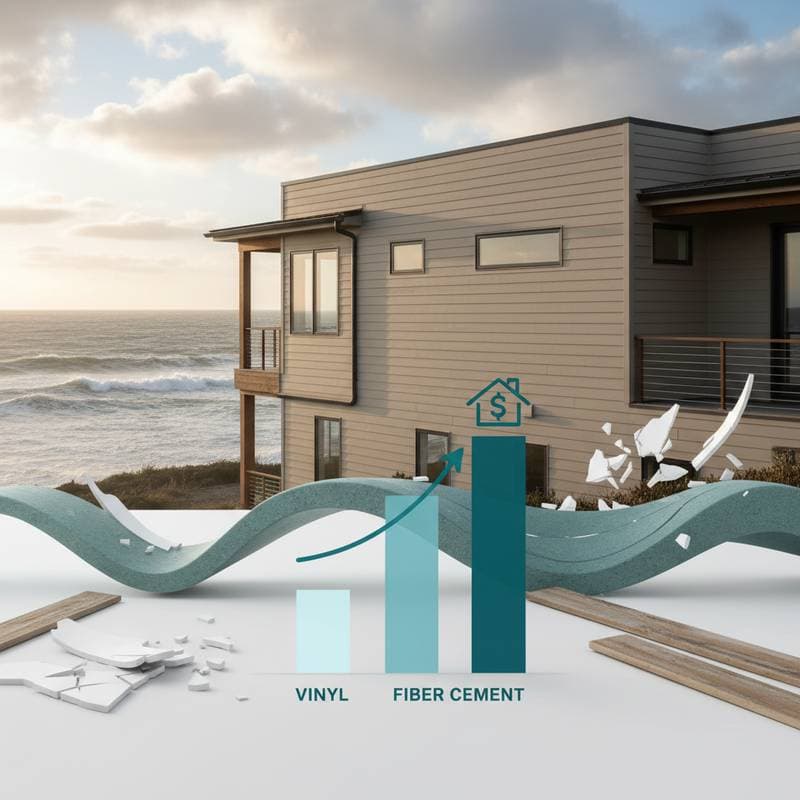
Fiber Cement vs Vinyl: The Coastal ROI Leader in 2026
Coastal homeowners encounter unique challenges in selecting siding materials. Salt-laden air, persistent humidity, strong winds, and intense ultraviolet radiation accelerate the degradation of many surfaces. Among the leading options, fiber cement and vinyl stand out for their popularity, yet only one consistently excels when evaluating durability, maintenance requirements, and resale potential in marine environments.
Before soliciting quotes or examining samples, homeowners benefit from understanding which material maximizes return on investment at the intersection of ocean influences and residential settings.
Key Insights
- Fiber cement siding generally yields higher long-term return on investment for properties near the coast.
- Vinyl siding provides affordability at installation but risks fading or deformation in saline conditions.
- Maintenance demands vary significantly, influencing overall expenses across the material's life.
- Resistance to hurricanes and overall sturdiness play critical roles in coastal return on investment calculations.
- Aesthetic appeal and buyer preferences often favor fiber cement, enhancing property marketability.
Upfront Costs Versus Lifetime Value
Homeowners frequently inquire about the most economical siding choice. The response hinges on whether the evaluation focuses on immediate expenses or comprehensive ownership costs.
| Factor | Fiber Cement | Vinyl |
|---|---|---|
| Average Installation Cost (per square foot) | $7 - $13 | $4 - $8 |
| Annual Maintenance Costs | Low to medium | Very low |
| Expected Lifespan | 40-50 years | 20-30 years |
| Return on Investment (Resale Recovery) | 65% - 75% | 55% - 65% |
Vinyl holds an advantage in initial outlay, yet fiber cement secures superior return on investment over extended periods. In coastal real estate markets, prospective buyers view fiber cement as a high-quality upgrade. This perception frequently translates to increased resale prices, particularly with expert installation and resilient coatings.
Practical Advice: Incorporate repainting intervals, repair likelihoods, and visual attractiveness into return on investment assessments to gauge true financial outcomes.
Durability and Upkeep Requirements
Fiber Cement
Fiber cement demands repainting approximately every 10 to 15 years, contingent on environmental exposure and surface treatment. Routine cleaning involves gentle soap solutions and rinsing with water. Its resistance to insects and decay ensures structural integrity persists for generations with appropriate care.
Advantages:
- Exceptional resilience to salt, abrasion, and solar damage
- Impervious to fire and infestations
- Extended service life
Disadvantages:
- Greater weight complicates installation
- Periodic recoating necessary
- Elevated starting investment
Vinyl
Vinyl eliminates painting obligations, appealing to those seeking minimal intervention. Nevertheless, impacts from flying objects or thermal expansion can cause fractures or distortions. Prevailing coastal gusts may gradually dislodge sections.
Advantages:
- Reduced upfront expenditure
- Diverse color and texture selections
- Negligible ongoing care
Disadvantages:
- Prone to color degradation
- Vulnerable to deformation from impacts
- Diminished market prestige
Sustainability Factors
Each material presents distinct ecological implications. Fiber cement production consumes substantial energy yet utilizes abundant natural components and endures longer. Vinyl manufacturing generates a smaller carbon footprint but depends on fossil-derived substances with limited recycling options.
For those prioritizing environmental impact, fiber cement prevails through prolonged utility and infrequent replacements. Reduced substitution cycles translate to lower resource depletion throughout the structure's duration.
Evaluating Return on Investment in Coastal Settings
Initial affordability positions vinyl as an attractive option. However, when considering resilience to coastal conditions, aesthetic enhancement, and market value appreciation, fiber cement asserts dominance as the return on investment frontrunner.
Coastal purchasers emphasize reliability and endurance beyond budget constraints. Fiber cement's fortitude against gales, flames, and corrosive air establishes it as a strategic asset. The premium initial expenditure recoups through elevated appraisals and deferred renewals.
Return on Investment Overview
| Factor | Leader | Rationale |
|---|---|---|
| Installation Cost | Vinyl | Economical per unit area |
| Lifespan | Fiber Cement | Approximately double the duration |
| Maintenance | Vinyl | Basic upkeep suffices |
| Resale Value | Fiber Cement | Instills greater assurance in buyers |
| Hurricane Resistance | Fiber Cement | Enhanced stability and strength |
| Overall Return on Investment | Fiber Cement | Optimal sustained financial returns |
Common Inquiries
How can homeowners determine if fiber cement suits their coastal property over vinyl?
Properties enduring regular gusts, saline mist, or prolonged sunlight benefit from fiber cement's superior safeguards. In protected or non-oceanfront locations, vinyl maintains adequacy with diligent oversight.
Does fiber cement necessitate painting?
Affirmative, though intervals exceed those of traditional wood. Premium applications extend color retention to over a decade. Several manufacturers provide factory-applied finishes for added convenience.
Is vinyl siding adequate for hurricane conditions?
Vinyl endures typical weather events, but severe winds risk panel displacement or rupture. Fiber cement's mass and firmness offer dependability in high-risk regions.
Which material elevates coastal home resale value most effectively?
Fiber cement contributes greater uplift through its sophisticated look and reputation for endurance. Property professionals routinely emphasize it in seaside marketing materials.
Does fiber cement align with environmental goals?
Its durability minimizes waste from frequent overhauls. Although production is resource-heavy, the extended lifecycle mitigates much of the initial burden.
Steps to Select and Install Coastal Siding
Assess your home's specific exposures, such as proximity to the shoreline and prevailing weather patterns, to inform material decisions. Consult certified installers experienced in coastal applications to ensure compliance with local building codes and optimal performance. By choosing fiber cement, homeowners position their properties for enduring value and minimal future disruptions in 2026 and beyond.