
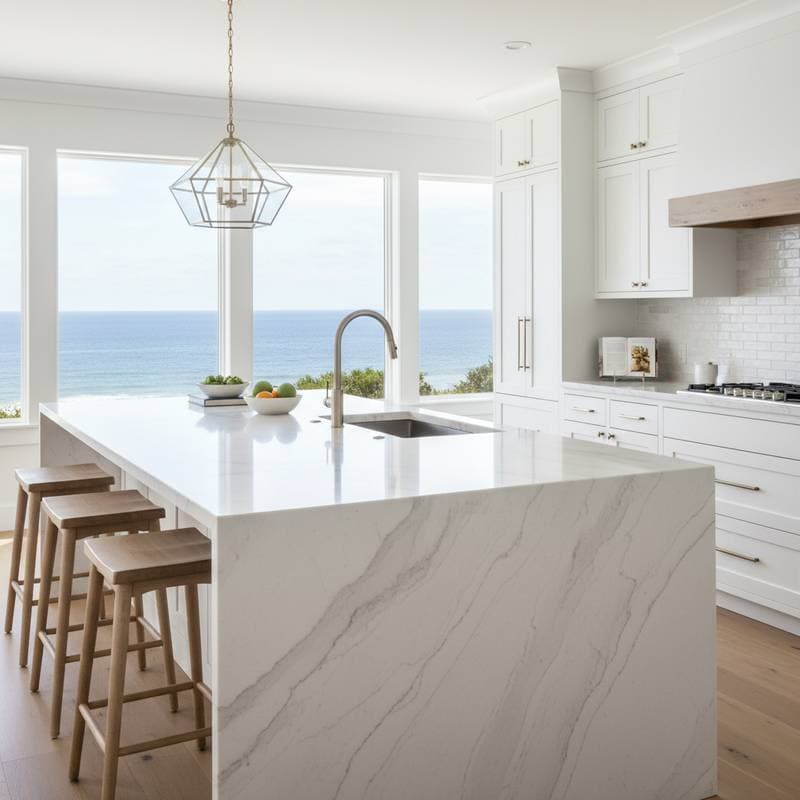
Why Coastal Kitchens Swap Granite for Quartzite
Coastal living carries a unique allure. Salty breezes, abundant sunlight, and a laid-back vibe shape choices in architecture and interior materials. Kitchens, in particular, reflect these elements. Homeowners once favored granite for countertops, but quartzite now leads the trend.
This article explores quartzite's rise in coastal kitchens. It highlights differences from granite, performance in humid settings, and selection tips. Readers gain insights to enhance kitchen durability and style amid seaside challenges.
Understanding the Shift from Granite to Quartzite
The Appeal of Granite in the Past
Granite gained fame as a natural stone with distinct patterns, robust strength, and upscale aesthetics. It served as the benchmark for premium kitchens for decades. However, in coastal areas, granite revealed limitations. It demands regular sealing to avoid stains, and some types etch or absorb moisture in salty, humid conditions.
Why Quartzite Is Taking the Lead
Quartzite, a natural stone, resembles marble visually but exceeds granite in performance. Formed from sandstone subjected to intense heat and pressure, it yields a dense, hard material. This composition resists scratches, etching, and heat effectively. In coastal kitchens facing salt air, humidity, and frequent use, quartzite proves a reliable choice.
Aesthetic Versatility for Coastal Designs
Coastal kitchens emphasize bright, open schemes with natural elements and light-enhancing surfaces. Quartzite aligns seamlessly. Options include soft grays, creamy whites, sandy beiges, and subtle blues or greens. Slabs often display marble-like veining, delivering elegance with reduced upkeep. Such traits drive its adoption in coastal renovations.
How Quartzite Handles Coastal Conditions
Resistance to Moisture and Salt
Coastal proximity brings persistent moisture and salt exposure. Granite may hold moisture if seals degrade, leading to discoloration over time. Quartzite's low porosity prevents this. Proper sealing blocks moisture and salt, preserving a smooth, stain-resistant finish.
Durability Under Heat and Humidity
Kitchens near the sea endure temperature swings from large windows and sunlight. Quartzite withstands heat without warping or fading. It maintains stability in humidity, avoiding the expansion or dulling seen in other stones.
Easy Maintenance and Longevity
Quartzite demands little care. Annual sealing suffices for stain resistance. Clean with mild soap and water. Granite requires more frequent sealing and careful handling to prevent dullness. These factors lower long-term effort and costs for owners.
Comparing Costs and Value
Typical Price Ranges
Costs for quartzite and granite fluctuate with color, pattern, and scarcity. Quartzite aligns with mid- to high-end granite pricing. Expect moderate to elevated rates per square foot, covering fabrication and installation. Local markets, slab quality, and project size influence final figures.
Long-Term Investment Value
Quartzite might exceed basic granite initially, yet it offers superior returns. Enhanced hardness minimizes repairs and resealing needs. Coastal residents benefit from reduced upkeep and sustained appearance. For resale, quartzite boosts appeal among buyers valuing durable, refined surfaces.
Environmental Considerations
As a natural stone, quartzite involves less processing than synthetics. Its durability cuts replacement frequency and waste. Opting for local sources lowers transport emissions and ecological impact.
Design Advantages of Quartzite in Coastal Kitchens
Light Reflectivity and Brightness
Sunlight defines coastal interiors. Quartzite's gentle sheen reflects light, expanding perceived space. Varieties like Taj Mahal or Sea Pearl in light tones amplify this. Combine with pale cabinets for enduring coastal charm.
Color and Pattern Variety
Natural veining in quartzite adds subtle character. Some slabs evoke ocean waves, others linear patterns suit contemporary spaces. It harmonizes with wood, rattan, or blue accents in coastal setups.
Compatibility with Other Materials
Quartzite integrates with coastal finishes like shiplap, open shelves, or nickel hardware. Neutral hues provide adaptability for future updates to cabinets or floors.
Steps for Choosing the Right Quartzite Countertop
1. Assess Your Kitchen’s Environmental Factors
Review sunlight exposure, window usage, and sea spray risks. This guides finish and sealant choices for optimal performance.
2. Visit Stone Yards and View Full Slabs
Slabs differ by quarry. Inspect in person for color depth and veining. Match with cabinet and floor samples.
3. Verify the Stone’s Authenticity
Distinguish true quartzite from quartz or marble mimics. Request a scratch test; genuine quartzite resists steel marks.
4. Select the Proper Finish
Polished surfaces gleam and reflect light. Honed or leathered options offer matte textures that conceal fingerprints, ideal for casual coastal vibes.
5. Hire a Qualified Fabricator and Installer
Quartzite's hardness needs expert handling. Choose experienced professionals with references, portfolio reviews, and insurance.
6. Discuss Sealing and Maintenance Plans
Consult on sealers and schedules. Secure written care guidelines for enduring protection.
Common Myths About Quartzite
“Quartzite Is the Same as Quartz”
Quartzite forms naturally from sandstone. Quartz countertops are resin-bound aggregates. Quartzite provides organic aesthetics and superior heat tolerance.
“Quartzite Doesn’t Need Sealing”
Sealing enhances its low porosity, especially against coastal humidity and oils.
“All Quartzite Looks the Same”
Slabs vary in veining and tones, ensuring unique installations.
Maintaining Quartzite in Coastal Homes
Routine Cleaning
Use a soft cloth with mild soap. Skip acids or abrasives that erode seals. Dry surfaces to avoid deposits.
Resealing as Needed
Test with water drops; absorption signals resealing time.
Preventing Scratches and Chips
Employ cutting boards and trivets. Avoid dragging metal items.
Frequently Asked Questions
What is the main difference between quartzite and granite?
Granite forms volcanically; quartzite from pressured sandstone. Quartzite proves harder, resisting scratches and etching more effectively.
Is quartzite suitable for outdoor kitchens near the coast?
Yes, sealed quartzite endures sun and salt, suiting patios and outdoor areas.
How often should quartzite countertops be sealed?
Annually, adjusted for use and moisture; heed fabricator advice.
Can quartzite be repaired if it chips or cracks?
Professionals fix minor chips with matching epoxy. Cracks repair without full replacement typically.
Does quartzite stain easily?
Sealed properly, it repels stains; prompt spill cleanup and resealing maintain it.
Which quartzite colors are best for coastal kitchens?
Light neutrals like white, cream, gray, or pale blue; favorites include Sea Pearl, White Macaubas, and Taj Mahal.
What cleaning products should be avoided?
Steer clear of vinegar, bleach, or harsh chemicals; use soap, water, or stone-safe options.
Integrating Quartzite for Coastal Kitchen Excellence
Quartzite elevates coastal kitchens through resilient performance against humidity and salt. Its radiant aesthetics capture seaside essence. Select and maintain it wisely to enjoy lasting beauty and functionality.