
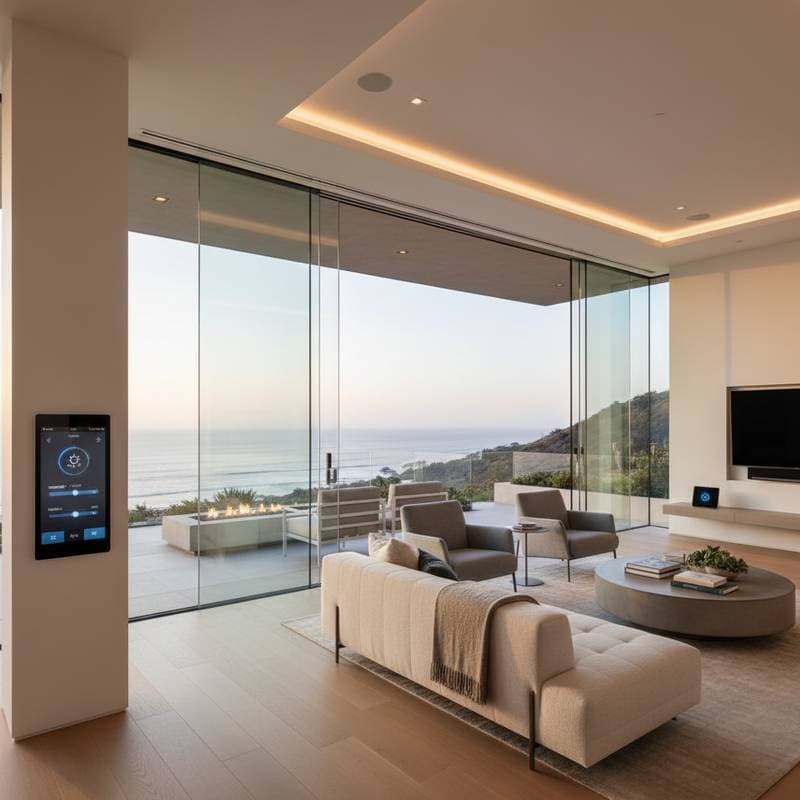
Indoors Meets Outdoors: Smart Glass Walls Electrify Living
The boundary between indoor comfort and outdoor beauty fades away with smart glass walls that respond to a simple command. These advanced panels, known as electrochromic glass walls, empower homeowners to regulate light, privacy, and views effortlessly. In moments, sunlight floods a living room or shade provides cooler relief. For San Diego residents who cherish open-air lifestyles, this technology redefines connections between spaces, enhances entertainment, and promotes energy conservation.
What Are Smart Glass Walls?
Smart glass walls employ electrochromic technology to manage transparency levels. Electricity activates the glass, prompting ions to shift within its layers and alter the surface from clear to tinted or opaque. This change reverses fully when power ceases. Homeowners gain a versatile wall that transitions from transparent to private in seconds, eliminating the need for traditional curtains or blinds.
Contemporary designs feature retractable panels that slide or fold, seamlessly uniting indoor and outdoor areas. Integration with smart home ecosystems allows control of tint or panel positions via smartphone or voice commands, adding convenience to daily routines.
Average Cost of Smart Glass Wall Installation
Installation expenses for smart glass walls fluctuate according to size, design, and features. Homeowners typically encounter the following ranges:
| Project Type | Cost per Square Foot | Typical Total Cost |
|---|---|---|
| Fixed Smart Glass Wall | $120 to $180 | $12,000 to $25,000 |
| Retractable Smart Glass Wall | $200 to $350 | $20,000 to $50,000+ |
| Full Smart Integration with Home System | Add $5,000 to $10,000 | $25,000 to $60,000+ |
These estimates cover materials and expert installation. Expenses increase with bespoke dimensions, premium framing, or complex multi-panel setups.
Cost by Size and Scope
Project dimensions and extent directly impact budgets. Consider these scales:
- Small Upgrade (up to 100 sq. ft.): Suited for patios or kitchen expansions. Expenses range from $12,000 to $20,000.
- Mid-Range Project (150 to 250 sq. ft.): Appropriate for living areas or indoor-outdoor dining links. Budgets fall between $25,000 and $40,000.
- Large or Luxury Installation (300+ sq. ft.): Encompasses complete wall overhauls or expansive automated systems. Costs surpass $50,000.
Larger projects demand more materials and labor, yet they maximize spatial flow.
Cost by Material and Frame Type
Frame choices affect appearance, longevity, and price. Common options include:
| Frame Material | Average Cost per Linear Foot | Durability | Maintenance Level | Aesthetic Appeal |
|---|---|---|---|---|
| Aluminum | $150 to $200 | High | Low | Modern, sleek |
| Wood-Clad Aluminum | $180 to $250 | High | Moderate | Warm, natural |
| Steel | $200 to $300 | Very High | Moderate | Industrial, bold |
| Vinyl | $120 to $160 | Moderate | Low | Budget-friendly |
Aluminum suits coastal properties due to its corrosion resistance and alignment with modern designs. Wood-clad variants offer a inviting appearance with robust performance.
Labor Costs and Installation Details
Labor constitutes 25 to 35 percent of overall expenses. Skilled installers bill $75 to $150 hourly, based on project intricacy. Tasks involve structural readiness, electrochromic wiring, and ties to current home systems or walls.
Projects span three to seven days. Automation wiring or remote features may prolong this period, ensuring seamless operation.
Factors That Influence the Total Cost
Multiple elements shape final outlays:
- Size and panel quantity
- Technology type, such as basic tinting versus gradient adjustments
- Fixed versus retractable configurations
- Frame material and finishes
- Wiring and smart integrations
- Modifications to existing structures or reinforcements
- Permits and code adherence
- Energy enhancements or solar links
Coastal locations necessitate rust-proof materials and extra seals, elevating costs by 10 to 15 percent.
How to Save Money on Smart Glass Walls
Strategic choices curb spending while preserving functionality:
- Opt for partial setups, targeting areas like sliding doors or prime views.
- Use standard panel measurements to avoid custom fabrication fees.
- Employ basic controls over advanced smart integrations.
- Combine with other renovations, such as window replacements, to share labor.
- Obtain three comprehensive quotes covering all components.
- Confirm robust warranties to minimize future repairs.
These steps yield savings without compromising innovation.
DIY vs. Hire a Pro: A Cost-Benefit Analysis
Smaller tasks tempt DIY approaches, but smart glass demands expertise. Electrical and structural demands exceed casual skills.
| Task | DIY Feasibility | Risk Level | Recommended Approach |
|---|---|---|---|
| Framing Preparation | Moderate | Medium | Feasible with carpentry experience |
| Electrical Integration | Low | High | Require licensed electrician |
| Panel Installation | Low | High | Engage professionals |
| Smart System Syncing | Moderate | Medium | Handle post-installation |
Professionals ensure code compliance and durability. Limit DIY to minor finishes like trim or calibration.
Benefits Beyond Aesthetics
Smart glass walls provide practical advantages:
- Precise light management reduces glare and preserves furnishings.
- Tinting minimizes heat influx, slashing cooling expenses by up to 20 percent in warm regions like San Diego.
- Instant privacy shifts without added fixtures.
- Sensor integrations automate adjustments for optimal daylight use.
- Property values rise, appealing to discerning buyers seeking modern upgrades.
These features elevate daily living and efficiency.
Common Mistakes to Avoid
Steer clear of these errors for optimal results:
- Overlook structural checks; panels require sturdy supports.
- Underestimate electrical needs, leading to expensive fixes.
- Choose inferior glass prone to fogging or tint failure.
- Mismatch controls with home systems, reducing usability.
- Ignore care instructions; abrasive cleaners damage coatings.
Thorough planning prevents setbacks.
Frequently Asked Questions About Smart Glass Walls
Do smart glass walls require special maintenance?
Clean with mild, non-abrasive solutions to maintain clarity. Avoid ammonia or abrasives that degrade the electrochromic layer. Sealed electronics need only periodic inspections.
How long do electrochromic glass panels last?
Premium panels endure 20 to 30 years with reliable function. Tinting response may diminish gradually, surpassing conventional alternatives.
Can I retrofit smart glass into my existing wall?
Retrofitting demands structural review and rewiring. Swapping standard windows proves straightforward, while full walls may need new framing.
Are smart glass walls energy efficient?
They excel by curbing solar heat and glare, lessening lighting and AC dependence. Sunny-area homes achieve 10 to 25 percent savings.
Do I need a permit to install smart glass walls?
Permits apply to structural or electrical changes. Consult local regulations to comply and prevent interruptions.
What happens during a power outage?
Panels hold their final state without power. Operations resume upon restoration.
Can smart glass be combined with retractable wall systems?
Yes, many designs pair electrochromic panels with sliding or folding mechanisms. This hybrid allows tint control alongside physical opening, ideal for versatile spaces.
Integrating Smart Glass into Daily Life
Select durable materials and qualified experts aligned with your vision for space harmony. The result is a home that maximizes light, comfort, and outdoor ties, enriching every moment.