
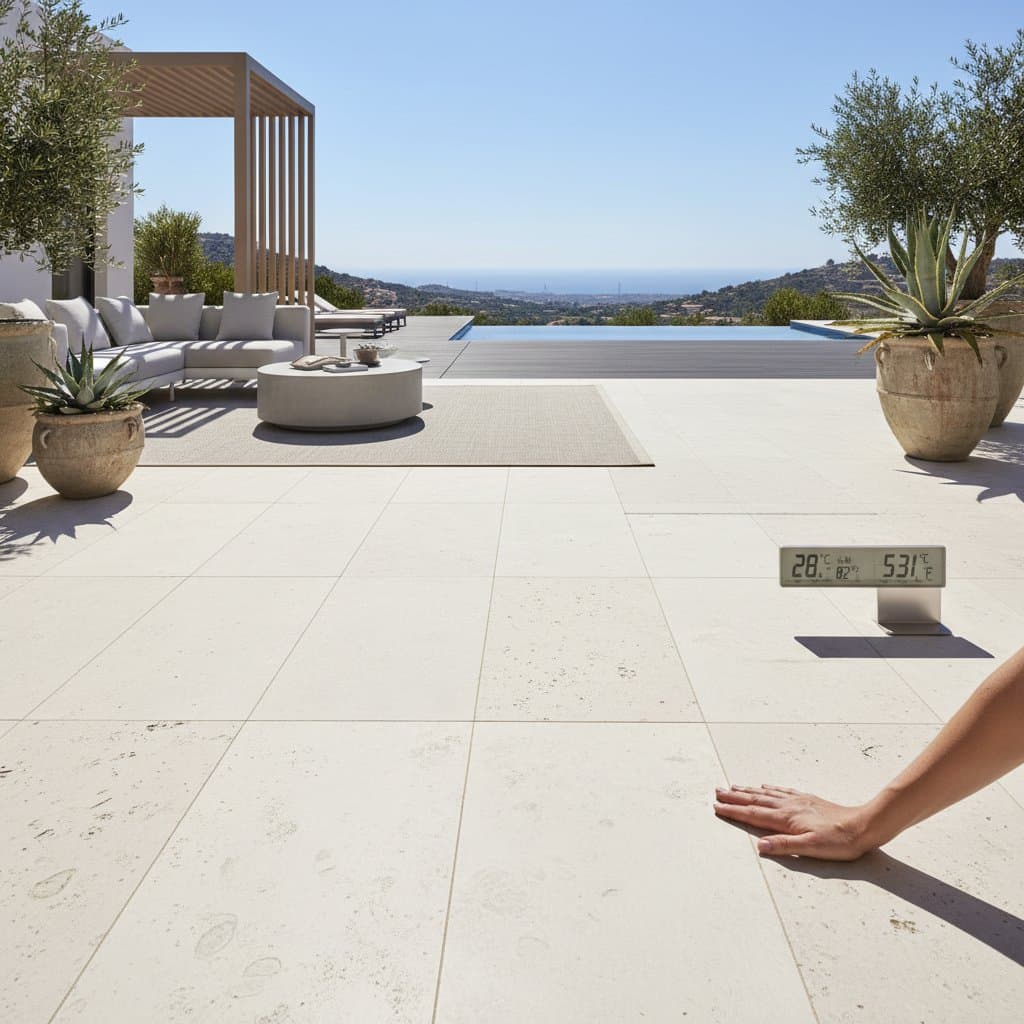
Why Limestone Decks Stay Cool in Scorching Heat
When temperatures rise, homeowners seek outdoor spaces that remain comfortable for barefoot walking. Many materials, including concrete and composite decking, absorb and retain heat, turning surfaces hot to the touch. Anyone who has stepped onto a sun-exposed patio and quickly retreated understands this challenge. Limestone decking provides a solution with its cool surface, enhancing outdoor enjoyment during peak summer heat.
This guide details why limestone decks maintain lower temperatures in intense sunlight, the unique properties that contribute to this performance, and strategies for selection and maintenance. Readers gain insight into the science of heat resistance and practical steps to create a durable, comfortable limestone deck.
Understanding What Makes Limestone Stay Cool
Limestone has served architecture in warm climates for centuries, appearing in courtyards and terraces where sun exposure demands reliable materials. Its inherent qualities position it as a superior option for sun-drenched environments.
The Science of Thermal Reflectivity
Limestone maintains a cooler surface through high thermal reflectivity, which allows it to bounce back sunlight rather than absorb it. Light-colored varieties, such as cream, buff, or white, excel in this regard because pale tones deflect a greater percentage of solar rays. In contrast, dark surfaces capture solar energy and convert it to heat, raising temperatures significantly.
This reflective property ensures that limestone surfaces stay noticeably cooler after prolonged exposure. For instance, studies on building materials show that light stones can reduce surface temperatures by up to 20 degrees Fahrenheit compared to darker alternatives under direct sun.
Natural Porosity and Breathability
As a porous stone, limestone contains microscopic air pockets that facilitate heat dissipation. These voids enable air circulation within the material, preventing heat buildup that occurs in solid, dense stones like concrete or granite. Consequently, the deck surface regulates its temperature more effectively, offering comfort even at midday.
Porosity also contributes to breathability, allowing moisture vapor to escape and reducing the risk of trapped heat. This characteristic proves particularly beneficial in hot, dry regions where rapid cooling after sunset enhances usability.
Density and Thermal Conductivity
Limestone exhibits low thermal conductivity, meaning it transfers heat poorly from the surface to deeper layers. When the outer layer warms from sunlight, the heat remains localized and does not conduct efficiently throughout the stone. This limits radiant heat emission, keeping the walking surface from reaching extreme temperatures.
Compared to metals or dense concretes with high conductivity, limestone avoids the intense heat transfer that makes other decks uncomfortable. Its moderate density strikes a balance between durability and thermal performance.
Choosing the Right Limestone for Outdoor Use
Performance in heat varies among limestone types, so factors like color, texture, and finish determine suitability for decking. Careful selection ensures optimal temperature control and longevity.
Light Colors Reflect More Heat
Prioritize lighter shades to maximize heat reflection. Options such as pale beige, ivory, or soft gray outperform darker limestones by redirecting more sunlight away from the surface. These colors not only promote comfort but also lend a bright, inviting aesthetic that suits coastal or Mediterranean designs.
For example, select Indiana limestone in a buff tone for its proven reflectivity and subtle veining that adds visual interest without compromising coolness.
Finishes That Enhance Comfort
Surface finishes influence heat distribution, slip resistance, and upkeep. Consider these options for outdoor applications:
- Honed: Provides a smooth, matte finish that resists slipping while offering an elegant appearance.
- Brushed: Delivers light texturing for improved traction and a natural patina over time.
- Tumbled: Creates rounded edges and varied texture, which evenly spreads heat and minimizes reflective glare.
Steer clear of polished finishes outdoors, as they increase slipperiness when wet and can intensify sunlight glare, detracting from comfort.
Durability and Maintenance Considerations
Though durable, limestone requires protection due to its relative softness compared to granite. Apply a penetrating sealer immediately after installation to guard against stains, water damage, and wear. Reapply the sealer every two to three years, adjusting based on local weather and usage intensity.
Choose sealers formulated for natural stone, such as silane or siloxane-based products, to preserve the material's breathability while enhancing resistance to environmental factors.
Designing a Cool Limestone Deck
Effective design elevates limestone beyond a mere surface, integrating it into a functional, safe outdoor area that prioritizes comfort.
Strategic Placement and Shading
Position the deck to capture morning sun while avoiding full afternoon exposure. Install features like pergolas with climbing vines, fixed umbrellas, or motorized awnings to provide shade during peak heat hours. These elements reduce direct sunlight on the stone, preserving its cool properties and extending usability.
Ensure designs promote natural airflow, such as open layouts that prevent heat pockets from forming around seating areas.
Integrating Complementary Materials
Pair limestone with elements that enhance texture and functionality. For instance:
- Select teak or cedar for benches and tables to introduce organic warmth against the stone's cool neutrality.
- Incorporate raised planters filled with drought-tolerant succulents to add greenery and soften hard lines.
- Use powder-coated aluminum for railings or lighting fixtures, providing modern contrast without overwhelming the natural stone.
This combination creates layered interest, making the space more inviting for gatherings.
Drainage and Subsurface Preparation
Installation fundamentals determine long-term performance. Prepare a stable subsurface with gravel and sand layers to support the stone and facilitate drainage. Design a subtle slope, typically one-fourth inch per foot, to direct water away and prevent pooling.
Hire certified installers familiar with natural stone to ensure joints allow for expansion and contraction, avoiding cracks from thermal shifts.
Comparing Limestone with Other Decking Materials
Various options compete for outdoor deck projects, each with distinct traits. This comparison highlights limestone's advantages in heat management.
| Material | Heat Retention | Comfort Underfoot | Maintenance | Aesthetic Appeal |
|---|---|---|---|---|
| Limestone | Low | Cool | Moderate (sealing required) | Natural, elegant |
| Concrete | High | Hot | Low | Customizable but prone to cracking |
| Composite | Very high | Very hot | Low | Uniform appearance |
| Wood | Moderate | Warm | Moderate (staining required) | Classic, versatile |
Limestone excels in delivering cool comfort alongside a premium, enduring look. While sealing adds a step, the benefits in usability and style justify the effort.
Maintaining Your Limestone Deck
Consistent care preserves the cool feel and visual appeal of limestone over decades.
Regular Cleaning
Remove leaves and dirt with a soft broom weekly. Clean the surface quarterly using a solution of mild dish soap and water, applied with a gentle brush. For tougher spots, opt for a pH-neutral stone cleaner to avoid etching the surface or degrading the sealer.
Rinse thoroughly and allow full drying to prevent moisture-related issues.
Sealing for Protection
A quality sealer forms an invisible shield against water and contaminants. Select breathable formulas that permit vapor escape, applying two coats with a roller or sprayer for even coverage. Test for resealing need by pouring water on the surface; if it beads up, delay application.
Schedule professional inspections annually in high-use areas to address any wear early.
Managing Outdoor Furniture and Grills
Protect the stone by placing felt pads under furniture feet to distribute weight and avoid scratches. Position grills or fire pits on dedicated heat pads made of ceramic or metal to shield against direct flame or drippings.
Relocate movable items during cleaning to ensure comprehensive surface care.
Frequently Asked Questions
Why does limestone stay cooler than concrete or composite decking?
Limestone reflects a higher proportion of sunlight than concrete or composites, which trap heat through absorption. Its porous structure promotes air flow, aiding in rapid cooling under direct sun.
Is all limestone suitable for outdoor decks?
Varieties differ in density and porosity. Opt for dense types like Jerusalem or Turkish limestone, which withstand moisture and weather effectively. Verify exterior ratings from suppliers to ensure compatibility.
Does sealing limestone make it hotter?
Penetrating sealers enhance protection without adding a heat-trapping layer. They maintain the stone's natural reflectivity. Glossy sealers, however, may slightly elevate warmth and glare, so avoid them.
How does limestone handle heavy foot traffic?
Installed on a solid base, quality limestone endures daily use. For intensive areas, specify pavers at least two inches thick. Professional laying with tight joints boosts resilience.
Can limestone decks be slippery when wet?
Textured finishes such as brushed or tumbled provide strong grip in wet conditions. Honed surfaces remain safe with proper sealing and routine cleaning to remove algae buildup.
How much does a limestone deck cost?
Expect mid-to-high pricing, typically $15 to $30 per square foot for materials, plus $10 to $20 for installation. Factors include stone origin, thickness, and site preparation; obtain multiple quotes for accuracy.
What climates are best for limestone decking?
Limestone performs optimally in warm, arid regions like the Southwest, where low humidity minimizes freeze-thaw damage. With robust sealing, it adapts to moderate coastal humidity. Avoid areas with frequent freezing unless using frost-resistant varieties.
Maximizing Comfort on Your Limestone Deck
Investing in a limestone deck delivers enduring outdoor pleasure, with surfaces that invite relaxation year-round. Follow these principles to create a space that withstands heat while fostering memorable gatherings. The result combines practical functionality with sophisticated style, elevating everyday living.