
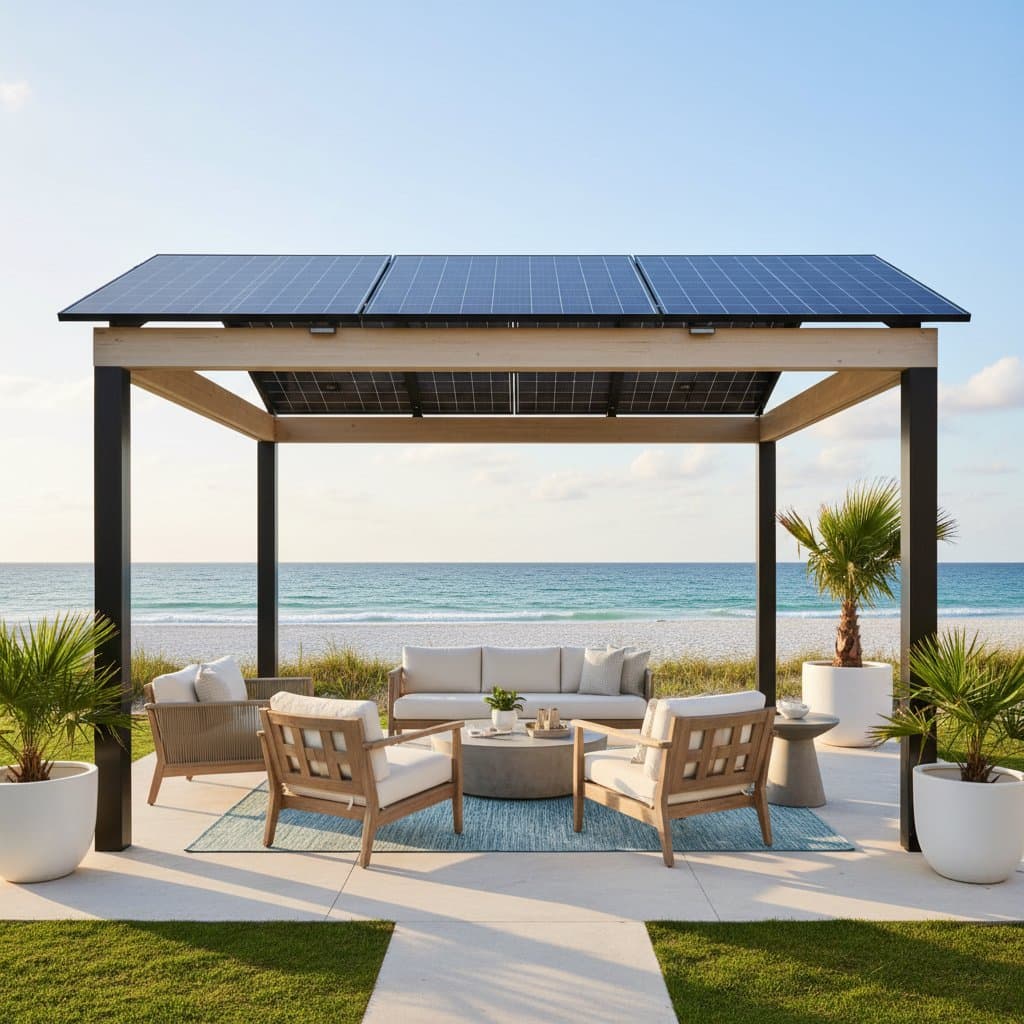
Solar Pergolas Generate $200 Monthly for Beach Homeowners
Beach homeowners often seek ways to enhance their properties while reducing energy costs. Solar pergolas offer a compelling solution by combining stylish outdoor shade with renewable energy production. These structures can generate up to $200 in monthly income through excess power sales to the grid, all while providing a shaded retreat for coastal living.
Solar pergolas integrate photovoltaic panels into a pergola framework, capturing sunlight to produce electricity. In sunny coastal areas like San Diego, a well-designed system of 4 to 6 kilowatts can offset household bills and qualify for net metering programs. Homeowners receive credits or direct payments for surplus energy, turning idle rooftops or patios into revenue sources. This approach not only lowers utility expenses but also aligns with sustainable living trends that appeal to environmentally conscious buyers.
Factors Influencing Costs and Returns
Several key elements determine the financial viability of a solar pergola. Selecting the right materials ensures durability in harsh coastal conditions, while system size and storage options affect overall output and savings.
Material Selection
Aluminum frames resist corrosion better than wood in salty air, though they carry a higher initial price of $5,000 to $8,000. Steel provides strength for wind-prone areas but requires galvanization to prevent rust. Over time, these premium choices reduce replacement needs and maintenance expenses, boosting long-term returns.
System Size
A standard 4-kilowatt setup suits most beach homes, producing 500 to 700 kilowatt-hours monthly and yielding $150 to $200 in credits. Larger 6- to 8-kilowatt systems increase output proportionally but demand $15,000 to $25,000 upfront. Assess your energy needs and available space to balance investment with income potential.
Battery Storage
Batteries store excess daytime production for evening use, adding $5,000 to $10,000 to the project. Without them, you rely on grid export for earnings, which works well in areas with favorable net metering. For frequent outages common in coastal zones, batteries enhance reliability and maximize self-consumption savings.
Incentives such as federal tax credits covering 30 percent of costs further improve payback periods to five to seven years. Local rebates in California can accelerate returns, making solar pergolas a smart addition to beach properties.
DIY vs. Hiring a Professional: A Cost-Benefit Analysis
Deciding between a do-it-yourself project and professional installation involves weighing skills, time, and risks. Each path offers distinct advantages for beach homeowners aiming to install a solar pergola.
DIY Approach
Experienced builders with electrical knowledge can construct the frame using pre-engineered kits priced at $10,000 to $18,000, including panels and mounting hardware. This method cuts labor costs by 40 to 50 percent. However, connecting to the grid requires a licensed electrician to handle wiring and inspections.
Pros:
- Reduced initial expenses through self-labor
- Customization to match specific coastal aesthetics
- Sense of accomplishment from hands-on creation
Cons:
- Navigating complex permits and codes independently
- Risks to structural integrity or electrical safety
- Extended timeline due to learning curves and weather delays
Hiring a Professional
Certified installers oversee the entire process, from site assessment to grid interconnection. Expect total costs of $20,000 to $35,000, depending on size and features. They ensure adherence to seismic and wind standards prevalent in beach areas.
Pros:
- Comprehensive warranties covering workmanship and performance
- Expertise in engineering for salt exposure and high winds
- Streamlined permitting and quicker activation, often within weeks
Cons:
- Elevated costs from professional fees
- Limited options for unique design tweaks
Professionals prove ideal for most coastal installations, where environmental factors demand precision. They mitigate risks that could void incentives or insurance coverage.
Common Mistakes to Avoid
Solar pergola projects thrive with careful planning, yet pitfalls can undermine efficiency and safety. Addressing these issues upfront preserves performance in demanding beach settings.
- Overlooking Wind Loads. Coastal winds exceed 50 miles per hour during storms; reinforce posts with concrete footings and use rated anchors to prevent damage.
- Opting for Inferior Components. Standard hardware fails in humid, salty conditions; select stainless steel bolts and marine-grade sealants to avoid premature corrosion.
- Underestimating Permit Delays. Beachfront regulations involve environmental reviews; submit applications early and consult local authorities to avoid months-long waits.
- Neglecting Regular Cleaning. Salt and sand accumulate on panels, dropping efficiency by 15 percent; rinse surfaces quarterly with fresh water to maintain output.
- Ignoring Site Shading. Trees or buildings cast shadows that reduce production by 20 to 30 percent; conduct a solar path analysis before finalizing placement.
By sidestepping these errors, owners secure systems that deliver consistent energy and income for 25 years or longer.
Frequently Asked Questions About Solar Pergolas
Do I Need a Permit for a Solar Pergola?
Yes, permits are essential. Secure a building permit for the framework and an electrical one for the panels. In coastal zones, additional certifications for wind resistance and erosion control may apply, ensuring compliance with safety standards.
How Long Does Installation Take?
The full process spans four to eight weeks, including design and approvals. Physical construction and wiring occur over one to two weeks, with utility interconnection adding a final inspection step.
How Long Do Solar Pergolas Last?
Quality installations endure 25 years or beyond. Panels warrantied for 25 years maintain 80 percent efficiency, while the frame, built with durable alloys, often lasts longer with basic upkeep.
Can I Add Battery Storage Later?
Yes, systems include provisions for future expansion. Battery integration requires minimal retrofitting, allowing owners to upgrade as budgets or needs evolve for better energy independence.
Will a Solar Pergola Increase Home Value?
Absolutely. Properties with solar features command 3 to 5 percent higher resale prices. Pergolas expand livable outdoor space, enhancing appeal in competitive beach real estate markets.
Are Solar Pergolas Safe Near the Ocean?
They are, when constructed properly. Use corrosion-resistant aluminum or treated steel, along with grounded electrical systems, to withstand moisture and surges common in marine environments.
How Much Maintenance Is Required?
Routine care suffices. Wipe panels every three months to remove debris, inspect hardware annually for wear, and schedule professional checks to optimize performance and safety.
Steps to Launch Your Solar Pergola Project
Start by evaluating your site's sunlight exposure and energy usage to size the system appropriately. Consult local installers for quotes and incentive details, then apply for permits promptly. Once operational, monitor production via apps to track earnings and adjust habits for maximum benefits. This investment not only generates passive income but also elevates your beach home's comfort and marketability for years ahead.