
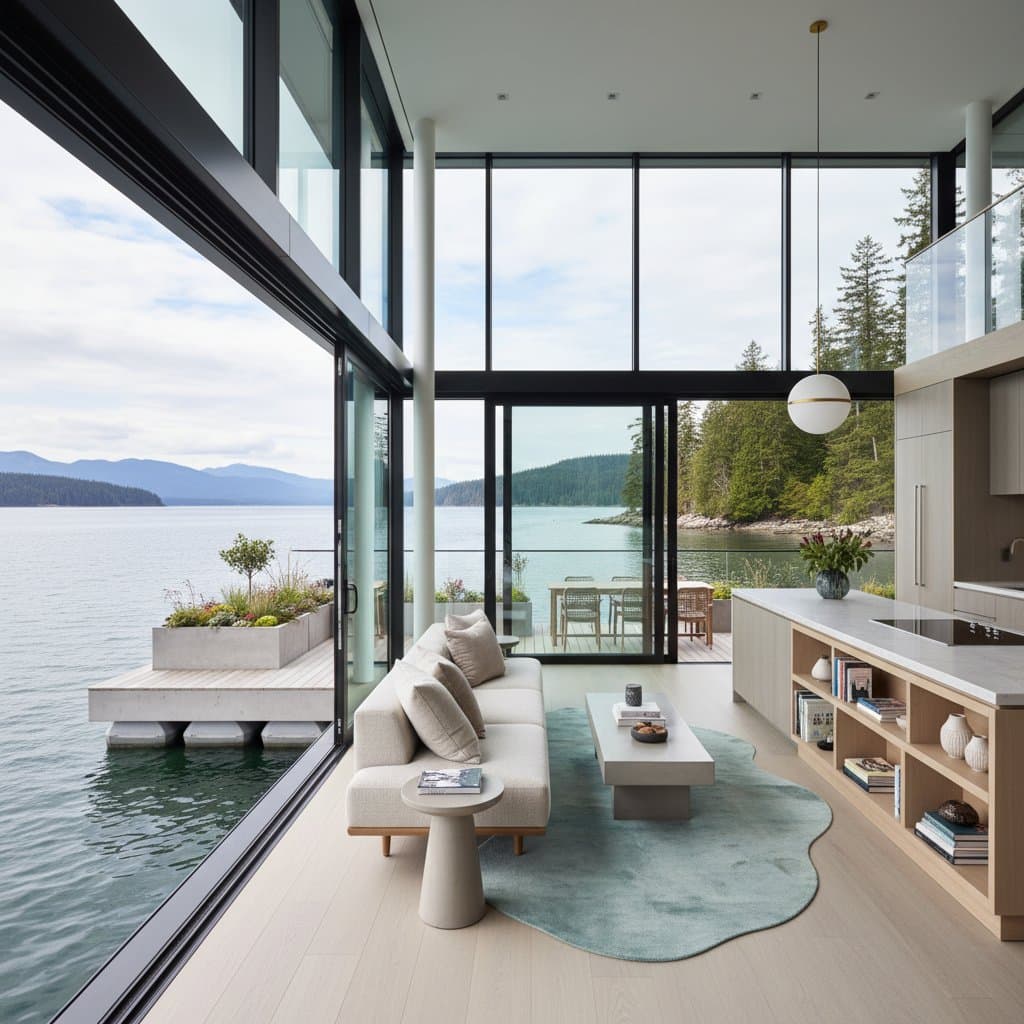
Floating Homes: Rise Above Coastal Flood Threats
Coastal living holds enduring appeal. Ocean views, fresh sea air, and a leisurely pace draw many to the shore. However, rising sea levels and intensified flooding now threaten traditional homes in these areas. Floating homes emerge as an innovative response, enabling residents to dwell on or near the water while mitigating flood risks.
This guide examines floating homes in detail. It covers their mechanics, benefits, and practical considerations for potential owners. Readers gain insights into design choices, expenses, regulatory hurdles, and strategies for environmental protection.
Understanding Floating Homes
Floating homes serve as fixed residences constructed on buoyant foundations. These allow the structures to adjust to fluctuating water levels. Distinct from houseboats, which remain mobile, floating homes stay anchored in place and integrate with standard utility services.
How Floating Homes Work
The foundation of a floating home consists of a buoyant platform, typically formed from concrete pontoons, steel flotation tanks, or foam-filled modules. These elements displace sufficient water to maintain equilibrium and prevent tipping. Vertical guideposts or pilings secure the home, permitting vertical movement with tides or surges while restricting lateral drift.
In flood scenarios, the home elevates naturally, safeguarding interiors, wiring, and appliances from submersion. This adaptive mechanism minimizes repair needs and preserves structural integrity over time.
Benefits of Floating Homes
Floating homes harmonize with aquatic environments rather than resist them. Principal advantages encompass:
- Flood resistance: Structures ascend with water, averting damage from inundation.
- Sustainability: Incorporate recycled materials, solar integration, and low-impact designs to lessen ecological footprint.
- Waterfront access: Provide unobstructed vistas and seamless entry to marine activities like kayaking or sailing.
- Space efficiency: Utilize underutilized waterways in dense urban coastal settings, such as San Diego's harbors.
Planning a Floating Home Project
Constructing or acquiring a floating home demands meticulous preparation. Unique factors, including maritime regulations and engineering demands, set this apart from conventional building.
Step 1: Research Local Regulations
Examine municipal zoning ordinances and construction standards first. In regions like San Diego, authorities may designate floating homes as aquatic installations or residential properties. Secure permits for anchoring, utility hookups, and ecological assessments. Contact the local planning office early to identify compliance pathways.
Step 2: Choose a Suitable Site
Site selection influences long-term viability. Opt for sheltered waters in marinas, bays, or lagoons with minimal wave action. In San Diego, areas like Shelter Island or Mission Bay offer protected conditions. Ensure proximity to utility infrastructure and robust mooring options while avoiding high-traffic zones.
Step 3: Design and Engineering
Collaborate with specialists in amphibious architecture, who specialize in water-compatible builds. Key elements include:
- Buoyancy and stability: Balance loads evenly to sustain level orientation across varying conditions.
- Anchoring systems: Employ guideposts or tension cables rated for local wind and current forces.
- Utility connections: Install extensible piping and wiring to flex without strain during elevation.
- Materials: Select durable options like galvanized steel frames, epoxy-coated wood, and fiber-reinforced panels to combat saltwater exposure.
Step 4: Budgeting and Costs
Expenses fluctuate based on scale, locale, and features. Basic models start at $400,000, while bespoke units in premium areas like San Diego exceed $1 million. Factor in annual marina fees ($5,000 to $15,000), ongoing upkeep ($10,000 yearly), and elevated insurance premiums. Regional variations, such as California's seismic standards, can increase costs by 20 percent.
Step 5: Insurance and Financing
Coverage for floating homes presents distinct challenges. Providers may classify them as vessels or fixed assets, affecting policy terms. Seek insurers experienced in amphibious properties, targeting comprehensive flood and marine coverage. For financing, approach institutions offering loans for non-traditional residences; expect down payments of 20 to 30 percent and interest rates 1 to 2 points above standard mortgages.
Living in a Floating Home
A completed floating home delivers a resilient yet comfortable existence. Practical realities shape daily life in these settings.
Maintenance and Upkeep
Durability defines these structures, yet vigilance remains essential:
- Conduct yearly evaluations of flotation components for integrity.
- Reinforce anchoring mechanisms to withstand seasonal stresses.
- Apply protective coatings to exteriors quarterly to inhibit degradation.
- Verify utility linkages biannually for wear and alignment.
Energy and Sustainability
Integrate renewable features like photovoltaic arrays for power generation, cisterns for water harvesting, and aerobic treatment units for waste management. These reduce reliance on external resources and align with green building certifications. The submerged base acts as thermal insulation, stabilizing internal climates year-round.
Community and Accessibility
Coastal enclaves of floating homes foster communal bonds. Shared amenities include piers, storage units, and recreational spaces. Assess proximity to roadways, public transit, and medical facilities; in San Diego, established communities near downtown enhance convenience.
Frequently Asked Questions
What is the difference between a floating home and a houseboat?
Floating homes function as immobile dwellings, moored indefinitely with permanent utility ties. Houseboats prioritize mobility for travel across waterways. The former suits stationary, home-like living; the latter accommodates transient use.
Are floating homes safe during storms?
Properly engineered units withstand severe weather. They elevate with surges and anchor firmly against winds up to 100 mph. Site in low-risk zones and adhere to codes for optimal security.
How much does it cost to build a floating home?
Ranges span $300,000 to $2 million, mirroring luxury land builds. Include site adaptations and contingencies for 10 percent overruns. Consult contractors for precise estimates.
Can floating homes connect to regular utilities?
Yes, via adaptable conduits that extend with motion. In isolated spots, off-grid solutions like wind turbines or septic systems provide alternatives.
Do floating homes require special maintenance?
Indeed, focus on aquatic elements demands scheduled inspections. Budget 1 to 2 percent of value annually for preservation.
Can you get a mortgage for a floating home?
Specialized lenders extend financing, often as secured property loans. Documentation includes engineering reports; approval hinges on appraised value and location stability.
Where can floating homes be located?
Primarily in tranquil inland waters, per jurisdictional rules. San Diego permits them in designated marine zones with environmental reviews.
Securing Your Coastal Future
Evolving shorelines necessitate adaptive housing solutions. Floating homes align living spaces with dynamic waters, safeguarding assets amid climate shifts.
This approach extends beyond protection to enrich waterfront experiences. Embrace designs that evolve with the environment for enduring coastal harmony.