
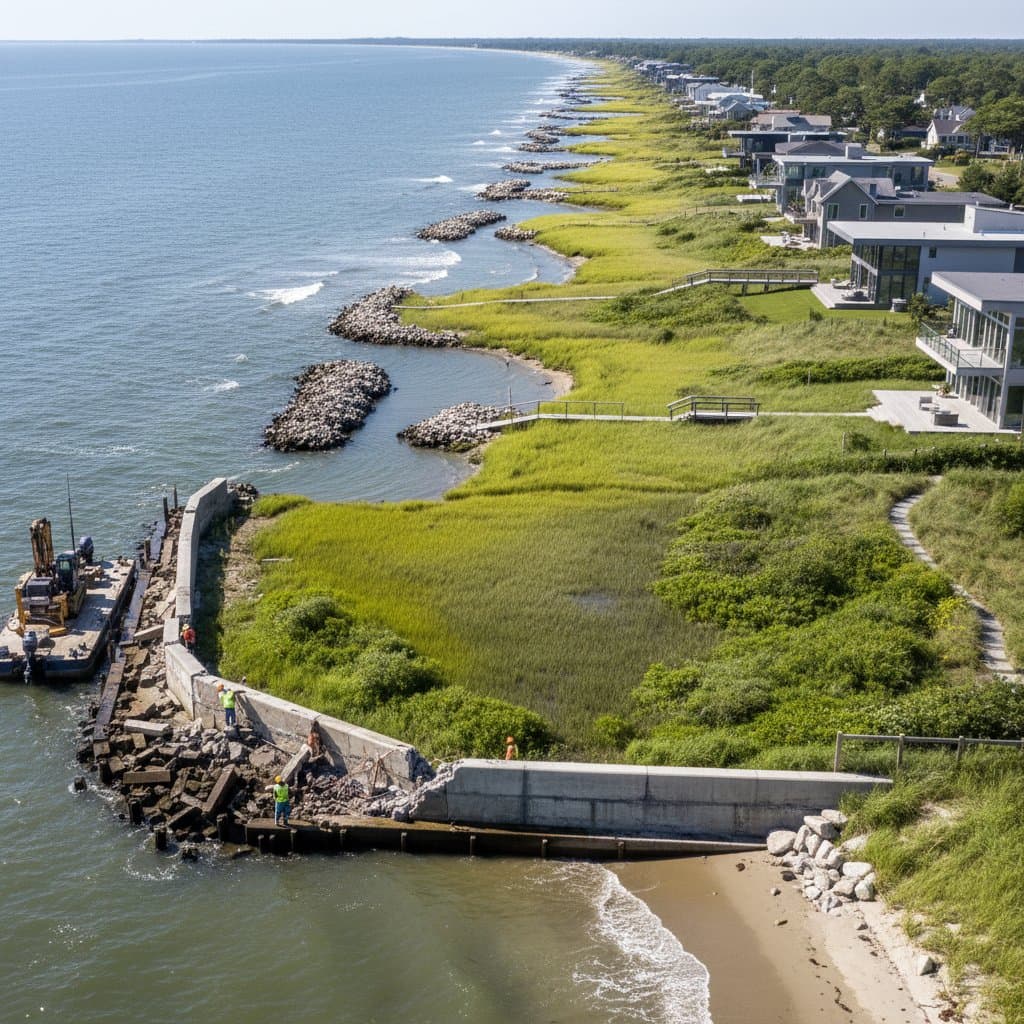
Living Shorelines to Supplant Seawalls in 2026 Coastal Codes
Coastal regions face intensifying pressures from erosion and sea level rise. Beginning in 2026, updated building codes mandate a preference for living shorelines rather than conventional seawalls. Property owners must incorporate natural elements, including marsh grasses, oyster reefs, and stabilized dunes, to fortify coastlines. These solutions secure shorelines, bolster wildlife habitats, and preserve public pathways without exacerbating erosion.
Understanding Living Shorelines
Living shorelines employ native vegetation, sediments, and structural aids to shield coastal properties. This method integrates plants, sand, and occasional stone placements to form a resilient buffer against wave action. In contrast to seawalls, which rebound waves and intensify scour, living shorelines diffuse energy and foster gradual sediment accumulation.
Key components encompass:
- Vegetation like smooth cordgrass and sea oats to anchor soil
- Periodic sand nourishment to sustain beach profiles
- Submerged reefs constructed from oyster shells or mussels for structural support
- Gradual inclines that replicate inherent coastal topography
Image: Coastal wetland featuring native grasses that secure a sandy embankment.
Living Shorelines Versus Seawalls: A Detailed Comparison
Seawalls have served as primary erosion barriers for decades, yet they frequently harm adjacent environments and promote downdrift erosion. Living shorelines deliver superior ecological and financial outcomes, aligning with contemporary regulatory demands.
| Feature | Living Shoreline | Seawall |
|---|---|---|
| Erosion Control | Dissipates wave energy through vegetation and structure | Reflects waves, potentially increasing erosion in adjacent areas |
| Habitat Support | Nurtures fish, birds, and plant communities | Offers no ecological benefits |
| Maintenance Needs | Minimal after initial establishment | Substantial, requiring regular inspections and repairs |
| Visual Integration | Harmonizes with surrounding nature | Presents a stark, engineered look |
| Cost Estimate | $50 to $200 per linear foot | $150 to $600 per linear foot |
Image: Side-by-side view of a lush, vegetated shoreline adjacent to a rigid concrete seawall.
Drivers Behind the Regulatory Transition
Erosion challenges coastal infrastructure in numerous waterfront locales. Rigid installations like seawalls struggle against fluctuating tides and intensified storm events. Living shorelines adapt dynamically, as root systems expand and sediments accumulate over seasons. They also create essential refuges for marine species, birds, and invertebrates, thereby elevating regional biodiversity.
Experts advocate this pivot to balance property safeguards with environmental restoration. Municipal authorities revise codes to promote resilient, nature-based protections that accommodate development alongside thriving ecosystems. This framework addresses immediate threats while building long-term coastal vitality.
Steps for Implementing a Living Shoreline
Individuals and professionals should familiarize themselves with the process to comply with forthcoming standards.
- Conduct Site Evaluation: Analyze soil composition, terrain gradient, and prevailing wave patterns.
- Develop Tailored Design: Select regionally appropriate flora and substrates based on environmental data.
- Secure Approvals: Review municipal coastal guidelines and file detailed engineering drawings.
- Execute Construction: Deploy plants and supportive elements per the vetted blueprint.
- Establish Oversight: Regularly evaluate vegetation progress and perform necessary adjustments.
Image: Workers positioning oyster shells to build a submerged reef along the water's edge.
Advantages Extending Past Erosion Mitigation
These installations purify runoff by trapping sediments and absorbing nutrients, thereby elevating water clarity. Property values often appreciate due to enhanced aesthetics and ecological appeal. Residents enjoy diminished upkeep demands, while broader communities secure fortified defenses and enriched aquatic environments.
Image: Vibrant marsh ecosystem teeming with fish and avian species proximate to waterfront homes.
Common Questions on Living Shorelines
Do living shorelines exceed seawalls in upfront expense? Initial investments align closely, though sustained upkeep proves more economical for living systems.
Are they viable in zones with intense wave activity? Proper engineering, incorporating elements like stone aprons or robust reefs, enables effectiveness in dynamic conditions.
May owners undertake installation independently? Modest-scale efforts suit self-directed projects, yet expert consultation guarantees enduring performance.
What is their projected lifespan? With diligent maintenance, they endure perpetually, as living components evolve and reinforce the structure.
Advancing Resilient Coastal Design
Regulatory updates present a pivotal moment for shoreline stewards. Opting for living shorelines ensures adaptive, scenic defenses that withstand environmental shifts. This commitment to natural integration preserves coastlines as dynamic, sustainable assets for future inhabitants.