
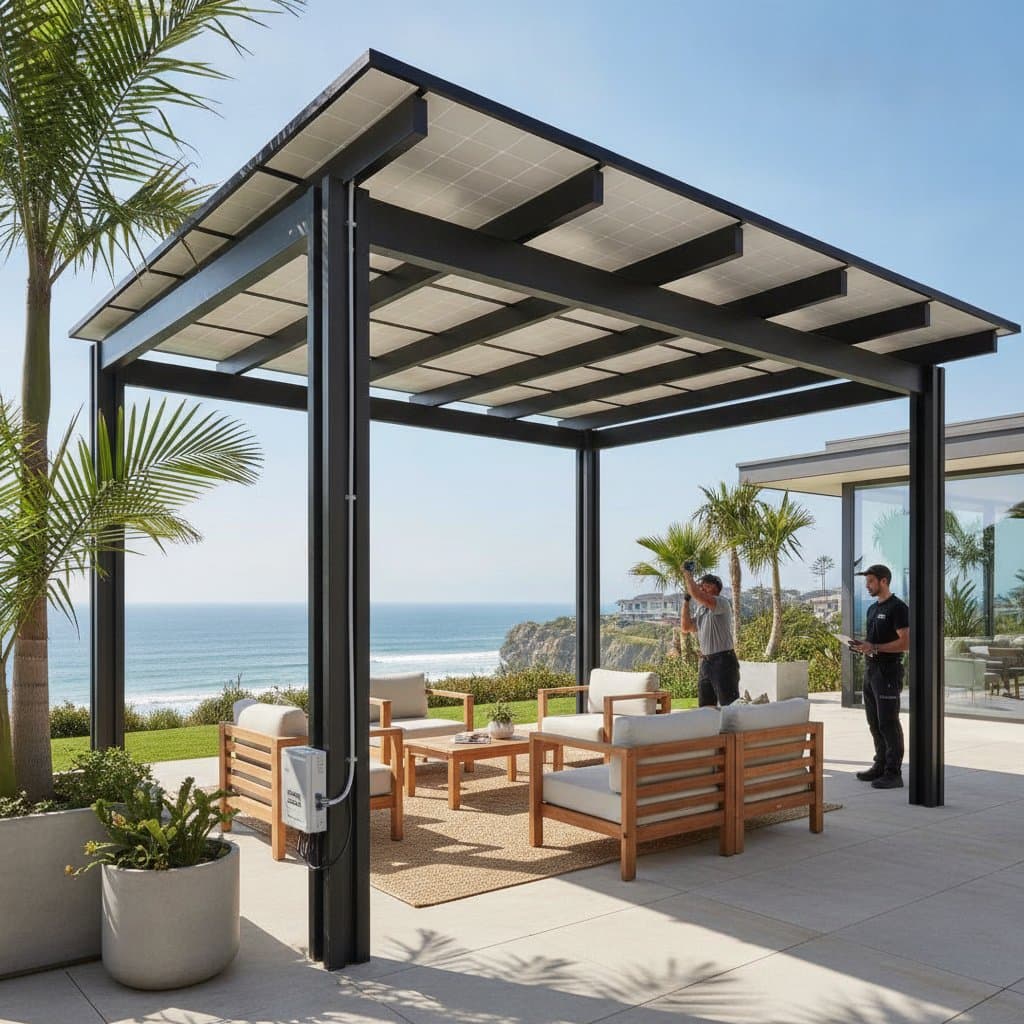
Blending Shade and Power Generation
Solar pergolas provide homeowners with a practical way to reduce monthly utility expenses while creating comfortable outdoor areas. These structures combine traditional pergola designs with photovoltaic panels that capture sunlight and convert it into electricity. Coastal properties benefit especially because consistent sun exposure supports steady energy production throughout the year.
Proper orientation toward the south maximizes output in most regions. Homeowners can connect the system to the main electrical panel or use it for dedicated outdoor circuits such as lighting and fans. This setup delivers immediate savings and adds long-term value to the property.
Selecting Materials for Coastal Conditions
Aluminum frames resist corrosion from salt air better than wood or steel options. Tempered glass or polycarbonate panels protect the photovoltaic cells while allowing light to filter through. Choose marine-grade hardware to maintain structural integrity over time.
Color choices should complement existing home exteriors. Light finishes reflect heat and reduce the load on air conditioning systems inside the house. Local building codes often require specific wind ratings for structures near the shoreline.
Understanding Installation Approaches
Professional installation ensures compliance with electrical codes and structural requirements. Certified contractors handle permitting, panel placement, and grid connection. This route typically includes warranties on both labor and equipment.
Do-it-yourself kits exist for those with construction experience. These packages supply pre-cut components and basic wiring diagrams. Even experienced builders should consult an electrician before making final connections to the home electrical system.
Managing Project Costs
Material prices vary based on size, panel efficiency, and finish quality. A standard twelve-by-twelve-foot unit with mid-range panels often falls between eight thousand and fifteen thousand dollars before incentives. Larger or custom designs increase both material and labor expenses.
Financing programs and leasing arrangements spread payments over several years. Some lenders offer rates tied to energy savings projections. Homeowners should compare total ownership costs rather than focusing only on the initial outlay.
Applying Available Incentives
Federal tax credits currently cover thirty percent of qualified solar expenditures. State and local rebates may further reduce net costs. Utility companies sometimes provide performance-based payments for electricity fed back into the grid.
Documentation of equipment specifications and installation dates supports incentive claims. Keep all receipts and certificates organized for tax filing. These programs change periodically, so verify current terms before purchasing.
Routine Care for Sustained Performance
Quarterly inspections identify loose connections or debris accumulation on the panels. Soft brushes and water remove salt residue without scratching surfaces. Annual professional checks confirm wiring integrity and inverter function.
Vegetation near the structure should remain trimmed to prevent shading. Proper care extends equipment life and maintains expected energy yields. Replacement parts remain available for most major brands.
Creating Functional Outdoor Spaces
Integrated lighting and ceiling fans extend usability into evening hours. Retractable shades offer additional comfort during peak heat. Storage benches built into the frame keep cushions and tools organized.
These additions turn the pergola into a true extension of living space. Families gain areas for dining, work, or relaxation without increasing indoor energy use. Thoughtful planning ensures the structure meets both aesthetic and practical needs.