
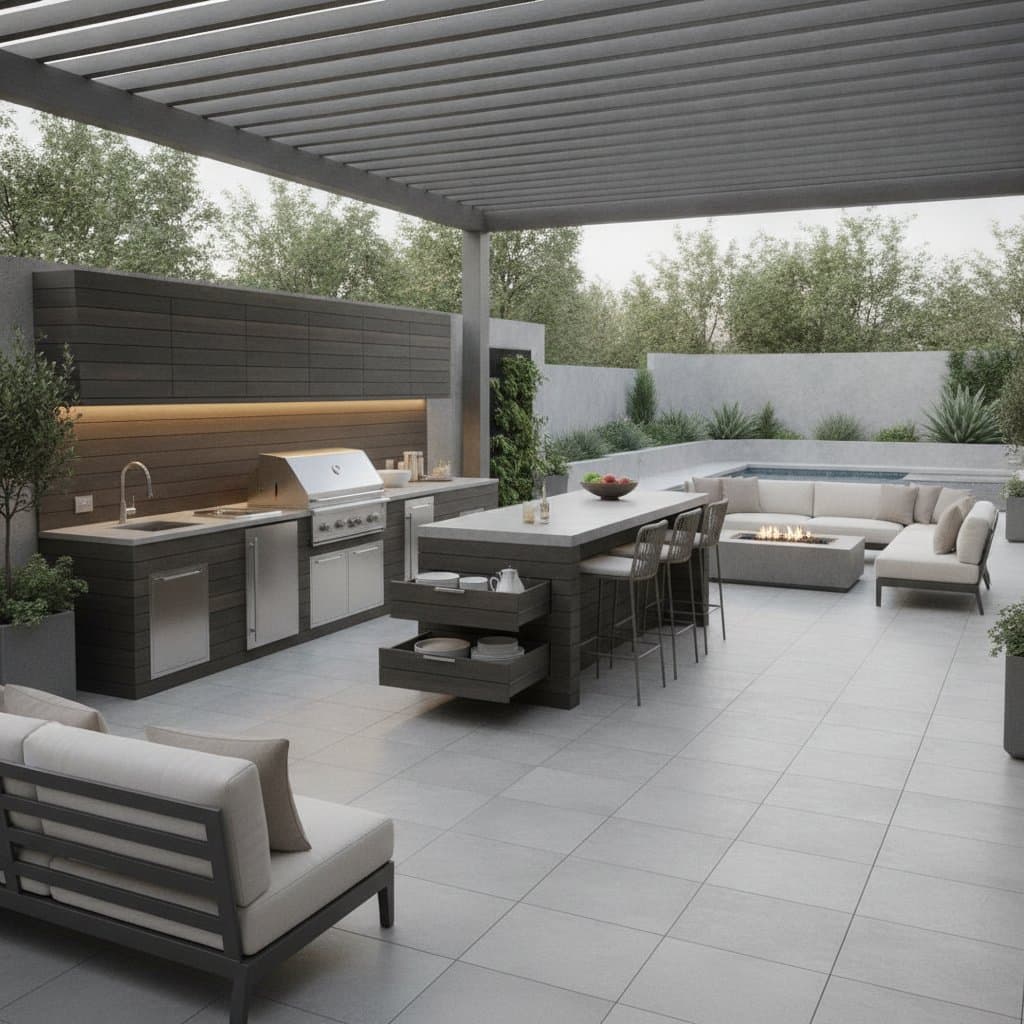
Why Modular Outdoor Kitchens Beat Full Replacements
Creating the perfect outdoor cooking area expands living space and adds value to a home. Homeowners often choose between a full custom replacement and a modular outdoor kitchen system. Modular systems deliver advantages in cost efficiency, flexibility, and long-term sustainability.
Planning an upgrade requires clear comparisons between these options to support a sound decision.
Average Cost Comparison
A full custom outdoor kitchen replacement ranges from 10000 dollars to 35000 dollars. A modular outdoor kitchen for a similar footprint costs 4000 dollars to 15000 dollars. Pre-engineered components arrive ready for assembly and reduce labor expenses.
| Type of Project | Typical Cost Range | Average Cost per Linear Foot | Installation Time |
|---|---|---|---|
| Modular Outdoor Kitchen | 4000 - 15000 | 500 - 1000 | 1 to 3 days |
| Full Custom Replacement | 10000 - 35000 | 1200 - 2500 | 1 to 3 weeks |
Cost by Size and Scope
Total investment varies with project size. The following ranges show how modular systems compare.
| Project Size | Modular Cost Range | Full Replacement Cost Range | Description |
|---|---|---|---|
| Small (Grill Island) | 3000 - 6000 | 7000 - 12000 | Basic setup with grill, counter, and small prep area |
| Medium (L-Shaped Layout) | 6000 - 12000 | 12000 - 25000 | Includes sink, storage, and optional refrigerator |
| Large (Full Cooking Station) | 12000 - 20000 | 25000 - 40000 | Full kitchen with multiple appliances and bar seating |
Savings remain substantial even at the upper end of modular pricing.
Cost by Material
Material selection affects appearance and longevity. Modular systems provide surface and finish options that match or exceed custom masonry quality.
| Material Type | Modular Price per Linear Foot | Custom Replacement Price per Linear Foot | Durability Rating | Maintenance Level |
|---|---|---|---|---|
| Powder-Coated Steel | 500 - 700 | 1000 - 1500 | High | Low |
| Concrete Composite Panels | 700 - 900 | 1200 - 1800 | Very High | Low |
| Natural Stone Veneer | 900 - 1100 | 1800 - 2500 | Very High | Moderate |
| Stainless Steel | 600 - 800 | 1200 - 1600 | High | Low |
Manufacturers use corrosion-resistant frames and weather-sealed panels suited to humidity, salt air, and temperature changes.
Labor and Installation Costs
Labor forms a major part of any budget. Traditional replacements involve masonry work, utility rerouting, and finishing details. Modular kitchens reduce these demands.
Average labor costs total 500 dollars to 2000 dollars for modular installation. Full replacement labor totals 3000 dollars to 10000 dollars. Two people can assemble most systems in a weekend, or a professional can complete installation in one to three days.
Key Factors That Influence Total Cost
Several variables shape final expenses. Location and climate affect material requirements. Utilities such as gas or electrical lines add expense. Appliance choices and surface finishes also influence totals. Permits may apply for gas or plumbing connections. Custom configurations can raise modular costs slightly.
How to Save Money on Modular Outdoor Kitchens
Strategic choices lower overall spending.
- Begin with core modules such as a grill and prep station, then expand later.
- Select standard module sizes to avoid added cost and lead time.
- Assemble the system personally when basic tools suffice.
- Purchase during slower retail periods outside peak summer months.
- Integrate existing working appliances into the new layout.
- Invest in corrosion-resistant finishes to limit future maintenance.
DIY vs. Hiring a Professional
DIY Approach
Modules arrive prebuilt and require only assembly plus basic connections.
- Save on labor costs.
- Maintain direct control over the project timeline.
- Simplified design reduces overall complexity.
Utility hookups may still need a licensed contractor. Some warranties limit coverage after self-installation.
Hiring a Professional
A professional installer delivers code compliance and a finished result.
- Ensure safety and regulatory adherence.
- Complete work on a shorter timeline.
- Preserve full warranty protection.
A hybrid method often works well. Assemble modules first, then engage licensed professionals for final utility connections.
Common Mistakes to Avoid
- Plan layouts around existing gas, water, and electrical access points.
- Verify that the deck or patio can support the combined weight of appliances and counters.
- Apply proper sealing and protective covers even on durable materials.
- Provide adequate airflow around gas grills to avoid overheating.
- Focus on efficient layout and storage before selecting decorative finishes.
Frequently Asked Questions About Modular Outdoor Kitchens
Do permits apply to modular outdoor kitchens?
Freestanding systems usually do not require permits unless permanent gas, plumbing, or electrical lines are added. Local regulations should be confirmed before construction begins.
How long does installation take?
Most systems are complete in one to three days. Smaller setups finish in a single afternoon.
Do modular systems hold up in coastal climates?
Marine-grade aluminum and powder-coated steel resist rust and corrosion, making these systems suitable for coastal properties.
Can the kitchen expand later?
Modular designs support future additions such as a pizza oven, refrigerator, or bar module.
What features increase resale value?
High-quality appliances, durable materials, and a practical layout contribute most to buyer appeal. Flexible configurations attract interest from potential purchasers.
Planning the Next Steps
Review site conditions, select core modules, and confirm utility requirements before ordering. This sequence produces a functional outdoor kitchen that fits the available space and budget while allowing future growth.