
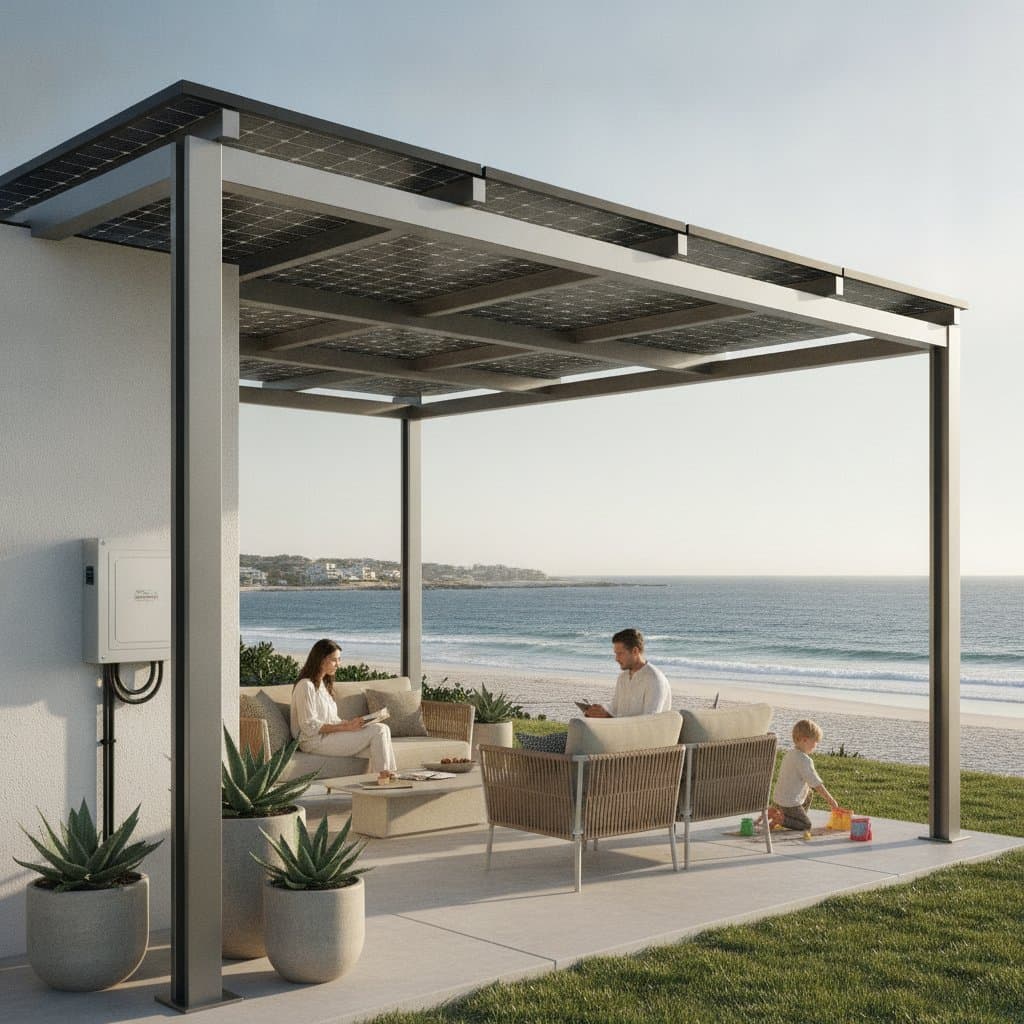
Solar Pergolas Deliver Shade and Clean Energy for Coastal Homes
Homeowners along the coast often face strong sun exposure along with rising energy costs. A solar pergola addresses both issues at once. It creates shaded outdoor space while producing renewable electricity on site.
Why Coastal Properties Benefit from Solar Pergolas
Coastal locations receive consistent sunlight that supports solar generation. At the same time, patios and decks can become too hot for comfortable use. A solar pergola converts excess sunlight into electricity and maintains pleasant shade below.
How the Structure Works
The roof holds solar panels instead of traditional slats. Photovoltaic cells inside the panels capture sunlight and generate direct current. An inverter then changes that current into alternating current for household use.
Key Advantages in Salt Air Environments
- Shade reduces heat gain and glare on outdoor living areas.
- Panels produce power during peak sunlight hours typical of coastal zones.
- Aluminum or powder-coated steel frames resist corrosion from salt air.
- Clean lines match modern coastal architecture.
- Generated electricity lowers monthly utility expenses.
Site Assessment and Material Selection
Proper planning begins with a review of sun exposure throughout the day. A contractor can perform a shading analysis to confirm the best orientation. Seasonal fog patterns should also factor into expected output.
Weather-Resistant Material Options
Salt air accelerates wear on standard building products. Aluminum offers light weight and natural rust resistance. Powder-coated steel provides strength in coastal-grade finishes. Composite lumber mimics wood appearance while avoiding rot.
Panel and Component Choices
Monocrystalline panels deliver higher efficiency and a uniform dark look. Polycrystalline panels cost less but produce slightly lower output. The full system requires inverters, outdoor-rated wiring, and mounting hardware designed for elevated structures. Licensed installers ensure compliance with local codes.
Cost Planning and Incentive Use
Project costs range from several thousand dollars to more than twenty thousand dollars based on size and capacity. Multiple contractor quotes help establish accurate pricing for a specific site.
Available Financial Offsets
Rebates, tax credits, and net metering programs reduce net investment. These measures credit homeowners for power returned to the grid. Local utility offices supply current eligibility requirements.
Expected Payback Period
Savings accumulate through reduced electric bills and increased property value. Energy production tracking reveals actual performance against projections.
Contractor Selection and Permitting
Both structural and electrical work demand qualified professionals. Verify licenses and insurance before signing an agreement.
Proposal Requirements
A complete bid lists panel layout, material specifications, project timeline, and warranty terms. Vague estimates increase risk of later change orders.
Permit Coordination
Coastal building departments enforce rules on wind load, foundation depth, and electrical safety. The contractor typically submits applications and schedules inspections.
Ongoing Care for Peak Performance
Routine maintenance preserves both appearance and output. Rinse panels with fresh water to remove salt film. Inspect frame connections for tightness and apply protective coatings as needed. Monitoring software flags drops in production promptly.
Long-Term Performance and Value
A properly installed solar pergola supplies daily shade and steady electricity generation. Regular care extends service life and protects the initial investment. Property owners gain both immediate comfort and lasting energy independence.