
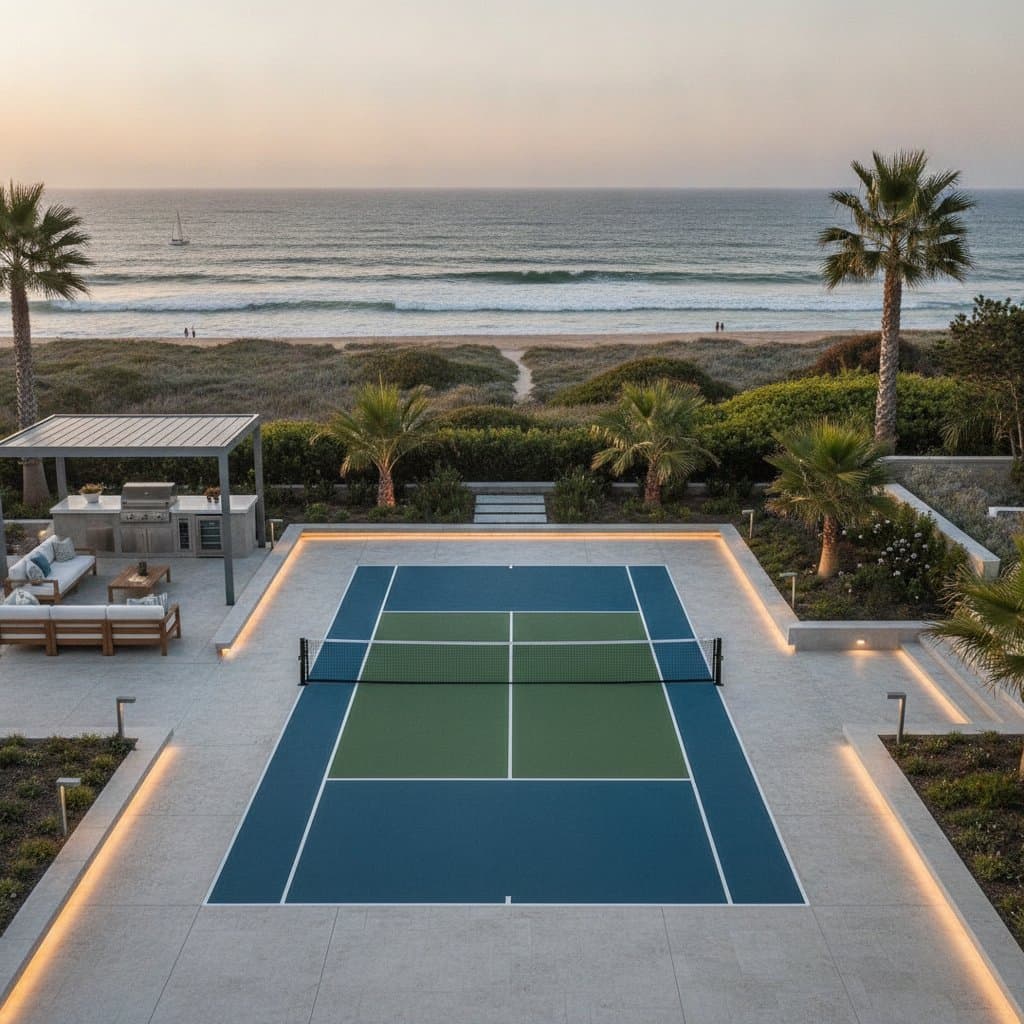
Coastal Homes Add Pickleball Courts as Outdoor Trend
Pickleball has moved beyond community centers into private backyards along the coast. Homeowners from San Diego to Cape Cod now install dedicated courts that support daily exercise and social gatherings. These additions also strengthen property appeal during resale.
The average backyard pickleball court costs between 25,000 and 50,000 dollars. Material selection, site grading, and design details determine the final price. Coastal conditions often push totals higher because of drainage requirements and salt-resistant components.
Average Cost of a Backyard Pickleball Court
A standard full-size court runs about 35,000 dollars when materials, labor, and basic preparation are included. Smaller courts or those built on existing slabs cost less. Luxury versions with lighting, fencing, and custom finishes can reach 60,000 dollars or more.
Coastal projects frequently exceed national averages. Extra grading, corrosion protection, and local permit rules add 10 to 15 percent to the budget.
| Project Type | Typical Cost Range | Average Cost |
|---|---|---|
| Basic Residential Court | 20,000 - 30,000 dollars | 25,000 dollars |
| Mid-Range Coastal Court | 30,000 - 45,000 dollars | 37,500 dollars |
| Luxury or Custom Design | 45,000 - 60,000+ dollars | 52,000 dollars |
Cost by Material
Surface choice affects both upfront price and long-term upkeep.
| Surface Material | Cost per Square Foot | Durability | Maintenance Level | Typical Use |
|---|---|---|---|---|
| Asphalt | 4 - 7 dollars | Moderate | Moderate | Budget-friendly installations |
| Concrete | 6 - 10 dollars | High | Low | Long-lasting and smooth surface |
| Modular Tile Systems | 8 - 12 dollars | High | Low | Coastal climates, easy drainage |
| Acrylic Overlay | 2 - 4 dollars (added) | Moderate | Low | Professional look and feel |
Concrete remains the preferred base in coastal areas. An acrylic sports coating applied on top improves traction and shields the surface from sun and moisture.
Labor and Installation Costs
Labor represents 40 to 50 percent of total project expense. Contractors typically charge 25 to 50 dollars per square foot. Coastal sites may require retaining walls or additional drainage work.
Key labor components include excavation and site prep at 3,000 to 5,000 dollars, concrete work at 8,000 to 12,000 dollars, surface coating at 2,000 to 3,500 dollars, and fencing plus lighting at 4,000 to 8,000 dollars. Permits add another 500 to 1,500 dollars.
Factors That Influence the Total Cost
Several site-specific elements affect final pricing. Sloped lots increase excavation needs. Salt air requires coated hardware and fencing. Proper court orientation reduces sun glare and surface wear. LED lighting extends evening use but raises cost. Multi-use designs need extra markings and reinforcement. Integrated landscaping adds visual appeal yet increases the budget.
How to Save Money on a Pickleball Court
- Select a compact half-court layout to cut material and labor expenses.
- Convert an existing patio or tennis court slab when possible.
- Install lighting after the court is complete if evening play becomes regular.
- Purchase coatings and fencing in larger quantities for better pricing.
- Clear vegetation and perform light grading before contractors arrive.
DIY vs. Hiring a Professional
Full DIY projects carry risk because precise leveling and drainage are difficult to achieve without specialized tools. Potential savings reach 10,000 to 15,000 dollars, yet many owners encounter permit issues or surface problems later.
Professional installation delivers correct grading, durable surfacing, and warranty coverage. Coastal properties benefit most from this approach because moisture control and material selection require experience.
Common Mistakes to Avoid
Poor drainage allows standing water that damages coatings. Indoor surfaces fade quickly outdoors. Many towns require permits for hardscape additions. Paddle noise can affect neighbors, so acoustic fencing or dense shrubs provide useful buffers.
Why Coastal Homes Lead the Trend
Coastal residents prioritize outdoor living spaces. Pickleball fits this preference because the court footprint is smaller than tennis and suits players of all ages. Many owners place courts near pools or outdoor kitchens to create connected recreation zones.
Well-designed courts can increase resale value by 5 to 10 percent. Buyers view these amenities as both practical and upscale.
Maintenance and Lifespan
Regular cleaning and annual inspections keep surfaces in good condition. Concrete courts with acrylic coatings typically last 15 to 20 years when properly maintained.
Frequently Asked Questions About Pickleball Courts
How big is a standard pickleball court?
A regulation court measures 20 feet wide by 44 feet long. Add a 10-foot buffer zone on each side for comfortable play.
Do I need a permit for a backyard court?
Most municipalities require permits for permanent hardscape features. Check local zoning rules before construction begins.
Can a pickleball court add value to my home?
Yes. Lifestyle amenities such as private courts appeal to coastal buyers and support stronger resale prices.
What surface performs best in coastal climates?
Concrete with an acrylic sports coating resists humidity and salt while providing consistent traction.
How long does installation take?
Most residential projects require three to six weeks from start to finish.
Can I convert an old tennis court into a pickleball court?
Yes. Overlaying an existing tennis court with new markings or modular tiles offers one of the most economical routes.
What type of fence works best?
Vinyl-coated chain link or aluminum fencing resists corrosion and matches coastal architecture.
Maximizing Your Investment
Plan the court layout around daily use patterns and future landscaping. Choose durable materials suited to local conditions. Schedule professional maintenance each year. These steps protect the initial investment and keep the space enjoyable for years.