
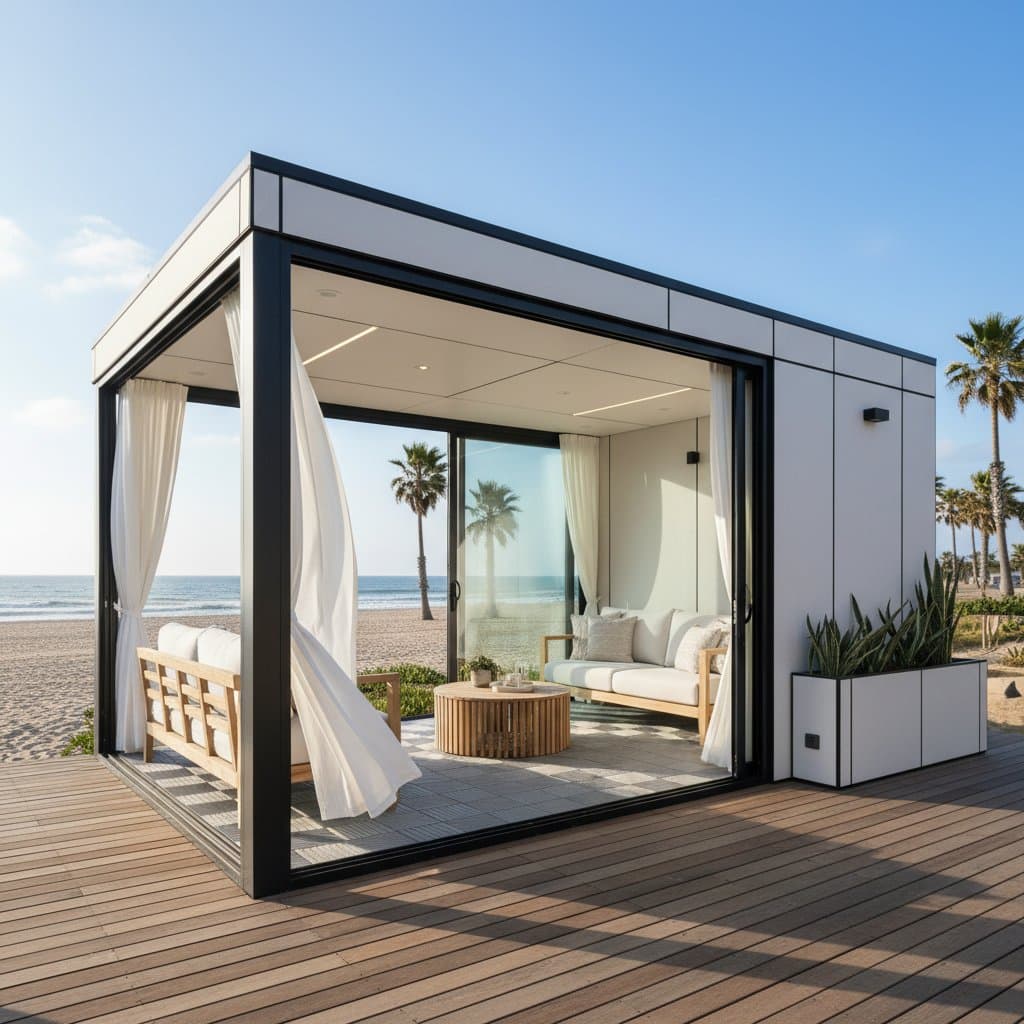
Effortless Coastal Living with Snap-Together Outdoor Rooms
Imagine a mild ocean breeze flowing through your patio, sunlight filtering softly over the space, and an area that seamlessly extends your indoor comfort. For those living along the coast, outdoor spaces represent more than convenience; they embody a way of life. Snap-together outdoor rooms simplify this vision. These prefabricated patio systems enable the creation of attractive, practical areas without extended construction timelines or fluctuating expenses.
This guide explains the appeal of snap-together outdoor rooms, details their pricing, and compares self-installation with professional services. It also covers budget-saving methods, favored configurations, and essential upkeep advice to maintain your outdoor area in pristine condition throughout the year.
Key takeaway: Snap-together outdoor rooms generally range from $5,000 to $25,000 in cost, varying by dimensions and components. Installation requires far less time than conventional methods and suits coastal conditions well. For a complete solution, obtain estimates from qualified specialists in modular outdoor installations.
Factors Influencing Costs
Snap-together outdoor rooms vary widely in design, from compact enclosed retreats to expansive gathering pavilions. Total expenses typically fall between $5,000 and $25,000, with many owners investing about $12,000 for a medium-sized unit featuring a roof, screening, and built-in illumination.
Several elements determine the overall expense:
- Size and configuration: Units covering approximately 100 square feet begin around $5,000, whereas those spanning 300 square feet exceed $20,000. Incorporating separate areas, like a dining zone and cooking alcove, elevates material and labor demands.
- Construction materials: Aluminum and composite frameworks offer economical choices, but marine-grade timber and stainless steel elevate prices. Options such as glass enclosures, insulated barriers, and high-end flooring contribute further.
- Roofing and enclosure options: Systems with retractable covers or adjustable louvers add $2,000 to $5,000. Fixed insulated sections cost marginally less yet provide reduced ventilation.
- Integrated utilities and amenities: Elements like illumination, overhead fans, and cooking stations necessitate wiring and piping. Budget an extra $1,000 to $5,000 based on the setup's intricacy.
- Preparation of the site: Tasks including ground leveling, concrete foundation work, or drainage improvements range from $800 to $3,000.
- Regulatory approvals and standards: Certain coastal regions mandate permits for enclosed builds. Confirm requirements prior to proceeding to prevent penalties or setbacks.
Prefabricated packages streamline financial planning, as they include panels, fasteners, and fittings. Hiring experts for assembly adds $1,500 to $6,000, influenced by terrain and engineering needs.
Comparing DIY and Professional Installation
Manufacturers promote snap-together systems as suitable for self-assembly, and this holds true to an extent. Components often connect via interlocking edges or tool-free mechanisms, permitting completion in one to three days for most sizes. That said, the task demands certain abilities that not all homeowners possess.
DIY Installation
- Skill level: Moderate
- Duration: 1 to 3 days
- Essential tools: Power drill, spirit level, stepladder, rubber mallet, and caulking compound
- Advantages: Reduces labor expenses by $2,000 to $5,000 and provides personal involvement
- Potential issues: Incorrect alignment or faulty sealing may cause water intrusion or weakened stability
Professional Installation
Engaging certified installers guarantees accurate construction and adherence to regulations. This approach proves particularly beneficial for seaside properties, where gusts and humidity challenge build quality.
- Skill level: Expert
- Duration: 1 to 2 days for typical setups
- Advantages: Includes guarantees, superior waterproofing, and tailored adaptation to the site
- Disadvantages: Increases initial investment
For designs incorporating water lines, electrical systems, or climate control, expert assistance is advisable. Select contractors experienced in prefabricated modules and regional coastal guidelines.
Ensuring Durability Through Maintenance
Seaside settings pose unique demands on exterior materials, with salt-laden air, humidity, and fluctuating temperatures accelerating wear. Fortunately, modular constructions withstand these conditions effectively with basic care.
Standard maintenance routine:
- Periodic rinsing: Apply fresh water to remove salt deposits and debris biweekly.
- Seal evaluation: Examine joints and gaskets for damage or looseness semiannually.
- Finish renewal: For coated or painted surfaces, reapply protective layers promptly to avert rust.
- Mechanism lubrication: Service adjustable roofs or gliding panels yearly to maintain fluidity.
- Drainage oversight: Clear channels and ensure proper grading to avoid water accumulation.
Regular attention extends the lifespan of these structures to 15 to 25 years amid coastal exposure. The modular nature allows straightforward replacement of specific parts, highlighting a key benefit over fixed builds.
Frequently Asked Questions
How long does installation of a snap-together outdoor room require?
Assembly of most systems takes one to three days, scaled to the project's scope. Experts frequently finish sooner by addressing approvals and groundwork beforehand.
Is a permit necessary for a prefabricated outdoor room?
Requirements vary by jurisdiction and whether the unit encloses space or connects to the residence. Detached open structures might bypass permits, but sealed ones typically need them. Verify locally before purchase.
Do these systems resist coastal winds and dampness?
Indeed, many feature engineering for elevated wind loads and anti-corrosion properties. Opt for marine-suitable selections like coated aluminum frames or rust-resistant fittings.
Are snap-together rooms efficient in energy use?
Units with thermal barriers or shaded glazing aid in temperature control. Incorporating fans or coverings enhances usability with minimal power consumption.
Is it possible to relocate or modify a modular room in the future?
Numerous designs support adaptability. Disassemble components, reposition elements, or augment the arrangement to match evolving preferences.
Steps to Build Your Coastal Retreat
Select a kit aligned with your space and budget, then assess site needs for a stable foundation. Choose materials suited to marine conditions, and decide on self or hired assembly based on your expertise. Integrate features like lighting or fans for added enjoyment. With these steps, your snap-together outdoor room becomes a durable haven for seaside relaxation.