
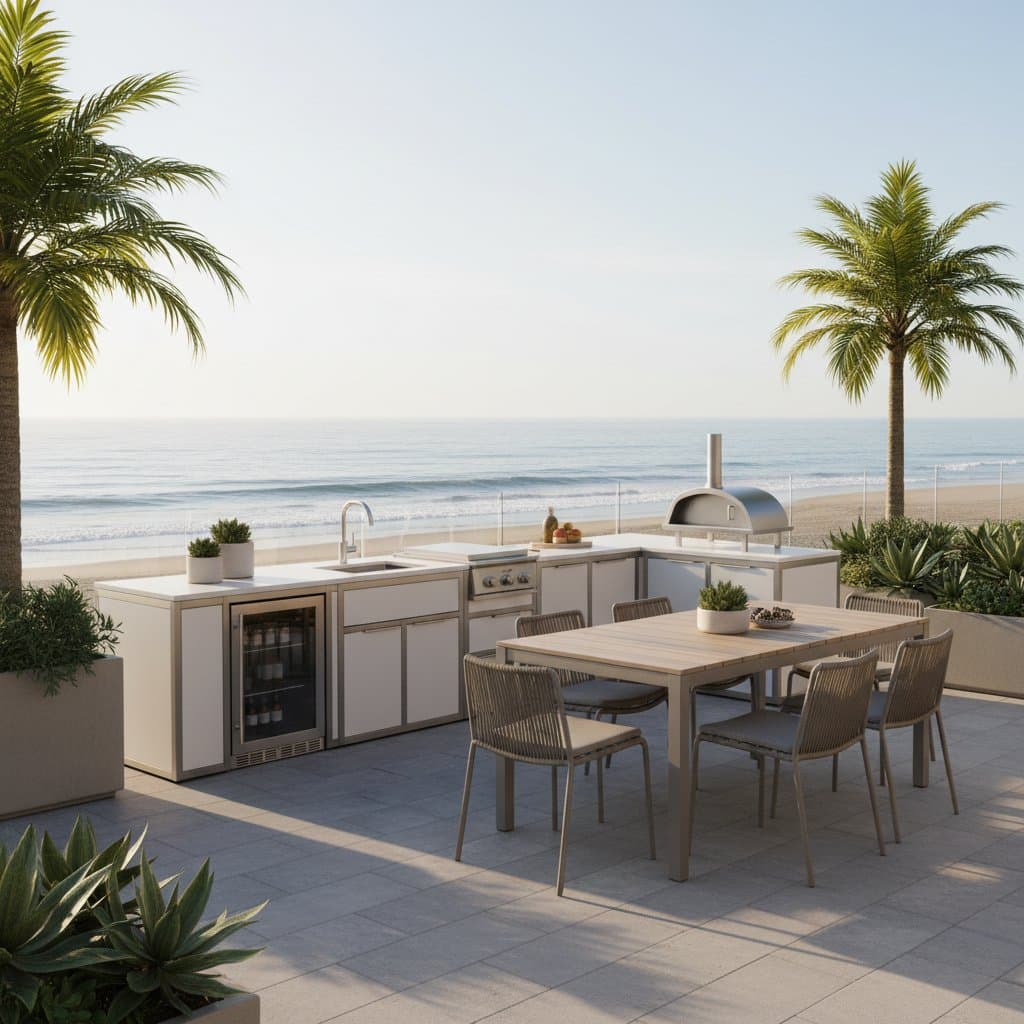
Modular Outdoor Kitchens: Skip Concrete for Effortless Outdoor Bliss
Creating an outdoor kitchen once required hiring a mason, pouring concrete, and enduring weeks of disruption as the design materialized. Modular outdoor kitchens change that equation entirely. These pre-engineered systems assemble in days, cost far less than traditional constructions, and provide professional-level cooking capabilities.
In coastal areas such as San Diego, where outdoor living defines everyday routines, a modular kitchen offers a direct path to an elegant, low-maintenance space for entertaining. This guide details the costs of modular outdoor kitchens, compares them to concrete alternatives, and outlines planning strategies for optimal value and satisfaction.
Cost Breakdown by Size and Scope
Modular kitchen expenses vary based on scale and features. Consider the size of your space and intended use when budgeting.
Small Modular Kitchen (Basic Configuration)
- Estimated Cost: $8,000 to $12,000
- Components: 6 to 8 feet of cabinetry, one grill base, small preparation counter, and compact refrigerator
- Best For: Compact patios or backyards with basic cooking requirements
Mid-Range Modular Kitchen
- Estimated Cost: $13,000 to $18,000
- Components: 10 to 14 feet of cabinetry, large grill, side burner, sink, refrigerator, and storage drawers
- Best For: Households that entertain regularly or prepare family meals
Large or Premium Modular Kitchen
- Estimated Cost: $19,000 to $30,000 or more
- Components: 15 or more feet of cabinetry, multiple cooking stations, pizza oven, bar seating, integrated lighting, and stone-effect cladding
- Best For: High-end residences or avid outdoor chefs
Labor Expenses and Installation Considerations
Labor constitutes 20 to 35 percent of the overall project budget for modular outdoor kitchens. This covers delivery, assembly, and appliance integration.
- Hourly Labor Rate: $70 to $120
- Installation Duration: 2 to 5 days
Traditional concrete kitchens demand masons, plumbers, electricians, and tile experts, which escalates labor expenses. Modular designs simplify the process, often requiring only a team of two or three specialists without specialized trades.
Strategies to Reduce Costs on a Modular Outdoor Kitchen
Modular kitchens represent a significant outlay, yet thoughtful decisions maximize affordability.
- Prioritize core elements. Begin with the grill, counter area, and storage, then incorporate extras like a pizza oven in subsequent phases.
- Select standard arrangements. Linear setups cost less than customized L- or U-shaped designs.
- Limit material variety. Employ a single consistent finish across surfaces to control expenses.
- Utilize an existing foundation. Mount the kitchen on a pre-level patio to eliminate new concrete pouring.
- Choose reliable mid-tier appliances. High-end models enhance aesthetics but can inflate appliance costs substantially.
- Combine services for savings. Suppliers frequently discount bundled delivery and installation packages.
- Perform simple tasks independently. Homeowners can manage basic panel placement or hardware attachment to trim labor fees.
DIY Options Versus Professional Installation
Assembling a modular kitchen independently appeals to some, though not every system suits self-installation despite DIY marketing.
| Task | DIY Possible | Professional Advised | Additional Details |
|---|---|---|---|
| Basic cabinet assembly | Yes | No | Resembles assembling flat-pack furniture |
| Appliance connections | No | Yes | Demands licensed experts for safe operation |
| Electrical work | No | Yes | Certified electricians required |
| Gas line setup | No | Yes | Essential for safety and code adherence |
| Countertop placement | Sometimes | Yes | Involves heavy lifting and exact alignment |
Projects involving gas or electricity necessitate professional involvement. Delegate non-technical steps like assembly and cleanup to yourself for savings, while professionals guarantee safety and regulatory compliance.
Pitfalls to Sidestep in Modular Outdoor Kitchen Projects
Steering clear of frequent errors safeguards your investment and promotes longevity.
- Overlook drainage and ventilation at your peril. Ensure proper airflow behind units and pathways for water drainage around bases.
- Select inappropriate materials. Indoor-grade surfaces degrade rapidly in outdoor conditions.
- Delay utility assessments. Extending gas or power lines post-installation proves costly and disruptive.
- Pack in excessive modules. Overcrowding diminishes functionality and flow.
- Disregard protection from elements. Unshielded exposure to sun and precipitation accelerates material breakdown faster.
- Fail to secure units properly. Anchor cabinets firmly to resist movement from winds or earthquakes.
Frequently Asked Questions on Modular Outdoor Kitchens
Does a modular outdoor kitchen require permits?
Permits seldom apply unless incorporating gas or electrical elements. Consult your local building authority prior to commencement. Plug-and-play or mobile configurations typically bypass formal reviews.
What is the installation timeline?
Expect two to five days for most setups. Factors include module count, site accessibility, and utility integrations.
Which appliances fit modular designs?
Incorporate grills, side burners, refrigerators, sinks, ice makers, and pizza ovens. Select models certified for exterior environments to uphold safety and endurance standards.
Do modular kitchens endure coastal conditions?
Affirmative. Superior units feature powder-coated aluminum, stainless steel, or marine-grade polymers that combat salt-induced corrosion. Steer clear of raw metals or particleboard constructions.
Is relocation of a modular kitchen feasible?
Numerous systems qualify as semi-permanent, allowing disassembly for relocations or patio redesigns. This adaptability surpasses fixed concrete installations.
Which elements boost an outdoor kitchen's worth?
Integrated grills, practical counters, and resilient storage yield the highest returns. These blend aesthetic enhancement with everyday utility.
How should one care for a modular outdoor kitchen?
Clean surfaces routinely to clear salt and debris. Apply gentle cleaners and shield appliances with covers during idle periods. Annually examine seals and hardware for signs of deterioration.
Tailoring Designs for Coastal Environments
Coastal residents must harmonize outdoor kitchens with local challenges like salt exposure, moisture, and fluctuating temperatures. Opt for materials that demand minimal maintenance while resisting environmental stresses.
Select pale hues to deflect heat, impermeable counters to repel stains, and sheltered configurations to guard against weather. Pair the kitchen with coordinated seating or a serving bar to integrate it fluidly with your outdoor area.
Strategic lighting elevates both practicality and mood. Install LED under-cabinet strips for precision tasks, focused beams over cooking areas, and ambient edge lights for evenings. Automated systems enable effortless adjustments to intensity and tone.
Sustaining Longevity Through Routine Care
With diligent upkeep, a modular outdoor kitchen endures 20 years or longer. Regularly torque fittings, cleanse cooking surfaces, and monitor for rust. Employ protective covers on grills and appliances, particularly in saline proximity, to mitigate accelerated degradation.
Steps to Launch Your Outdoor Kitchen Project
Begin by evaluating your space and needs. Consult reputable suppliers for custom consultations. Secure quotes encompassing full installation to align with your vision and budget, transforming your backyard into a enduring haven for gatherings and culinary pursuits.