
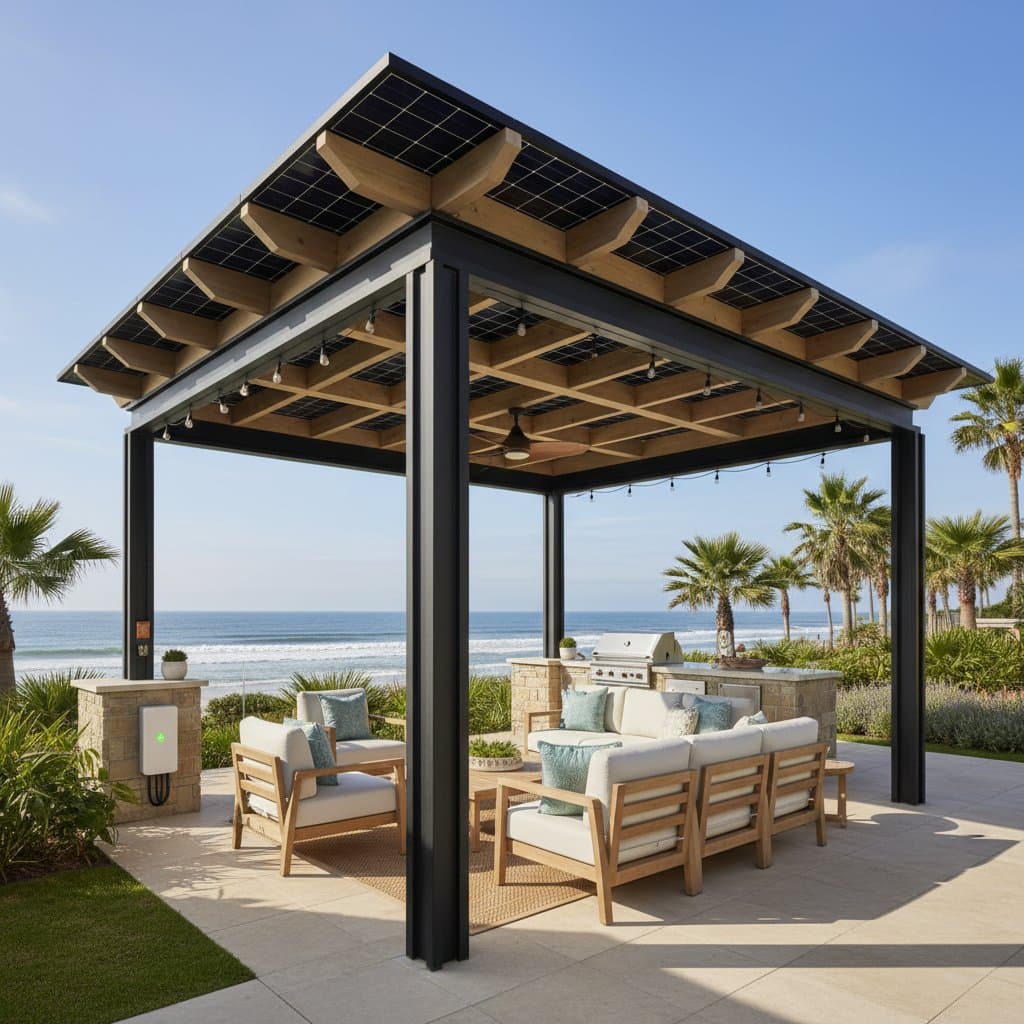
9 Solar Pergola Ideas to Power Coastal Patios and Reduce Glare
Coastal living presents unique opportunities and challenges with abundant sunshine. The ocean breeze provides natural cooling, yet intense glare from water and sky often makes outdoor spaces uncomfortable. Solar pergolas address this issue elegantly by providing shade and generating renewable energy to support outdoor amenities.
These structures integrate seamlessly into patio designs, offering both aesthetic appeal and functional benefits. They protect against ultraviolet rays, lower electricity costs, and enhance overall enjoyment of seaside environments. The following nine ideas demonstrate practical applications tailored for coastal settings, combining energy efficiency with stylish elements.
Essential Features for Energy Generation and Shade
1. Integrated Solar Roof Panels
Solar pergolas equipped with built-in roof panels harvest sunlight while blocking direct rays. These panels serve as a protective cover, shielding patio furniture from occasional coastal drizzle. Select models with high-efficiency photovoltaic cells to maximize output in variable weather conditions.
Practical Advice: Opt for panels featuring anti-reflective surfaces to minimize light bounce-back, ensuring a glare-free zone around seating arrangements. Position the pergola to face south for optimal solar exposure throughout the day.
[Image: Solar pergola with integrated roof panels over a coastal patio]
2. Adjustable Louvered Canopy
Systems with motorized louvers allow precise control over sunlight penetration. During peak afternoon heat, fully close the louvers to create deep shade; partially open them later to capture softer evening illumination. Solar-charged motors operate quietly without reliance on external power sources.
This feature adapts to daily light changes, maintaining comfort without manual adjustments. Integration with weather sensors can automate the process, closing louvers during sudden gusts common in coastal areas.
3. Concealed Wiring and Battery Storage
Designs that route wiring through structural beams maintain a tidy appearance. Incorporate compact battery units to store excess energy, providing power for evening illumination or brief interruptions in grid supply. Lithium-ion batteries offer reliable performance in humid environments.
Regular inspections ensure connections remain secure against corrosion. This setup supports off-grid functionality, ideal for remote coastal properties.
Stylish Designs Inspired by Coastal Aesthetics
4. Whitewashed Wood and Steel Frames
Combine weathered wood finishes with powder-coated steel for durability and visual harmony. White or light gray tones evoke beachside serenity, complementing sandy shores and azure waters. These materials resist fading from constant sun exposure.
Customize beam spacing to allow breeze flow while providing ample coverage. Pair with neutral cushions for a cohesive outdoor lounge area.
5. Built-In Lighting Powered by Solar Energy
Install LED strips or pendant lights connected directly to the solar system for ambient evening lighting. Efficient diodes ensure prolonged operation on stored power, illuminating pathways and dining surfaces.
Practical Advice: Incorporate timers or sensors that activate lights only when motion is detected, conserving energy for extended use. Dimmable options allow adjustment for romantic dinners or casual gatherings.
6. Glass or Polycarbonate Roof Inserts
Translucent panels diffuse sunlight, delivering soft illumination without harsh reflections. Position these inserts strategically between opaque solar sections to balance light and shade. Polycarbonate options provide shatter resistance suitable for windy locales.
This configuration preserves views of the horizon while reducing eye strain during meals. Clean surfaces quarterly to maintain clarity and efficiency.
[Image: Coastal solar pergola with translucent roof inserts and string lights]
Innovative Add-Ons for Enhanced Functionality
7. Solar-Powered Fans
Mount ceiling fans that draw from the pergola's energy reserves to circulate air on still, humid days. Variable speeds accommodate different comfort levels, directing airflow to dissipate heat trapped under the canopy.
Blade designs optimized for outdoor use prevent water accumulation during light rains. This addition lowers perceived temperatures by several degrees, extending usable patio hours.
8. Electric Vehicle Charging Integration
Link the solar output to a dedicated charging station, transforming the patio into a multifunctional zone. Weatherproof outlets handle coastal moisture, supporting overnight vehicle recharges without indoor dependency.
Assess power needs based on vehicle specifications to size the system appropriately. This setup promotes sustainable transportation aligned with eco-conscious living.
9. Drip-Irrigation Power Source
Dedicate a portion of generated energy to a low-voltage pump for drip irrigation lines. This system delivers precise water to container plants or garden beds, thriving in salty coastal soil.
Timers synchronize watering with solar availability, avoiding overuse. Integrate soil moisture sensors for automated adjustments, ensuring plant health with minimal intervention.
Key Considerations for Installation
Review municipal codes regarding solar installations and structural permits. Prioritize materials like galvanized steel or teak wood treated for salt resistance to endure marine environments. Analyze site-specific sun paths using tools like solar calculators to optimize panel tilt and orientation.
Engage professionals experienced in coastal builds to assess wind loads and foundation stability. Budget for initial assessments to avoid costly modifications later.
Common Questions Addressed
What is the typical cost of a solar pergola?
Expect ranges from $10,000 to $25,000, influenced by dimensions, panel capacity, and customization levels. Factor in potential rebates for renewable energy systems.
Are solar pergolas suitable for coastal climates?
Constructed with marine-grade components, they endure high winds, salt spray, and humidity effectively. Routine rinsing removes buildup to preserve longevity.
What maintenance do solar pergolas require?
Annual inspections of electrical components and panel cleaning suffice. Lubricate moving parts seasonally to ensure smooth operation.
Maximizing Benefits in Coastal Settings
A well-designed solar pergola elevates patio functionality, delivering reliable shade and renewable power. Residents enjoy extended outdoor time with reduced glare, cooler microclimates, and decreased reliance on traditional energy sources. This investment enhances property value while fostering sustainable seaside living.