
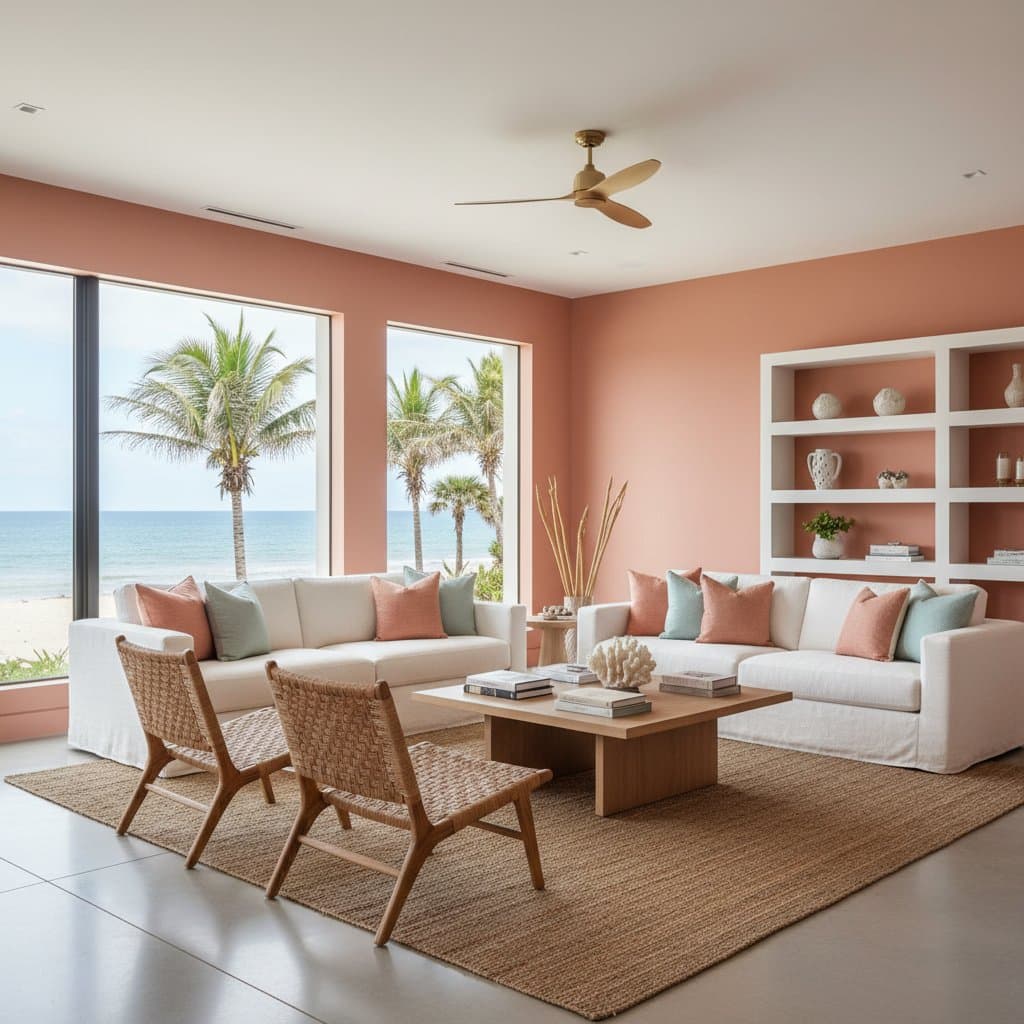
Coral Paint Colors Defining Beach Homes in 2026
Coral paint evokes the essence of a serene ocean breeze in a beach house. Picture the sunset painting the horizon in soft pinks, mirroring the hue on your walls. This color radiates vitality, coastal authenticity, and distinctive character. Residents in seaside communities increasingly select coral to introduce luminosity into living spaces while maintaining an air of refinement.
For those considering a renovation of a beach property, coral presents a compelling option. This guide examines prominent coral variations, their application in indoor and outdoor settings, and effective combinations with complementary hues for harmonious coastal aesthetics. Readers gain insights into expense estimates for painting initiatives, prudent budget management techniques, and guidance on opting for self-directed efforts or professional services.
Key takeaway: Coral paint imparts enduring coastal allure to beach residences, with comprehensive interior painting expenses generally spanning $2,300 to $7,500, influenced by area dimensions and finish standards. Exterior endeavors typically range from $3,800 to $9,200. To secure a pristine, durable outcome, obtain estimates from highly regarded specialists experienced in marine-adjacent conditions.
Cost Factors
The expense of applying coral paint to a beach home fluctuates based on multiple elements.
Interior painting costs:
- Small spaces (up to 1,000 sq. ft.): $2,300 to $3,800
- Medium spaces (1,500 to 2,000 sq. ft.): $4,000 to $6,000
- Large spaces (2,500+ sq. ft.): $6,500 to $7,500
Exterior painting costs:
- Single-story homes: $3,800 to $6,000
- Two-story homes: $6,500 to $9,200
Influential cost components include:
- Paint quality: High-end formulations featuring ultraviolet resistance and safeguards against saline exposure command higher prices yet provide extended durability.
- Surface preparation: Tasks such as sanding, priming, or repairing stucco and timber contribute to increased labor demands.
- Labor rates: Regions along the coast frequently incur elevated charges owing to market pressures and regulatory stipulations.
- Color intensity: The pigmentation in coral shades may necessitate several layers for complete opacity, particularly when applied over darker substrates.
- Trim and accents: Incorporating elements in white or turquoise expands the quantity of paint required and extends application duration.
Professionals generally finish an interior update within 2 to 4 days, whereas exterior work extends to 3 to 6 days, contingent on meteorological conditions and material characteristics.
Essential Considerations Before Painting
Prior to commencing a coral paint initiative, evaluate the impact of illumination, material textures, and environmental conditions on the final appearance.
- Natural light: Coral appears distinctly under varying light temperatures. Apply test patches across several surfaces and monitor them during diverse periods of the day.
- Finish type: Sheen levels amplify light reflection but accentuate irregularities. Flat finishes conceal blemishes yet may deteriorate more rapidly under intense solar exposure.
- Climate exposure: Elevated moisture and airborne salts in coastal areas accelerate paint breakdown. Select products designated for maritime or shoreline resilience.
- Surface preparation: Distinct primers suit stucco versus wood. Thoroughly remove salt deposits from outdoor areas before application.
- Adjacent colors: Coral may conflict with existing roof or trim shades. Employ digital visualization software or physical swatches to simulate potential pairings.
Strategies for Cost Efficiency
Achieve a striking coral paint overhaul while managing expenditures effectively. The following approaches prove practical:
- Accent walls exclusively: Deploy coral in prominent zones, such as adjacent to headboards or encircling window casings.
- Bulk purchasing: Opt for substantial volumes to lower the cost per gallon and ensure uniform coloration.
- Self-preparation: Handle initial steps like abrasion, masking, and surface cleansing to diminish professional labor hours.
- Mid-tier paint selections: Although superior products endure longer, numerous intermediate brands deliver strong performance in saline settings.
- Off-peak scheduling: Contractors frequently provide reductions during periods of reduced activity, such as winter seasons.
Frequently Asked Questions
1. What colors pair effectively with coral in a beach home?
Neutral whites, sandy beiges, and gentle blues form a cohesive scheme. For intensified contrast, combine coral with teal or navy accents. Organic elements including bamboo, seagrass, and driftwood enhance coral's appeal seamlessly.
2. Is coral overly vibrant for expansive areas?
This depends on the selected tone. Subdued coral or blush variants suit broad applications. To foster tranquility, restrict coral to feature walls or integrate it via furnishings such as cushions or floor coverings.
3. How does one select an appropriate coral shade based on lighting?
Examine swatches directly on walls within the space. Rooms oriented northward favor warmer coral iterations, whereas sun-drenched areas accommodate richer or cooler variants.
4. Are specialized paints necessary for beach environments?
Affirmative. For exteriors, prioritize formulations resistant to humidity, salt, and ultraviolet rays. Interiors benefit from additives that resist mold in damp coastal atmospheres.
5. How can one trial coral colors prior to full commitment?
Acquire sample containers and apply them to two-foot sections on varied walls. Assess the hues under both morning and evening illumination to capture diurnal variations.
Integrating Coral for Lasting Coastal Harmony
Once applied, coral paint fosters a dynamic interplay with natural surroundings in beach homes. It softens harsh light and amplifies sunset views, creating spaces that evolve with the tides. Maintain vibrancy through routine cleaning and periodic touch-ups, ensuring the palette remains a timeless reflection of seaside vitality.