
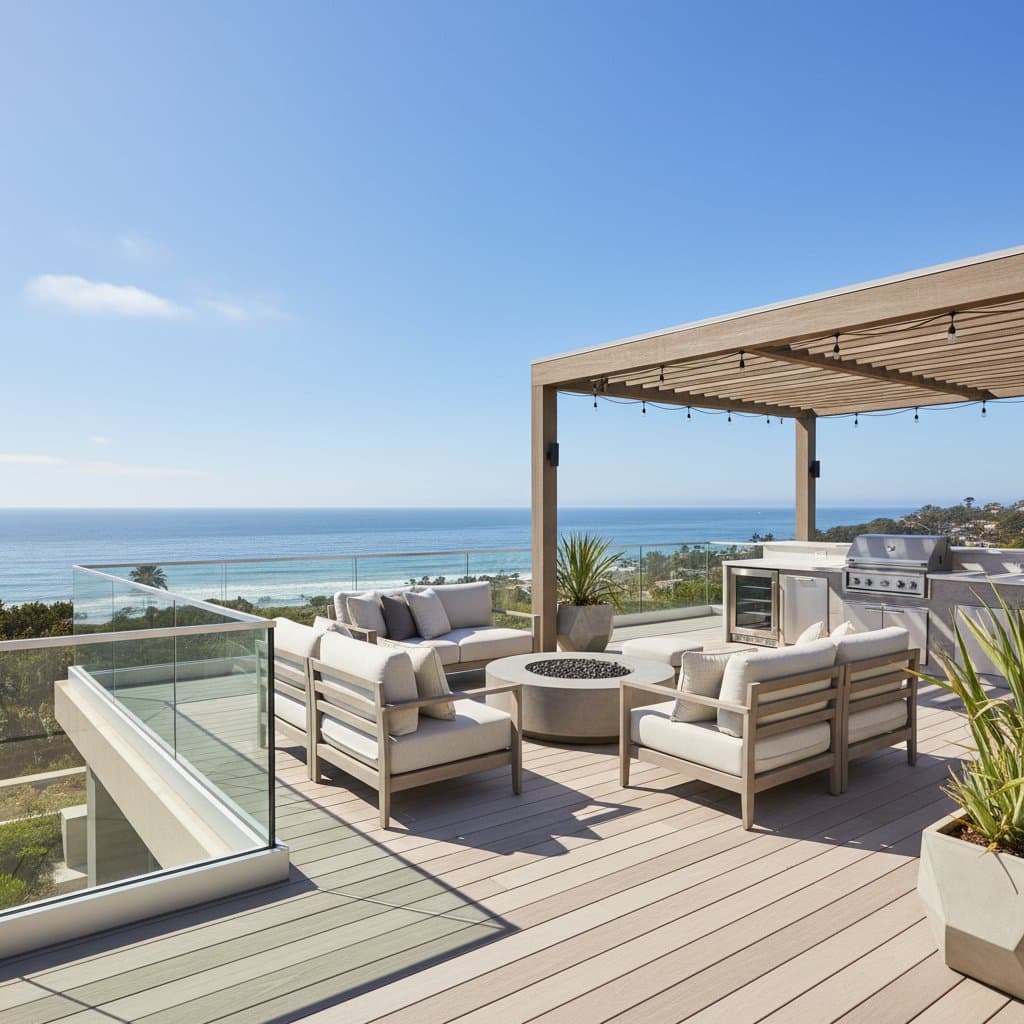
Introduction to Rooftop Decks in Coastal Settings
Coastal properties benefit greatly from rooftop decks, which convert flat or sloped roofs into functional extensions of living space. These additions provide panoramic ocean views, fresh air circulation, and a private retreat above the bustle of beachfront life. Recent data indicates that such installations can increase home values by approximately $45,000, making them a smart investment for properties in areas like San Diego.
Homeowners appreciate the versatility of rooftop decks for relaxation, entertaining, or even light gardening. However, success depends on careful planning to address unique seaside challenges such as high winds, salt exposure, and frequent moisture. This article outlines key considerations, from initial design to long-term upkeep, to help readers achieve a durable and aesthetically pleasing result.
Professional Installation Essentials
Engaging a licensed contractor remains crucial for rooftop deck projects. Professionals guarantee adherence to local building codes, ensure structural integrity, and incorporate effective drainage systems to avoid water accumulation. Installation timelines typically span one to three weeks, influenced by deck dimensions and prevailing weather conditions.
Labor expenses generally comprise 40 to 60 percent of the overall project budget. For intricate designs involving custom features or elevated heights, obtain estimates from contractors experienced in coastal environments. These specialists often recommend reinforcements like additional joists or steel beams to support live loads from gatherings or heavy furnishings.
Strategies for Cost Savings
Budget-conscious homeowners can implement several approaches to reduce expenses without sacrificing quality.
- Leverage existing access. Utilize current stairwells or attic openings to minimize new framing requirements, potentially saving several thousand dollars.
- Select economical materials. Opt for pressure-treated lumber or interlocking composite panels instead of premium options like natural stone or ceramic tiles.
- Phase the construction. Begin with a foundational platform and incorporate elements such as seating or outdoor kitchens in subsequent updates.
- Incorporate drainage from the outset. Design with adequate slopes and impermeable membranes to avert future leak repairs, which can escalate costs significantly.
- Solicit competitive bids. Contractor rates fluctuate considerably in coastal markets; comparing at least three quotes often uncovers more favorable terms.
These tactics allow for a high-return project while keeping expenditures manageable, often capping total costs at $50,000 to $100,000 for a standard 400-square-foot deck.
Key Factors Influencing Design and Feasibility
Adapting to Coastal Climate and Exposure
Seaside conditions demand resilient construction. High humidity, airborne salt, and gusty winds accelerate wear on standard materials. Choose corrosion-resistant options such as galvanized or stainless steel hardware, along with cable railings rated for marine use and coatings that block ultraviolet degradation.
Engineers often specify wind-load calculations for coastal builds, ensuring decks withstand speeds up to 110 miles per hour. Proper ventilation beneath the decking prevents mold growth in humid climates.
Ensuring Maintenance and Long-Term Durability
Select materials that align with maintenance preferences. Natural wood surfaces require resealing every two to three years to maintain appearance and integrity, whereas composite decking or porcelain pavers need only routine cleaning. Annual examinations of waterproofing elements, including edge flashing and seam seals, help identify issues early.
Durable decks in coastal zones typically endure 20 to 30 years with consistent care. Investing in high-quality underlayments, such as rubberized membranes, extends lifespan by shielding against roof penetrations.
Balancing Style and Practical Function
Define the deck's primary purpose to guide layout decisions. A serene lounge area might feature modular sofas and ambient lighting, while an entertainment-focused space could include integrated grills, wet bars, or fire pits. Incorporate shade solutions like retractable awnings and privacy features such as frosted glass panels to optimize usability throughout the day.
Aesthetic cohesion with the home's architecture enhances appeal. For modern coastal styles, sleek metal accents pair well with clean lines; traditional vibes benefit from teak or cedar tones.
Navigating Permits and Safety Standards
Rooftop additions trigger specific regulatory oversight. Local authorities enforce height restrictions and load-bearing mandates, particularly in coastal districts prone to seismic activity or hurricanes. Submit detailed engineering reports and secure permits prior to any groundwork.
Safety features include railings at least 42 inches tall with gaps no wider than four inches, plus nonslip stair surfaces. Fire-resistant materials prove essential in wildfire-vulnerable regions.
Practical Tips for Maintenance and Longevity
Regular upkeep preserves both functionality and visual charm.
- Conduct routine cleaning. Remove leaves and sand with a broom, followed by a gentle soap rinse to eliminate salt residues.
- Perform yearly inspections. Examine seals, bolts, and drainage components for signs of deterioration.
- Reseal wooden elements. Refresh protective coatings biennially to combat sun and moisture damage.
- Safeguard accessories. Select furnishings with powder-coated metal frames and stow removable items during inclement weather.
- Maintain water flow. Clear gutters and scuppers promptly after storms to prevent pooling.
Following these practices minimizes repair needs and sustains the deck's value over decades.
Common Questions About Rooftop Decks
What load capacity should a rooftop deck support?
Designs typically accommodate 40 pounds per square foot as a minimum, though coastal versions often require 60 pounds or more to handle crowds, planters, and equipment. Consult a structural engineer for a site-specific assessment.
Is a building permit necessary for installation?
Affirmative. Jurisdictions mandate approvals and technical submissions, with coastal areas imposing additional rules for elevation and environmental impact.
Can a hot tub be added to the deck?
Possible, provided reinforcements support the tub's weight, which may exceed 3,000 pounds when operational. Professional load analysis remains non-negotiable.
Which materials suit coastal environments best?
Synthetic composites and porcelain tiles excel due to their resistance to water, corrosion, and color loss. Sealed hardwoods serve as viable alternatives with diligent care.
Steps to Launch Your Coastal Rooftop Project
The rise in rooftop decks underscores a shift toward innovative outdoor integration in coastal living. These spaces offer tranquility for personal routines or vibrancy for social occasions, all while enhancing property appeal. Begin by sketching your intended use, verifying roof suitability through an inspection, and establishing a budget that includes 10 to 15 percent for contingencies.
Partner with a certified remodeler versed in seaside challenges to execute the vision. The result yields a secure, stylish addition that enriches home life and delivers substantial return on investment.