
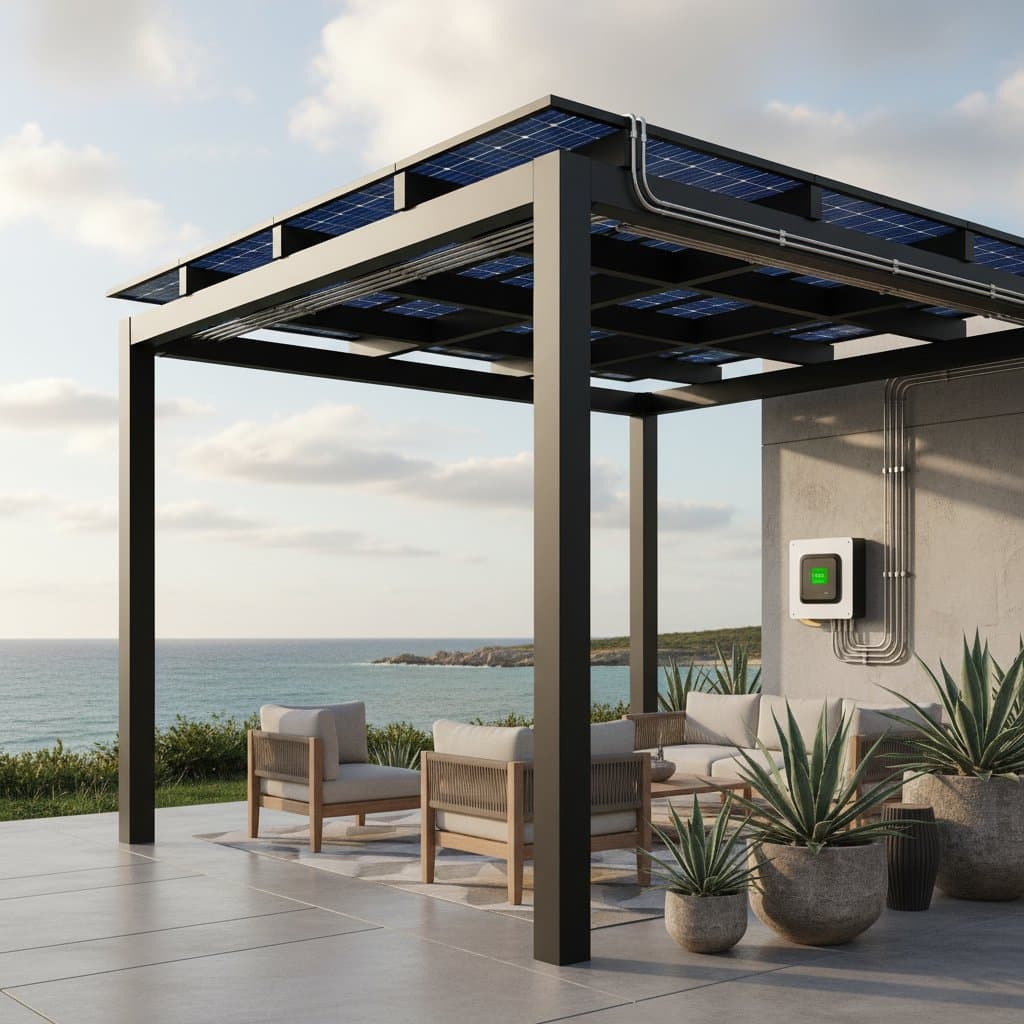
Solar Pergolas Deliver Shade and Renewable Energy for Coastal Patios
Coastal living provides abundant sunlight, gentle breezes, and scenic views that enhance outdoor enjoyment. However, intense sun exposure often renders patios too hot for comfortable use. A solar pergola addresses this issue by offering shade while harnessing solar power to generate electricity. This integration of aesthetics and utility suits homeowners seeking enhanced comfort, visual appeal, and environmental responsibility.
This guide details the mechanics of solar pergolas, key planning considerations, and selection criteria for designs suited to coastal properties. Proper preparation enables the creation of a functional outdoor area that contributes to household energy needs and elevates living spaces.
How Solar Pergolas Function
A solar pergola consists of an open-roofed structure fitted with solar panels on its top beams or slats. These panels absorb sunlight and transform it into usable electricity through photovoltaic cells. The generated power connects to a home's electrical system, either directly or via batteries, to supply energy for patio features like lights or fans, or to reduce overall utility bills.
Positioning plays a critical role in efficiency. Panels tilt at an optimal angle, typically 20 to 40 degrees depending on latitude, to capture maximum sunlight. In coastal areas, where sunlight remains consistent year-round, these systems produce reliable output, often equaling 1 to 5 kilowatts for a standard 10-by-10-foot pergola.
Key Advantages of Solar Pergolas
Solar pergolas merge practical benefits with stylish design elements. Consider these primary gains:
- Electricity production that offsets monthly utility costs by 10 to 30 percent, based on system size and local rates.
- Effective shading that reduces surface temperatures by up to 20 degrees Fahrenheit, preserving outdoor furnishings from UV fading.
- Contemporary aesthetics that align with coastal motifs, using clean lines to enhance curb appeal.
- Environmental contributions by decreasing reliance on fossil fuels and lowering carbon footprints.
- Investment returns via energy savings over 25 years and potential property value increases of 3 to 5 percent.
Steps to Plan Your Solar Pergola Installation
Effective planning aligns the project with personal objectives, financial constraints, and site conditions. Begin with a thorough assessment to ensure seamless integration.
Evaluate Your Patio Layout
Determine the pergola's placement to optimize both shade and energy capture. Coastal patios benefit from south-facing orientations in the Northern Hemisphere to align with peak sun hours.
- Measure available space, aiming for at least 100 square feet to accommodate panels without overcrowding.
- Inspect for obstructions like overhanging branches or buildings that could block 20 percent or more of daily sunlight.
- Test the foundation, such as concrete slabs or wooden decks, for load-bearing capacity of 50 pounds per square foot to support the added weight of panels and framing.
Develop a Budget Framework
Costs for solar pergolas span $5,000 to $20,000, influenced by dimensions, materials, and integrated solar capacity. Factor in incentives like federal tax credits that cover 30 percent of expenses.
Obtain estimates from at least three contractors, specifying inclusions for panels, inverters, wiring, and installation labor. Regional variations in California, for instance, may elevate prices due to seismic standards, so allocate 10 to 15 percent for contingencies.
Choose Durable Materials and Styles
Select components resilient to coastal challenges like saltwater corrosion and high winds. Prioritize low-maintenance options for longevity.
- Frames in aluminum with powder-coated finishes to prevent rust, or stainless steel for superior strength in gusty conditions.
- Wood alternatives such as cedar or redwood treated with marine-grade sealants to mimic natural textures while resisting moisture.
- Panel covers in clear polycarbonate that allows diffused light, reducing glare while protecting against hail or debris.
Styles vary from minimalist aluminum lattices for modern homes to louvered designs that adjust for variable weather, ensuring versatility in coastal settings.
Selecting and Collaborating with Professionals
Professional installation guarantees safety and performance, combining carpentry skills with solar expertise. Engage certified specialists to navigate complexities.
Verify Credentials and Coverage
Confirm the contractor possesses active licenses for general building (Class B in California) and solar photovoltaic installation (C-46 or NABCEP certification). Review proof of $1 million liability insurance and workers' compensation to mitigate risks during construction.
Review Comprehensive Proposals
Demand detailed documentation outlining:
- Projected annual energy yield, calculated using tools like PVWatts for site-specific estimates.
- Lists of panel brands (e.g., monocrystalline for higher efficiency) and mounting hardware.
- Blueprints showing dimensions, anchoring methods, and integration with existing electrical panels.
- Warranties covering 25 years on panels and 10 years on labor.
Discuss Ongoing Maintenance
Inquire about protocols for panel cleaning every three months to remove salt residue, performance monitoring via apps, and annual inspections. Reliable providers offer service contracts to maintain output at 80 percent efficiency over time.
Common Questions About Solar Pergolas
What dimensions suit a typical coastal patio?
Size selections balance coverage and output; a 12-by-12-foot unit shades 144 square feet while generating 2 to 3 kilowatts. Consult an expert for custom measurements.
Do these structures endure harsh coastal elements?
Constructed with galvanized steel anchors and UV-resistant coatings, they withstand winds up to 100 miles per hour and salty air when properly maintained.
What energy production can homeowners expect?
A mid-sized system yields 3,000 to 6,000 kilowatt-hours annually in sunny regions, covering 20 to 50 percent of average household needs.
How does a solar pergola affect home resale value?
Buyers favor energy-efficient features; appraisals often add $10,000 to $15,000, depending on local green building trends.
Are permits required for installation?
Local codes mandate structural and electrical approvals; contractors typically manage submissions to zoning boards and utility interconnections.
Maximizing Benefits from Your Solar Pergola
Once installed, integrate smart features like automated louvers or LED lighting powered by the system to extend usability. Regular upkeep ensures sustained performance, turning your patio into a year-round haven that saves money and supports sustainability. Homeowners report quicker returns on investment through combined shade comfort and bill reductions, making solar pergolas a smart choice for coastal lifestyles.