
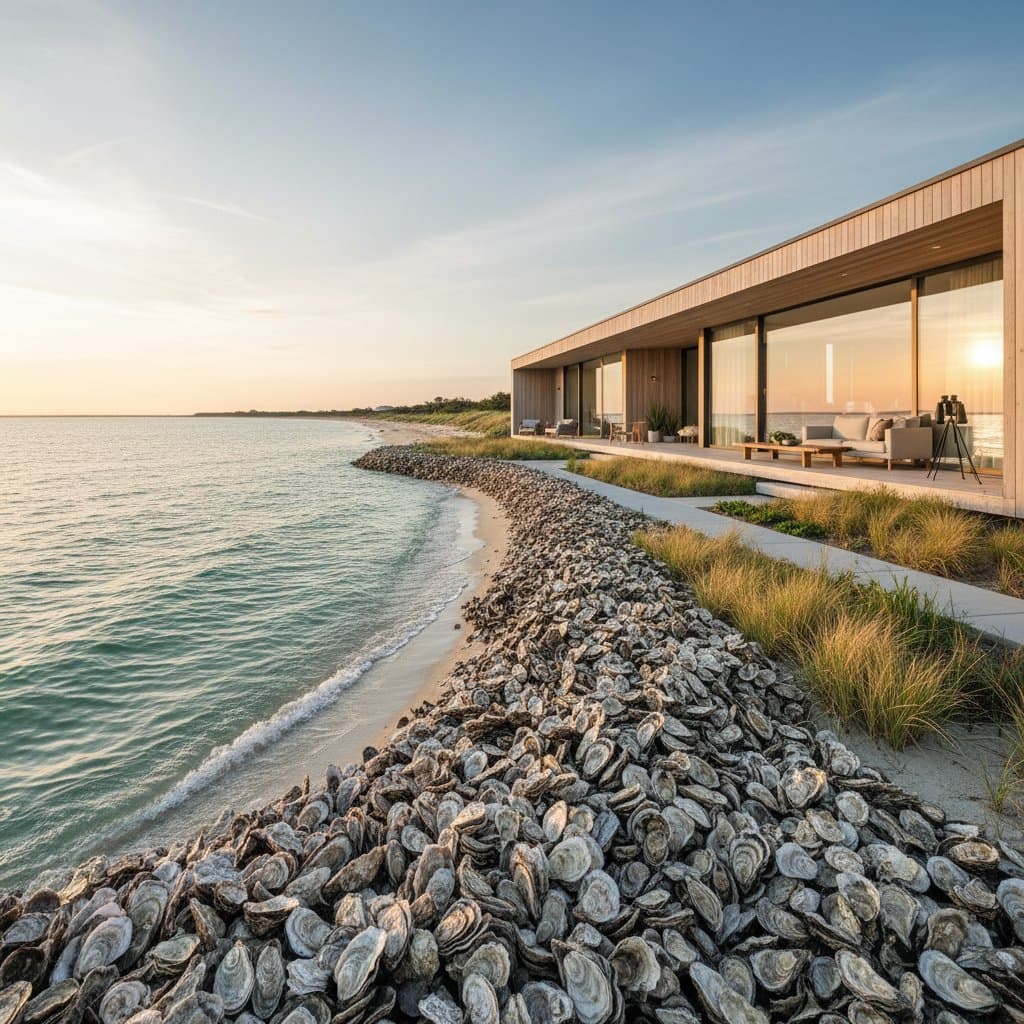
Oyster Reefs: Natural Protection for Coastal Homes
If you live near the water, you already know the beauty and the worry that comes with it. Coastal homes offer incredible views and a lifestyle that feels like a permanent vacation. Yet they also face the constant threat of erosion and flooding.
For years, the go-to solution has been concrete seawalls. Nature offers its own version of a seawall. This option not only protects but also restores the surrounding environment.
Key Advantages of Oyster Reefs
- Oyster reefs act as natural seawalls that reduce wave energy and slow erosion.
- They improve water quality by filtering pollutants and stabilizing shorelines.
- Homeowners gain added protection along with increased biodiversity near their properties.
- Installing oyster reefs proves more cost effective over time than traditional barriers.
- Healthy reefs attract fish, birds, and marine life that enrich coastal ecosystems.
- Living shorelines that incorporate oyster reefs blend engineering with natural processes.
What Oyster Reefs Are
An oyster reef is a dense cluster of oysters that forms on the seabed or is built along shorelines. Unlike concrete barriers that deflect waves, oyster reefs absorb and dissipate energy. The rough, irregular surfaces of the shells break up waves before they reach the shore.
Oysters function as ecosystem engineers. Each oyster filters gallons of water daily and removes sediment and nutrients that would otherwise cloud the water. Over time the shells stack and harden into a reef structure that becomes a permanent part of the coastal landscape.
Limitations of Traditional Seawalls
Traditional seawalls might look strong, yet they often create more problems than they solve. When waves hit a vertical wall, the force reflects downward and sideways. This action scours the seabed and accelerates erosion nearby.
Homeowners then face repeated repairs or replacements. Oyster reefs soften the impact instead. They act like a natural sponge that reduces wave force and allows sediment to settle.
This process builds up the shoreline rather than wearing it away.
Comparison of Protection Options
| Feature | Concrete Seawalls | Oyster Reefs |
|---|---|---|
| Initial Cost | High | Moderate |
| Maintenance | Frequent repairs | Minimal once established |
| Environmental Benefit | None | High water filtration and habitat creation |
| Longevity | Limited, can crack or fail | Self sustaining and regenerative |
| Visual Appeal | Industrial | Natural and scenic |
Consult a local marine contractor about hybrid systems that combine oyster reefs with low profile barriers for maximum resilience.
How Oyster Reefs Protect Shorelines
Oyster reefs work through principles of physics and biology. When waves roll toward the shore, the reef absorbs kinetic energy. The complex surfaces of the shells disrupt wave movement and reduce the height and force that reach land.
The process unfolds in clear stages. First the reef breaks up waves and slows them. Slower water then allows sand and silt to settle and build the coast. Calmer conditions encourage marsh grasses to take root and anchor the soil further. Fish, crabs, and other species thrive in the reef and support long term shoreline stability.
Additional Benefits
Oyster reefs deliver value beyond coastal protection. Each oyster filters several gallons of water daily and removes excess nutrients such as nitrogen and phosphorus. Improved clarity allows sunlight to reach underwater plants that stabilize sediment.
Reefs also create habitat. Small fish find shelter while larger fish hunt nearby. Birds feed on the abundance and produce a vibrant ecosystem.
A stable shoreline supports property value. Homes protected by living shorelines often maintain or increase in worth as awareness of sustainable engineering grows.
Once established, oyster reefs need little upkeep. They grow and repair themselves as oysters reproduce. The blend of oysters, marsh grasses, and tidal pools creates a scenic view that feels authentic to coastal living.
Steps to Install an Oyster Reef
Creating an oyster reef requires careful planning and permits. The process becomes straightforward once the basics are understood.
- Experts evaluate water depth, salinity, and tidal flow to identify suitable locations.
- A base of oyster shells, limestone, or recycled concrete is laid along the shoreline.
- Young oysters, known as spat, are placed on the base to begin growing.
- Specialists track growth and adjust methods to ensure success.
- Adjacent marsh plants or seagrasses may be added to complete a living shoreline.
Check local regulations before starting. Many coastal communities offer grant programs or restoration partnerships that help homeowners install reefs at low or no cost.
Answers to Common Questions
A functional reef can begin offering protection within one or two seasons. Over time the structure becomes stronger and more effective at reducing wave energy.
Most reefs sit in shallow or intertidal zones away from swimming lanes or boating routes. They can improve water clarity and reduce strong currents, which makes nearby areas safer.
Reefs attract fish, crabs, and small invertebrates that form part of a healthy ecosystem. They do not draw pests or harmful animals and often increase biodiversity in positive ways.
Extreme weather can damage reefs, yet their flexibility allows them to absorb wave energy and rebuild naturally. Documented cases show that oyster reefs have reduced storm surge damage to nearby properties.
Some reefs remain fully submerged while others appear slightly above the surface at low tide. Many homeowners appreciate the natural aesthetic and the wildlife activity they support.
Daily Life Near a Reef
Once an oyster reef is near your property, the water becomes clearer and shorelines feel more stable. New wildlife appears season by season. The reef becomes part of daily scenery while it quietly protects the home and environment.
Many coastal neighborhoods host oyster restoration events. Residents help plant baby oysters or monitor reef health. These activities strengthen local bonds and enhance long term coastal resilience.
Keeping the Shoreline Healthy
A living shoreline with oyster reefs represents an environmental legacy. Avoid chemicals near the waterline that could harm marine life. Monitor erosion and report unusual changes to local conservation agencies. Support reef friendly policies and encourage neighbors to consider living shorelines instead of hard barriers.
Investing in Coastal Resilience
Choosing natural protection over concrete walls supports a sustainable future for both property and community. Oyster reefs demonstrate that nature based solutions often provide the most reliable results.