
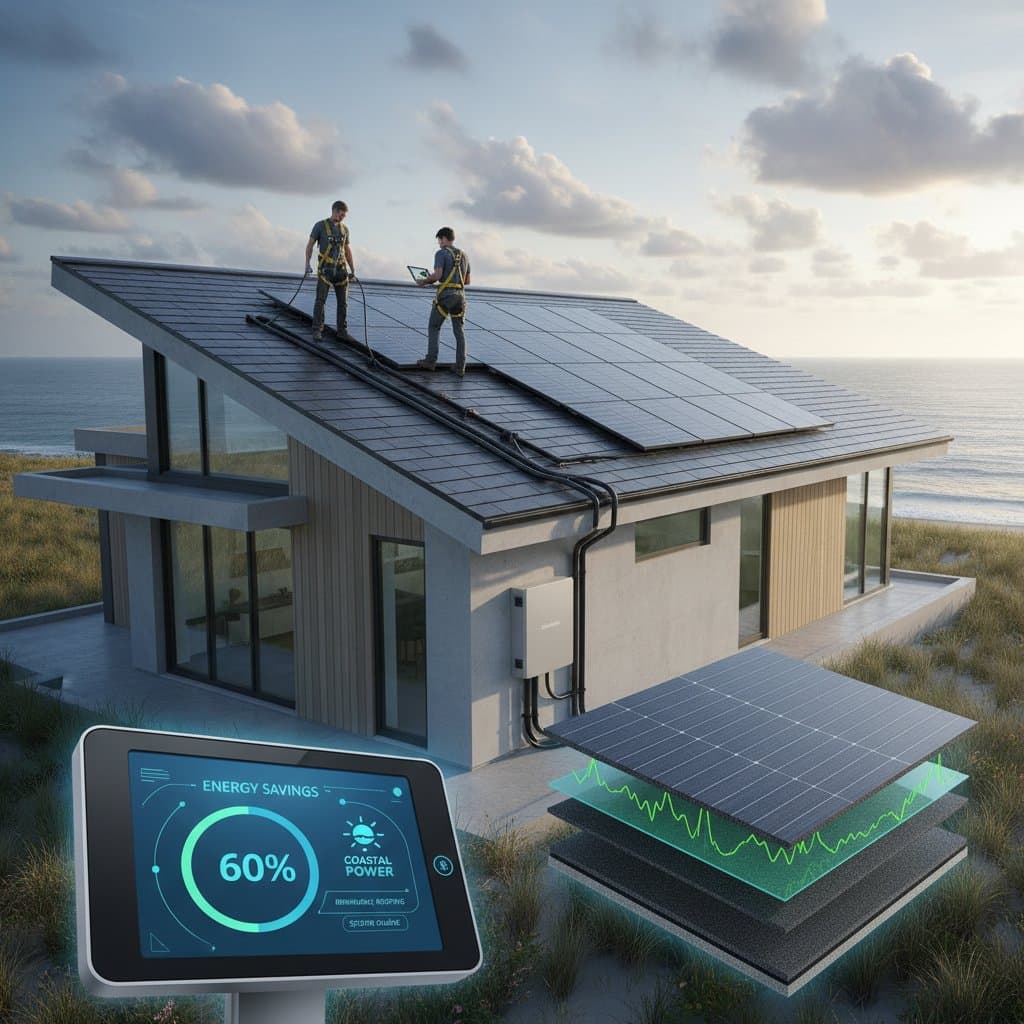
Understanding Solar Shingles for Coastal Homes
Solar shingles represent an advanced roofing solution that integrates photovoltaic technology directly into traditional shingle designs. Unlike bulky solar panels, these shingles maintain a sleek appearance while capturing sunlight to produce electricity. For coastal properties, they offer resilience against corrosive salt spray and fierce winds, ensuring long-term performance in challenging environments.
Installation involves replacing or overlaying existing roof materials with these specialized shingles. Each shingle contains embedded solar cells that convert sunlight into usable power for the home. This seamless integration eliminates the need for visible mounting hardware, preserving the architectural integrity of seaside residences.
The Financial Impact: Achieving 60 Percent Savings
Coastal regions often face higher energy costs due to air conditioning demands in humid climates. Solar shingles address this by generating clean electricity onsite, which offsets reliance on utility grids. Studies indicate that well-implemented systems can reduce annual bills by up to 60 percent, depending on sunlight exposure and energy consumption patterns.
The initial investment covers materials and professional installation, typically ranging from $20,000 to $40,000 for an average home. However, federal tax credits and local incentives recover a significant portion of costs within the first few years. Over the 25-year lifespan of the shingles, cumulative savings often exceed $50,000, providing a strong return on investment.
Property values also rise with solar installations. Homes equipped with these systems sell for 4 to 6 percent more than comparable properties without them. In coastal markets, where sustainability appeals to buyers, this premium enhances resale potential.
Why Coastal Conditions Demand Specialized Solar Solutions
Seaside environments expose roofs to unique stressors like saltwater corrosion and hurricane-force gusts. Standard solar panels may degrade faster under these conditions, leading to reduced efficiency and higher maintenance needs. Solar shingles, engineered with marine-grade materials, resist these elements effectively.
Their low-profile design minimizes wind uplift, a critical factor in storm-prone areas. Additionally, the shingles' interlocking system creates a watertight barrier, preventing leaks from heavy rains or sea spray. This durability translates to fewer repairs and sustained energy production over decades.
Integration with coastal aesthetics remains a key advantage. Available in colors and textures that mimic slate, wood, or asphalt, they blend with traditional beachfront styles. Homeowners achieve a modern upgrade without sacrificing visual harmony.
Seven Proven Strategies to Maximize Solar Shingle Benefits
To unlock the full potential of solar shingles, homeowners must focus on efficiency, style, and savings. The following strategies provide practical guidance for optimal results.
-
Select Shingles Rated for Marine Environments: Choose products certified for high wind and corrosion resistance, such as those meeting ASTM standards for coastal use. Verify warranties that cover salt exposure to ensure reliability in salty air.
-
Optimize Roof Orientation and Pitch: Position the roof to face south for maximum sunlight capture in the Northern Hemisphere. A pitch between 15 and 40 degrees enhances energy yield without compromising shingle stability.
-
Pair with Energy-Efficient Appliances: Upgrade to LED lighting and high-efficiency HVAC systems to reduce overall consumption. This synergy amplifies the impact of generated solar power, accelerating bill reductions.
-
Incorporate Battery Storage Solutions: Install home batteries to store excess daytime energy for evening use. This feature prevents reliance on peak-rate utility power, further lowering costs during high-demand periods.
-
Integrate Smart Energy Management Systems: Connect shingles to apps that monitor production and usage in real time. Automated adjustments, like shifting appliance operation to sunny hours, boost efficiency by up to 20 percent.
-
Enhance Aesthetics with Custom Designs: Select shingle patterns that complement coastal architecture, such as textured finishes for a shingled look. Professional consultations ensure the design elevates curb appeal while maintaining functionality.
-
Plan for Long-Term Maintenance: Schedule annual inspections to clean debris and check connections. This proactive approach preserves output levels and extends the system's lifespan, maximizing return on investment.
Integrating Solar Shingles with Smart Home Ecosystems
Modern solar shingles communicate with home automation platforms for seamless control. Sensors track weather patterns and adjust energy distribution accordingly. For instance, during forecasted storms, the system can prioritize battery charging to maintain power continuity.
Homeowners access performance data via mobile devices, enabling informed decisions on energy use. This connectivity not only saves money but also promotes environmental stewardship by reducing carbon footprints. In coastal communities, where grid outages occur frequently, such reliability proves invaluable.
Securing Lasting Savings and Sustainability
Adopting solar shingles positions coastal homeowners for financial security amid rising energy prices. The combination of immediate bill cuts and future-proofing against utility hikes creates substantial long-term value. Beyond economics, these systems contribute to cleaner air and reduced dependence on fossil fuels.
Consult certified installers to tailor solutions to specific property needs. With careful planning, solar shingles transform coastal living into an efficient, stylish, and eco-friendly experience. The result is a home that generates savings as reliably as it withstands the sea.