
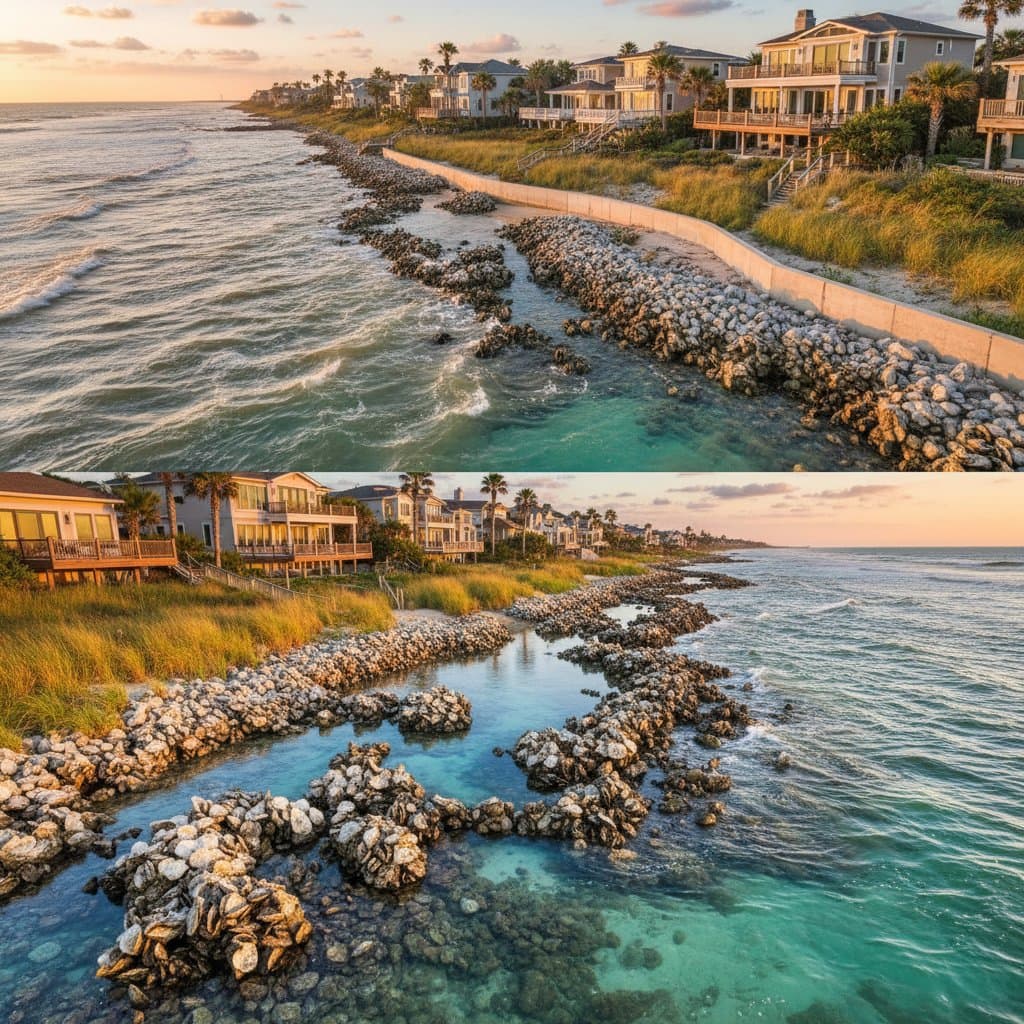
Oyster Reefs: Eco Seawalls Replacing Concrete Barriers
Coastal communities have long relied on concrete seawalls to protect property and infrastructure from waves and erosion. Yet these rigid barriers often cause more harm than good. They deflect wave energy downward, eroding beaches and destroying marine habitats. Today, a growing movement is reshaping how shorelines are protected. Oyster reefs, also known as living shorelines, are becoming the natural alternative to concrete. These eco-engineered structures reduce erosion, support marine biodiversity, and strengthen coastal resilience.
If you live along the coast or own waterfront property, understanding how oyster reefs work and what they cost can help you decide whether this sustainable solution fits your shoreline needs.
Average Cost of an Oyster Reef Installation
The average cost of installing an oyster reef ranges from 40 to 200 dollars per linear foot, depending on design complexity, materials, and labor. For a typical residential shoreline, this translates to 4,000 to 20,000 dollars for a 100-foot section. Larger community or municipal projects can reach several hundred thousand dollars, but they often qualify for grants or environmental funding.
In comparison, concrete seawalls usually cost 200 to 800 dollars per linear foot, making oyster reefs a competitive and often more cost-effective option over the long term. The real value lies not only in cost but in function. While a seawall deteriorates and requires repair, oyster reefs grow stronger over time as the oysters reproduce and expand.
Cost by Project Type and Scope
| Project Type | Typical Size | Cost Range per Linear Foot | Estimated Total Cost |
|---|---|---|---|
| Small residential shoreline | 50–100 ft | 40–120 dollars | 2,000–12,000 dollars |
| Mid-size community shoreline | 100–500 ft | 80–150 dollars | 8,000–75,000 dollars |
| Large-scale municipal or habitat restoration | 500+ ft | 100–200 dollars | 50,000–250,000+ dollars |
These figures include materials, labor, and permitting. They can vary depending on accessibility, local oyster populations, and environmental regulations.
Cost by Material Type
The foundation of an oyster reef can be built from several materials. Each offers different benefits in durability, cost, and ecological performance.
| Material | Average Cost per Cubic Yard | Durability | Ecological Benefit | Notes |
|---|---|---|---|---|
| Oyster shell | 30–50 dollars | Moderate | Excellent | The most natural substrate, often recycled from local shell recycling programs |
| Limestone rock | 40–70 dollars | High | Good | Durable and stable, supports oyster attachment but less natural |
| Concrete reef balls or blocks | 50–100 dollars | Very High | Moderate | Long-lasting structures that mimic reef shapes but require more labor |
| Woven coir fiber mats | 10–30 dollars | Low | Excellent | Ideal for soft shorelines, often used in combination with shell or rock |
Oyster shells provide the most authentic base for reef development, but combining materials can optimize cost and ecological performance.
Labor Costs and Installation Process
Labor costs for oyster reef installations typically account for 30 to 50 percent of the total project budget. Specialized teams handle design, permitting, site preparation, and construction. Labor rates vary from 50 to 150 dollars per hour, depending on expertise and local market conditions.
Step-by-Step Installation Process
- Site Assessment: A marine biologist or coastal engineer evaluates water depth, salinity, and sediment type.
- Permitting: Environmental permits are secured to ensure compliance with coastal regulations.
- Base Construction: Shells, rock, or reef balls are placed along the shoreline to form the initial structure.
- Oyster Seeding: Juvenile oysters (called spat) are introduced onto the substrate to begin growth.
- Monitoring and Maintenance: The reef is periodically inspected to track oyster growth and shoreline stabilization.
Once established, maintenance costs are minimal, often limited to occasional inspections or adaptive planting of marsh grasses.
Factors That Influence Total Cost
Several variables affect the final cost of an oyster reef installation. Understanding these helps you set a realistic budget and timeline.
- Permitting and environmental compliance fees
- Accessibility of the site for transporting materials and equipment
- Local availability of oyster shells or limestone
- Water quality and salinity levels which influence oyster survival
- Wave energy and tide exposure determining the necessary reef height and density
- Integration with vegetation such as marsh grasses, which can increase stability but add cost
- Engineering design complexity if the reef must protect infrastructure or high-value property
Ecological and Functional Benefits
Oyster reefs do far more than just hold back waves. They actively improve water quality, enhance marine life, and reduce erosion through natural biological processes.
Key Environmental Benefits
- Water filtration: A single oyster filters up to 50 gallons of water per day, improving clarity and reducing algae.
- Habitat creation: Reefs provide shelter for fish, crabs, and other marine species, boosting biodiversity.
- Sediment stabilization: The reef slows wave energy, allowing sediment to settle rather than wash away.
- Carbon storage: Oyster shells capture and lock away carbon, helping offset emissions.
- Self-repairing structure: As oysters grow and reproduce, they reinforce the reef naturally over time.
Compared to a concrete seawall that deteriorates and can collapse, an oyster reef becomes stronger and more effective with age.
Comparing Oyster Reefs and Concrete Seawalls
| Feature | Oyster Reef | Concrete Seawall |
|---|---|---|
| Initial Cost | Lower to moderate | High |
| Lifespan | Self-sustaining | 20–40 years with maintenance |
| Environmental Impact | Positive, enhances ecosystems | Negative, increases erosion |
| Maintenance Cost | Low | High |
| Aesthetic Appeal | Natural and scenic | Industrial appearance |
| Erosion Control | Gentle and adaptive | Rigid and displacement-prone |
This comparison highlights why coastal planners and homeowners are shifting toward living shorelines that blend protection with ecological restoration.
How to Save Money on an Oyster Reef Project
You can reduce project costs without sacrificing quality by planning strategically and making use of available resources.
- Partner with local conservation groups. Many offer cost-sharing programs or volunteer labor for habitat restoration.
- Use recycled oyster shells. Restaurants and seafood processors often donate shells for free.
- Combine with marsh grass planting. Vegetation helps stabilize sediment and reduces the amount of shell or rock needed.
- Phase the project. Build the reef in sections to spread costs over time.
- Seek grants and incentives. Coastal resilience and habitat programs frequently fund living shoreline projects.
These approaches can reduce total expenses by 20 to 50 percent while maintaining ecological integrity.
DIY vs. Hiring a Professional
Some homeowners consider building small oyster reefs themselves, but professional expertise is usually required for optimal results.
DIY Advantages
- Lower material costs for small shoreline sections
- Educational and community engagement value
- Flexibility in timing and scope
DIY Limitations
- Difficult permitting process without professional guidance
- Limited access to oyster seed and proper substrates
- Inadequate design may lead to erosion or reef failure
When to Hire a Pro
For shorelines longer than 50 feet or areas with strong currents, hiring a professional coastal engineer or habitat restoration team ensures proper design and long-term success. The additional upfront cost often prevents costly mistakes later.
Common Mistakes to Avoid
Avoiding these errors can ensure your oyster reef performs as intended for decades.
- Ignoring local water conditions. Salinity, sediment type, and tidal range must match oyster requirements.
- Using the wrong materials. Not all shells or rocks are suitable for oyster attachment.
- Building too high or too low. Improper elevation can drown oysters or leave them exposed during low tide.
- Skipping maintenance. Early monitoring helps detect and correct problems before they spread.
- Neglecting vegetation. Marsh grasses are crucial companions for full shoreline stability.
A well-planned reef, built with correct materials and elevations, can protect your property for generations.
Frequently Asked Questions About Oyster Reefs
Do oyster reefs really stop erosion?
Yes. Oyster reefs reduce wave energy by up to 75 percent, which slows shoreline erosion and allows sediment to settle. Over time, they create a stable buffer zone that replaces the need for hard barriers.
How long does it take for an oyster reef to form?
A new reef begins stabilizing within months, but it can take several years for oysters to fully mature and achieve maximum strength. Once mature, the reef continues to grow naturally.
Do I need a permit to build an oyster reef?
Most coastal areas require environmental permits for any shoreline modification. A professional consultant can help you navigate the local process and ensure compliance with conservation rules.
Are oyster reefs safe for property protection?
Yes. Properly designed reefs can protect against moderate storm surges and daily wave action. For extreme conditions, combining reefs with vegetated buffers provides the best defense.
What maintenance is needed after installation?
Maintenance is minimal. Periodic inspections check for sediment buildup, shell displacement, or gaps in oyster coverage. Many reefs remain functional for decades with little intervention.
Can oyster reefs increase property value?
Oyster reefs often enhance property appeal by creating natural, resilient shorelines that attract eco-conscious buyers. Studies show living shorelines can boost coastal property values by 10 to 20 percent through improved aesthetics and environmental benefits.
Sustaining Long-Term Coastal Protection
To maximize the benefits of your oyster reef, commit to ongoing stewardship. Schedule annual inspections with local experts to monitor health and adjust as needed. Integrate the reef into broader landscape plans, such as adding native plants for enhanced stability. This investment not only safeguards your shoreline but also contributes to healthier marine ecosystems for future generations.