
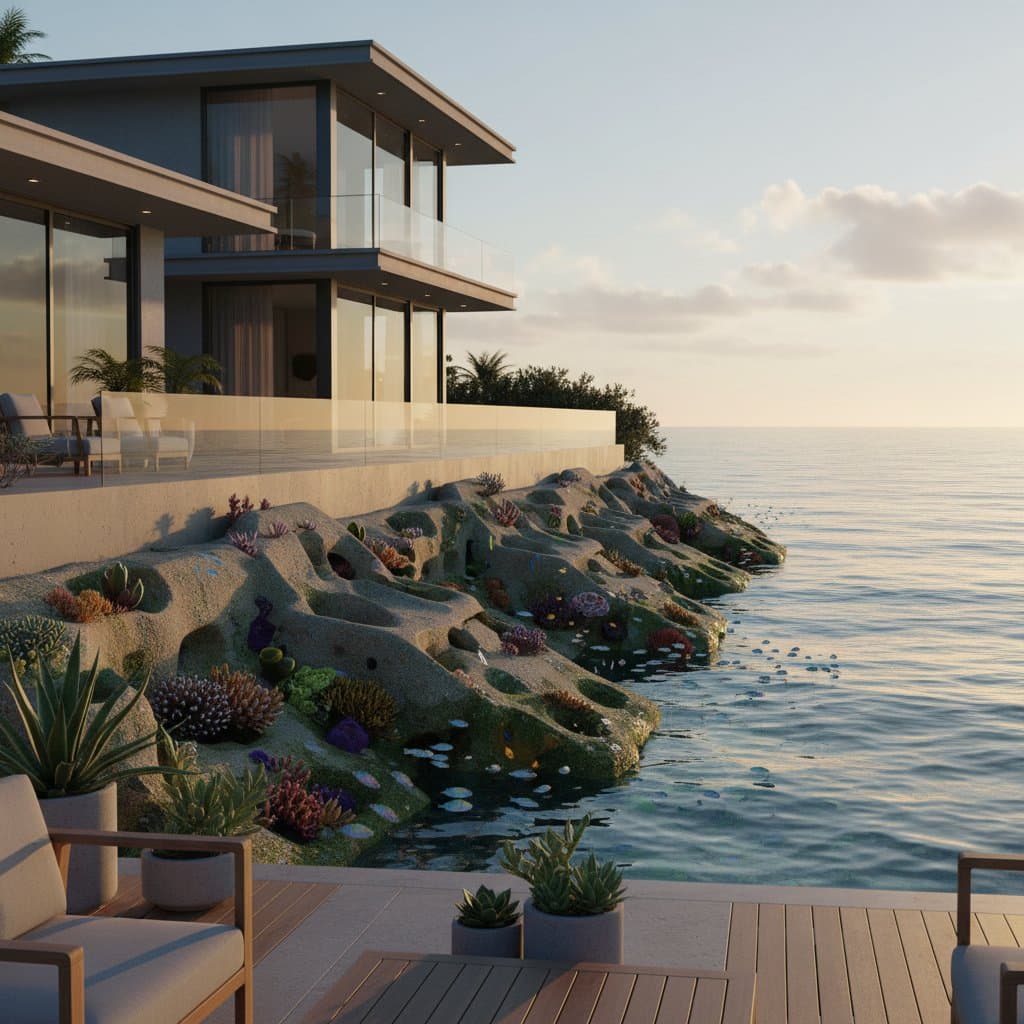
Living Seawalls That Protect Homes and Rebuild Reefs
Why Traditional Seawalls Fall Short
Conventional seawalls provide property protection, but they frequently interrupt natural sediment flow and harm marine ecosystems. These structures block waves effectively in the short term, yet they lead to beach narrowing and significant habitat loss over time. Property owners often discover that while their land appears safeguarded, adjacent shorelines erode at an accelerated rate.
Living reef panel seawalls address these issues by integrating protection with ecological support. Rather than opposing ocean forces, these designs collaborate with them to foster long-term shoreline health.
Comparison Table: Traditional vs Living Reef Panel Seawalls
| Feature | Traditional Seawall | Living Reef Panel Seawall |
|---|---|---|
| Wave Energy Management | Reflects waves | Absorbs and disperses energy |
| Environmental Impact | Reduces marine habitat | Encourages marine biodiversity |
| Maintenance Needs | High over time | Lower, as reef structure strengthens naturally |
| Aesthetic Value | Industrial appearance | Natural, blends with shoreline |
| Long-Term Stability | Can cause nearby erosion | Promotes stable sand movement |
Benefits for Coastal Homeowners
Living reef panel seawalls deliver robust protection alongside environmental advantages. This method converts a property's shoreline into a vibrant ecosystem that enhances both value and visual appeal.
Enhanced Coastal Protection
These seawalls mitigate the effects of storm surges and elevated tides. Textured surfaces fragment incoming wave energy, which decreases the potential for damage to buildings and foundations. As reef organisms colonize the panels, they reinforce the structure, forming a resilient, self-sustaining barrier.
Environmental Restoration
Growth on the panels filters water by trapping pollutants and securing sediments in place. Populations of fish, shellfish, and other species expand, restoring biodiversity diminished by conventional hard infrastructure. Local marine habitats regain vitality, supporting broader ocean health.
Property Value and Aesthetics
Buyers in coastal markets increasingly seek properties with sustainable elements. A residence featuring a reef panel seawall demonstrates commitment to environmental stewardship and forward-thinking design. This appeal draws eco-aware purchasers and can elevate market desirability.
Factors Influencing Installation Costs
Costs for living reef panel seawalls vary based on material selection, design intricacy, and specific site characteristics. Initial expenses exceed those of standard seawalls, yet reduced maintenance and ecological returns justify the investment over the structure's lifespan.
Common Cost Factors
- Site Accessibility: Locations that are remote or feature steep terrain demand additional labor and equipment.
- Wave Exposure: Areas with intense wave action require reinforced foundations to withstand forces.
- Panel Material Choice: Options like reinforced eco-concrete provide superior durability against saltwater corrosion.
- Permitting and Regulations: Local coastal rules and environmental assessments influence timelines and fees.
- Maintenance Planning: Incorporating provisions for inspections supports ongoing biological and structural performance.
Average Cost Breakdown
| Component | Cost Range (per linear foot) | Notes |
|---|---|---|
| Base Structure | $300 - $600 | Includes excavation and foundation work |
| Reef Panels | $250 - $500 | Custom designs with varied surface textures for habitat promotion |
| Installation Labor | $200 - $400 | Varies with contractor expertise and site challenges |
| Habitat Enhancement | $50 - $150 | Optional additions like coral seeding or oyster attachment |
| Total Estimated Range | $800 - $1,650 | Adjusts based on overall site complexity |
Long-Term Value and ROI
Investing in a living reef panel seawall secures property defense and contributes to ecological well-being. The evolving structure lowers ongoing expenses while stabilizing the shoreline against erosion.
| Benefit | Estimated ROI | Description |
|---|---|---|
| Reduced Repairs | 30% savings | Minimizes wear from direct wave impact |
| Enhanced Property Value | 10% increase | Attracts buyers valuing sustainable features |
| Environmental Benefits | Continuous | Boosts marine populations and water clarity |
| Longevity | 50+ years | Gains strength from biological accretion |
Qualification for coastal resilience grants and green incentives further enhances financial returns.
Planning and Installation Tips
Homeowners pursuing this option benefit from collaborating with coastal engineers and marine biologists. Tailored designs account for regional conditions, ensuring effective protection and reef maturation.
Key Steps
- Site Assessment: Analyze tidal cycles, soil composition, and current erosion patterns to inform design.
- Design Consultation: Select panel configurations and materials compatible with indigenous marine species.
- Permitting: Secure necessary coastal development approvals prior to any groundwork.
- Construction: Schedule panel placement during calm, low-tide windows to optimize efficiency.
- Monitoring: Conduct annual evaluations of biological progress and structural condition.
Maintenance Advice
- Eliminate invasive species to allow native organisms to thrive.
- Examine joints and anchors periodically for corrosion indicators.
- Promote natural settlement over forced seeding to build resilient ecosystems.
- Collaborate with community conservation organizations for sustained habitat oversight.
Frequently Asked Questions
| Question | Answer |
|---|---|
| How long does a living reef seawall last? | With appropriate construction and upkeep, it endures for several decades and fortifies through organic growth. |
| Will it change the appearance of my beachfront? | Yes, positively. The developing reef creates a textured surface that integrates seamlessly with the natural shoreline. |
| Is it safe for swimming nearby? | Yes. The design tempers wave intensity, resulting in calmer and safer adjacent waters. |
| Can existing seawalls be retrofitted with reef panels? | In numerous instances, yes. Panels attach to legacy structures to improve functionality and support biodiversity. |
| Do they require special permits? | Coastal regions typically mandate environmental evaluations, though eco-oriented projects often navigate approvals more readily. |
Sustaining Your Seawall for Lasting Impact
After installation, the living reef panel seawall integrates into the surrounding ecosystem. Its growth enhances durability, providing homeowners with reliable security and a flourishing coastal environment. For San Diego property owners, this approach enables harmonious coexistence with the ocean, safeguarding homes while revitalizing reefs.