
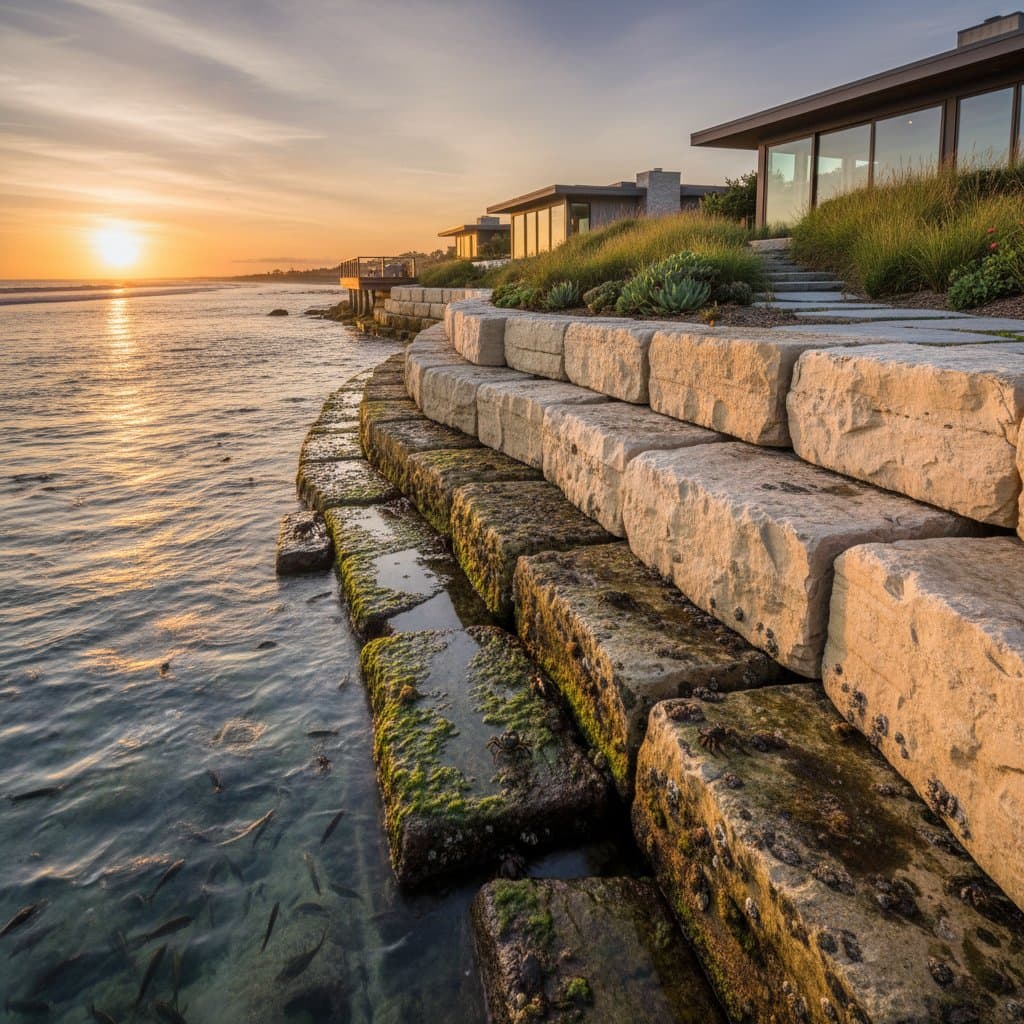
Limestone Seawalls: A Superior Solution for Coastal Erosion Control
Limestone seawalls represent an advanced and sustainable approach to safeguarding coastal properties against erosion. Property owners in regions such as Southern California increasingly recognize the value of limestone for its robust protection and positive environmental contributions. Installation costs for limestone seawalls typically range from $120 to $300 per linear foot, influenced by factors like wall height, site accessibility, and regulatory approvals. Although the initial expense exceeds that of certain concrete options, the extended durability and ecological advantages position limestone as a prudent choice for maintaining shoreline integrity.
Benefits of Choosing Limestone Seawalls
Conventional seawalls constructed from concrete or steel effectively mitigate wave impact, yet they frequently disrupt local ecosystems. Limestone provides a bioactive surface that fosters the attachment of marine organisms, including barnacles, oysters, and algae. This colonization process reinforces the structure progressively and enhances surrounding water quality.
Principal Advantages
- Ecological integration: Promotes the development of coral and shellfish, which further secure the wall against erosion.
- Seamless aesthetics: Integrates harmoniously with coastal environments, unlike stark concrete structures.
- Exceptional resilience: Withstands corrosion from saltwater and environmental degradation over extended periods.
- Minimal upkeep: Demands infrequent interventions following correct installation.
- Superior energy dissipation: The porous composition absorbs wave forces rather than redirecting them, minimizing base erosion.
Image placeholder: A limestone seawall featuring natural tidal pools at its foundation.
Cost Breakdown for Limestone Seawalls
Project expenses for limestone seawalls vary based on site-specific elements, such as terrain, elevation, and structural demands. The following table outlines estimates for standard installations.
| Project Type | Cost Range (per linear foot) | Average Lifespan | Notes |
|---|---|---|---|
| Low wall (2-4 ft) | $120 - $180 | 30+ years | Suitable for sheltered bays or minor beaches |
| Mid wall (5-7 ft) | $180 - $250 | 40+ years | Appropriate for areas with moderate surf |
| High wall (8-10 ft) | $250 - $300 | 50+ years | Designed for exposed shores with intense waves |
These figures encompass materials and labor, excluding permits and engineering consultations. Compared to poured concrete, limestone involves a modest premium initially, offset by its prolonged service life and environmental enhancements.
Image placeholder: A mid-height limestone seawall shielding a residential coastal site.
Mechanisms of Erosion Control with Limestone
Shoreline erosion results from the relentless action of waves, tides, and storms that strip away sand and sediment. Hard-surfaced seawalls like those made of concrete often amplify erosion by bouncing waves back toward the shore. The textured profile of limestone captures and diffuses this energy, thereby protecting the adjacent seabed from excessive wear.
Bioactive Enhancement
Limestone's calcium carbonate base facilitates the establishment of a vibrant ecosystem on its surface. Marine species adhere and proliferate, creating a bioactive interface that bolsters the wall's stability. This layer serves as an organic shield, while also generating microhabitats for juvenile fish and invertebrates.
Material Comparisons
| Material | Cost Range (per linear foot) | Environmental Impact | Maintenance Level | Aesthetic Appeal |
|---|---|---|---|---|
| Concrete | $100 - $250 | Limited habitat support | Moderate | Industrial appearance |
| Steel | $150 - $300 | Prone to rust | High | Functional only |
| Vinyl | $90 - $150 | Neutral effects | Low | Unremarkable |
| Limestone | $120 - $300 | Strong bioactive support | Low | Organic and inviting |
Image placeholder: Detailed view of limestone texture colonized by shells and algae.
Key Influences on Cost and Effectiveness
Multiple considerations determine the performance and pricing of a limestone seawall installation.
1. Site Location and Wave Exposure
Structures exposed to oceanic swells demand greater height and mass than those in enclosed waters. Regions with vigorous currents or frequent storms necessitate reinforcements, potentially elevating costs by 20 to 40 percent.
2. Subsoil and Foundation Stability
A solid base is essential for enduring performance. Sites with loose sediments require preparatory measures, such as compacted fill or geotextile fabrics, to avert subsidence.
3. Regulatory and Ecological Clearances
Coastal authorities often mandate impact studies prior to approval. These processes, though time-intensive, confirm adherence to preservation guidelines.
4. Structural Design Elements
Configurations that mimic shoreline contours, such as stepped or angled profiles, enhance functionality and visual harmony, albeit at added expense for fabrication and placement.
5. Sourcing and Logistics
Delivering limestone to isolated locations incurs transport fees. Utilizing nearby quarries minimizes expenditures and aligns with sustainable practices.
Strategies for Executing a Limestone Seawall Installation
- Engage a specialist in coastal engineering familiar with stone-based barriers.
- Obtain quotes from several contractors to evaluate options and estimates.
- Incorporate weep holes or channels to manage water buildup behind the structure.
- Plant native shrubs or grasses along the upper edge to anchor upland soils.
- Conduct periodic evaluations, ideally biennially, to assess seams and biological accretion.
Image placeholder: Professional examining a limestone seawall at ebb tide.
Maximizing Value from Your Seawall
Beyond defensive utility, limestone seawalls elevate real estate appeal. Their organic integration with the landscape boosts curb appeal, while operational efficiencies yield substantial savings.
| Benefit | Description | Estimated ROI |
|---|---|---|
| Erosion prevention | Safeguards against land loss and inundation | 100% (maintains asset worth) |
| Enhanced aesthetics | Organic materials complement natural settings | 20% uplift in market value |
| Reduced maintenance | Fewer interventions over the structure's life | 80% decrease in ongoing costs |
| Biodiversity support | Fosters aquatic ecosystems | Intangible community benefits |
Common Questions on Limestone Seawalls
What distinguishes limestone from concrete in seawall applications?
Limestone delivers a hospitable substrate for aquatic life, excels at wave attenuation, and ages gracefully without clashing against natural surroundings.
What is the expected service life of a limestone seawall?
Properly engineered installations endure 50 years or longer, contingent on environmental stresses.
Are limestone seawalls viable in dynamic coastal environments?
Affirmative, provided the build incorporates robust blocks, anchored bases, and water management systems to counter forceful surf.
What maintenance does a limestone seawall entail?
Annual visual checks and selective clearing suffice; biological encrustations generally aid rather than hinder the structure.
How do limestone seawalls influence adjacent shorelines?
Thoughtful engineering minimizes energy rebound, preserving sediment volumes and mitigating downstream sediment depletion.
Is it possible to integrate limestone with alternative materials?
Certainly; facades of limestone over concrete foundations merge resilience with eco-conscious design.
Sustaining Your Seawall's Performance
A completed limestone seawall evolves into an integral coastal feature, with organic layers refining its form and fortitude. Property stewards prolong its efficacy by overseeing water flow paths, managing overhead foliage, and steering clear of abrasive cleaners that could harm attached biota. This approach ensures enduring protection aligned with ecological stewardship.
Limestone seawalls advance the paradigm of shoreline defense by harmonizing fortification, elegance, and habitat preservation. For those stewarding coastal assets, this material delivers a dependable, aesthetically pleasing barrier that endures across generations.