
Understanding the 2026 Coastal Outdoor Shower Regulations
California's coastal regions, including San Diego, implement new regulations effective in 2026 for outdoor showers on properties near the shoreline. These rules stem from efforts to preserve delicate ecosystems by controlling water runoff and promoting sustainable practices. Property owners must obtain permits to install, modify, or maintain such features, ensuring alignment with environmental protection goals.
The regulations address key concerns like wastewater discharge, resource conservation, and material durability in saline environments. Compliance not only avoids penalties but also enhances property value through eco-friendly upgrades. This guide details the requirements, preparation strategies, and practical considerations for seamless adaptation.
Core Requirements for Coastal Outdoor Showers
The new standards focus on four primary areas to minimize environmental impact while maintaining functionality.
Drainage Standards
Outdoor showers must direct water into approved containment or treatment systems rather than allowing direct infiltration into the soil or connection to storm drains. This prevents contaminants from reaching nearby beaches or groundwater sources. Installers typically route drainage through dedicated lines to municipal sewers or on-site filtration units, with inspections verifying proper slope and sealing to avoid leaks.
Water Efficiency Measures
Regulations promote conservation by mandating low-flow showerheads that limit output to 2.5 gallons per minute or less. Timed shutoff valves further reduce usage during rinses, particularly in drought-prone areas. Property owners benefit from integrating sensors or foot pedals for hands-free operation, which align with broader water management policies in coastal zones.
Environmental Protection Protocols
All products used with outdoor showers, including soaps, shampoos, and detergents, require biodegradable formulations certified by organizations like the EPA's Safer Choice program. These substances break down without harming marine life or vegetation. Users should store such products in designated areas to prevent accidental spills, supporting the overall health of coastal watersheds.
Design and Material Restrictions
Structures near sensitive ecological zones face limits on material choices to prevent leaching or erosion. Prohibited options include untreated wood, which deteriorates quickly in humid conditions, and impermeable concrete slabs that exacerbate runoff. Approved alternatives emphasize corrosion-resistant and permeable designs, fostering longevity and integration with natural surroundings.
Cost Implications of Compliance
Budgeting for these updates involves several components, with totals varying based on project scope and location. The table below outlines typical expenses for a standard retrofit or new installation.
| Item | Estimated Range | Notes |
|---|---|---|
| Permit fees | $200 to $1,000 | Depends on municipal jurisdiction and distance from the shoreline |
| Plumbing and drainage | $800 to $2,500 | Covers excavation, piping, and connection to approved systems |
| Fixtures and materials | $500 to $2,000 | Focuses on durable options like stainless steel or recycled composites |
| Total project cost | $1,500 to $5,500 | Increases with custom features or complex site conditions |
These figures represent averages; consulting local contractors provides precise quotes tailored to specific properties.
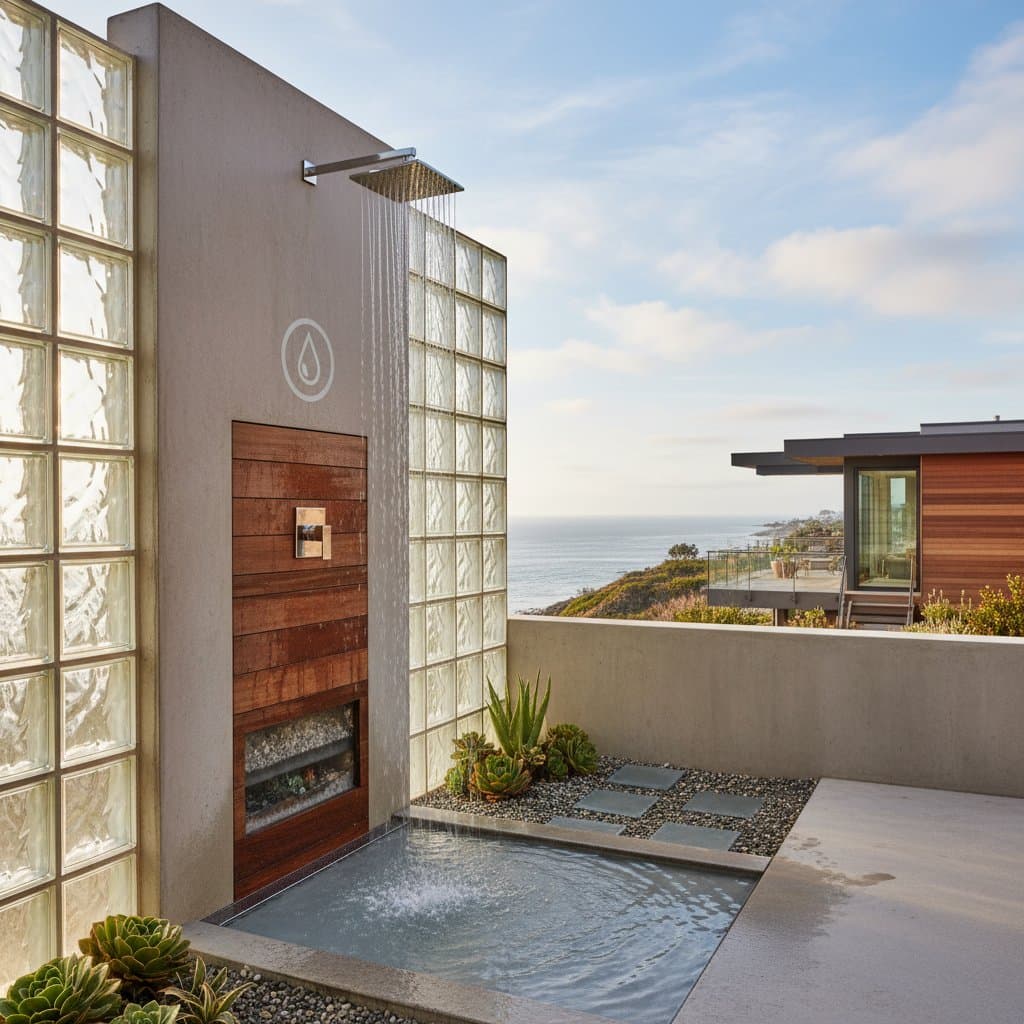
Image: Coastal outdoor shower featuring stone flooring and stainless steel fixtures.
Key Factors Shaping Permit Approvals
Permit processes consider site-specific elements to ensure regulations fit diverse coastal landscapes. Understanding these influences helps streamline applications and avoid delays.
Location and Shoreline Proximity
Properties within 300 feet of the high-tide line undergo rigorous review by coastal commissions. Applicants submit detailed drainage schematics, erosion mitigation plans, and evidence of minimal habitat disruption. Sites farther inland encounter simplified procedures but must demonstrate that any runoff does not indirectly affect protected waterways through neighboring properties or natural flow paths.
Advanced Drainage and Filtration Options
Effective water management forms the cornerstone of approval. Systems must capture and treat greywater before release or reuse.
- French drains: Layered gravel and perforated pipes facilitate slow percolation into amended soil, ideal for sloped terrains.
- Greywater diversion setups: Filter and redirect shower water to irrigate non-edible plants, complying with reuse guidelines.
- Catch basins with treatment: Collect runoff for sedimentation and bio-filtration before sewer discharge, suitable for urban coastal lots.
Selection depends on soil type, available space, and local water quality standards. Professional engineers often design these to meet variance requirements if standard options prove infeasible.
Image: Example of a greywater filtration system integrated with an outdoor shower.
Selecting Compliant Materials
Choices prioritize sustainability and resilience against coastal elements like salt spray and UV exposure. Stainless steel pipes and fixtures withstand corrosion without chemical coatings, while permeable stone or recycled composite bases allow natural drainage. Stone aggregates or teak alternatives treated with non-toxic sealants enhance aesthetics without environmental risk. Avoid plastics that degrade into microplastics, opting instead for verified low-VOC products to support certification processes.
Preparing Your Property for Regulatory Compliance
Proactive planning positions homeowners for efficient upgrades. Begin by mapping your site's features and consulting experts early in the process.
Step-by-Step Guidance for Preparation
- Conduct a site assessment: Measure slopes, locate existing utilities, and note vegetation or water features that could influence design.
- Engage qualified professionals: Partner with plumbers or architects experienced in coastal codes to review plans against 2026 standards.
- Select sustainable components: Prioritize fixtures with WaterSense labels and materials sourced from certified suppliers.
- Compile required documentation: Assemble scaled drawings, product specifications, and environmental impact statements for submission.
- File applications ahead of deadlines: Account for 4-8 week processing periods, which may extend during peak seasons.
These steps minimize revisions and foster collaboration with authorities, potentially qualifying for incentives like rebates for green innovations.
Image: Contractor examining outdoor shower site plan adjacent to coastal vegetation.
Addressing Frequently Asked Questions
Clarity on common concerns aids decision-making. The following table responds to typical inquiries based on regulatory frameworks.
| Question | Answer |
|---|---|
| Do existing showers require permits? | Retrofitting becomes necessary if current drainage violates standards; seek approval to confirm compliance. |
| Are portable showers exempt from permits? | Units without fixed plumbing generally bypass permitting, provided they avoid surface runoff into sensitive areas. |
| What applies to properties outside core zones? | Conservation and anti-runoff rules persist if water flows toward coastal systems; local ordinances dictate details. |
| How strict will enforcement be? | Initial focus lies on guidance and warnings, escalating to fines up to $5,000 for ongoing non-compliance. |
| Can solar-powered showers meet requirements? | Affirmative, as they advance efficiency goals; ensure all plumbing adheres to drainage and material rules. |
Image: Modern solar-heated outdoor shower amid drought-tolerant landscaping.
Integrating Compliance into Coastal Home Enhancements
These regulations encourage thoughtful enhancements that blend utility with ecological stewardship. Homeowners who invest in compliant designs enjoy reduced maintenance, lower utility bills, and heightened appeal in the real estate market. Professional guidance ensures installations not only satisfy legal mandates but also elevate daily living near the ocean. Start the process today to secure a feature that honors both personal comfort and communal environmental health.