
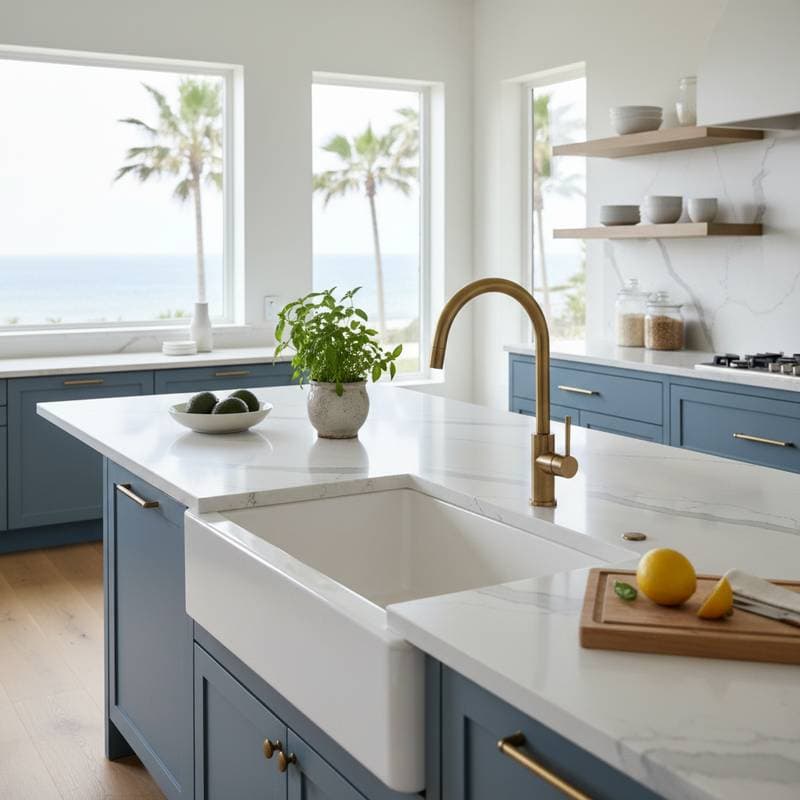
Why Quartz Tops Granite in Coastal Kitchen Remodels
Remodeling a coastal kitchen presents unique challenges and opportunities. Homeowners seek materials that withstand high humidity, resist salt-laden air, and maintain their appeal over time. While granite has long been a favorite for its natural elegance, quartz countertops are gaining popularity in seaside settings for superior performance.
This article explores the advantages of quartz over granite in coastal environments. Readers will gain insights into material properties, maintenance needs, and design benefits. The goal is to equip homeowners with the knowledge needed to select countertops that enhance both functionality and aesthetics.
Understanding Quartz and Granite Countertops
What Makes Quartz Different
Quartz countertops consist of approximately 90 percent ground quartz mixed with resins and pigments. This engineered composition results in a nonporous surface that repels stains, moisture, and bacterial growth. Installers find quartz easier to fabricate into custom shapes, ensuring precise fits for sinks, edges, and backsplashes.
How Granite Compares
Granite countertops derive from quarried natural stone slabs, each displaying distinct veining and coloration. Although granite offers impressive strength, its porous structure allows liquids to seep in without proper sealing. In humid coastal areas, this porosity heightens the risk of salt accumulation and surface degradation.
Durability in Coastal Conditions
Resistance to Moisture and Salt Air
Ocean proximity introduces elevated humidity and airborne salt particles that accelerate material wear. Quartz excels here due to its nonporous design, which blocks moisture and salt from infiltrating the surface. This resistance prevents etching, discoloration, and weakening that could compromise the countertop's integrity.
Granite requires annual sealing to mitigate these threats, but even sealed surfaces may develop subtle pitting from persistent exposure. Homeowners in salt-heavy zones often notice faster dulling on granite compared to quartz.
Heat and Scratch Performance
Granite edges out quartz in tolerating direct high heat from pots or pans, though both materials handle typical kitchen tasks well. Quartz, however, demonstrates greater resistance to scratches and chips during everyday activities. In coastal homes where sand tracks in from beaches, quartz's uniform hardness minimizes surface damage from abrasive particles.
Maintenance and Longevity
Effortless Upkeep with Quartz
Quartz demands little beyond daily wiping with mild soap and warm water. No sealing or specialized treatments are necessary, freeing coastal residents from routine material care. This simplicity suits busy households focused on enjoying their seaside lifestyle rather than upkeep.
The Demands of Granite Maintenance
Granite necessitates sealing every six to twelve months, with coastal conditions potentially requiring more frequent applications. Neglected seals invite stains from spills or salt residue, sometimes leading to permanent dark spots or microbial buildup. Professional resealing can add ongoing expenses to the initial investment.
Long-Term Value
Both surfaces endure for 25 years or more with care, yet quartz preserves its original appearance without interventions. This reliability reduces replacement costs and appeals to long-term owners. In resale scenarios, quartz's pristine condition often justifies its selection in remodels.
Design Flexibility and Aesthetic Appeal
Consistency in Pattern and Color
Engineered quartz ensures uniform patterns and colors across entire installations, simplifying planning for large kitchen areas. Homeowners select from extensive slabs that match exactly, avoiding surprises during layout. This predictability supports seamless integration with cabinetry and flooring.
Granite's natural variations create visual interest but complicate coordination between sections like peninsulas or islands. Achieving harmony may involve rejecting multiple slabs, increasing time and cost.
Matching Coastal Aesthetics
Coastal designs favor serene palettes evoking beaches and waves, such as soft whites, beiges, and subtle aquas. Quartz varieties replicate these hues with matte or polished finishes that amplify natural light. The result is a bright, inviting space that captures the essence of seaside living.
Granite often features bolder tones and pronounced veins, which may overwhelm lighter schemes. While adaptable with careful selection, it less frequently aligns with the understated elegance preferred in coastal interiors.
Environmental and Health Considerations
Nonporous and Hygienic Surface
Quartz's sealed structure inhibits bacterial adhesion, mold formation, and allergen accumulation. In moisture-rich coastal kitchens, this feature promotes a healthier environment for meal preparation and family gatherings. Routine cleaning suffices to keep surfaces sanitary.
Eco-Friendly Options
Leading quartz producers incorporate recycled glass or stone aggregates, lowering the demand for virgin materials. Sustainable manufacturing processes further reduce the carbon footprint. Granite extraction, involving heavy machinery and land disruption, typically exerts a larger ecological toll.
Cost and Return on Investment
Comparing Price Ranges
Installed quartz and granite countertops range from $50 to $150 per square foot, influenced by quality, thickness, and detailing. Factors like edge profiling or integrated sinks affect totals. Consulting local fabricators yields precise quotes tailored to project scope.
Boosting Home Value
Quartz's modern appeal and resilience attract buyers in competitive coastal markets. Kitchens with low-maintenance surfaces signal quality upgrades, potentially increasing property appeal by 5 to 10 percent. This enhancement supports both immediate enjoyment and future financial returns.
Hiring the Right Professional
Choosing a Qualified Installer
Select contractors certified by countertop associations, with portfolios showcasing coastal projects. Verify insurance coverage and request client testimonials to assess reliability. Ensure the team uses templating tools for accurate measurements, minimizing errors in high-humidity settings.
Getting a Detailed Estimate
Insist on itemized proposals covering materials, labor, fabrication, and disposal fees. Review timelines for delivery and installation to align with remodel schedules. Negotiate inclusions like warranties to protect against defects from environmental stresses.
Frequently Asked Questions
What makes quartz better than granite for coastal kitchens?
Quartz's nonporous composition shields it from humidity, salt, and contaminants, outperforming granite's seal-dependent protection in marine climates.
Does quartz discolor in sunlight?
Most quartz formulations resist UV fading, but direct exposure over years may subtly affect pigmented resins. Opt for UV-stabilized options in sunlit areas.
How often do quartz countertops need maintenance?
Wipe daily with soap and water; no sealing is required, unlike granite.
Can quartz replicate the look of natural stone?
Quartz designs emulate marble or granite veining with enhanced uniformity and durability, delivering stone-like beauty without vulnerabilities.
Is quartz safe for food preparation?
Yes, its nonporous surface resists bacteria, ensuring a hygienic zone for cutting and serving.
What are the main color options for coastal kitchens?
Choices include pearl whites, seashell creams, driftwood grays, and lagoon blues to evoke ocean tranquility.
How do I clean quartz countertops properly?
Apply mild soap solution with a soft cloth; rinse and dry to prevent water spots. Steer clear of harsh chemicals that might etch the resin.
Steps to Select and Install Quartz
Begin by measuring your kitchen precisely and gathering inspiration from design resources. Consult fabricators for samples that suit your coastal theme. Proceed with professional templating, then oversee installation to confirm secure anchoring against humidity shifts. With quartz in place, enjoy a resilient, stylish kitchen that withstands seaside demands while elevating daily living.