
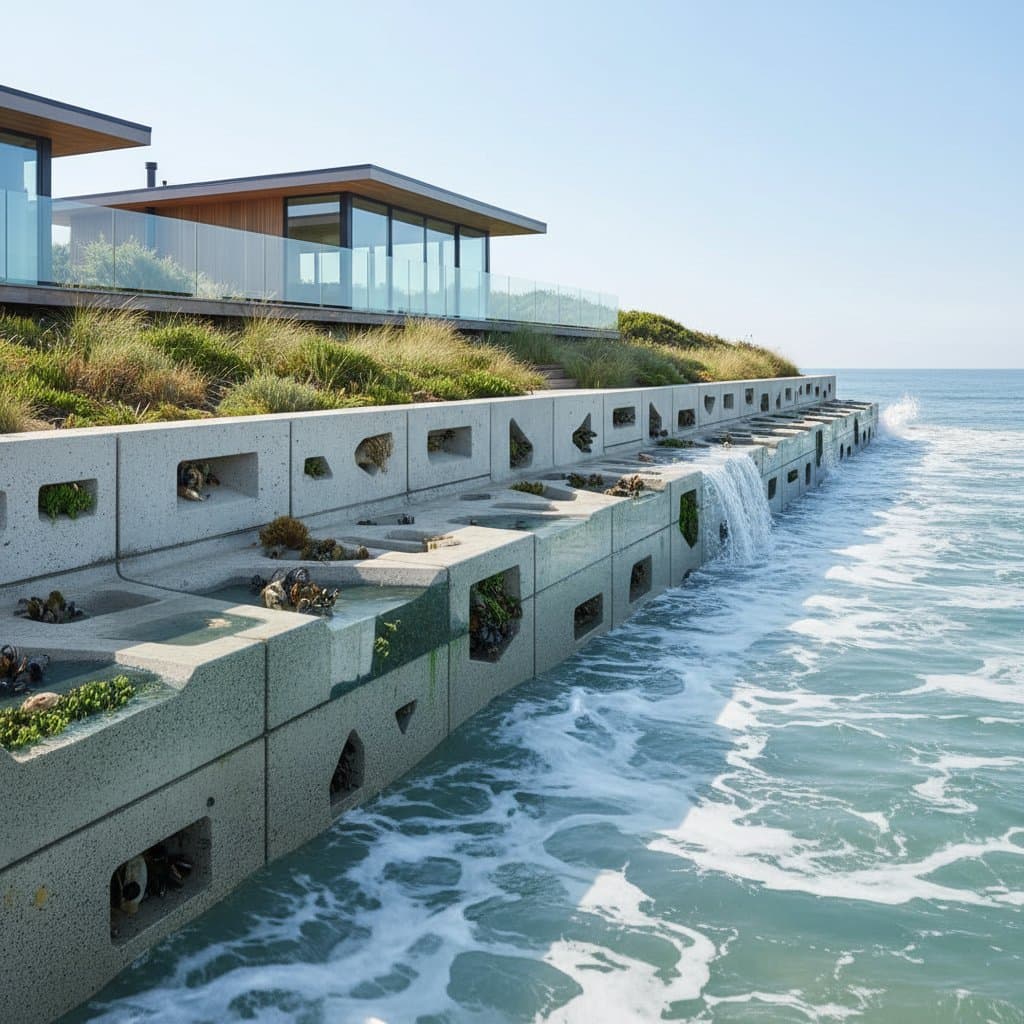
Living Seawalls: Absorbing Waves for Sustainable Coastal Protection
Coastal erosion poses a significant threat to shoreline communities worldwide. Traditional concrete seawalls, while effective at first glance, frequently harm marine ecosystems and exacerbate erosion in surrounding areas. Living seawalls provide a superior alternative by integrating engineering precision with ecological principles. These innovative structures absorb wave energy, promote biodiversity, and build long-term resilience against environmental pressures.
Understanding Living Seawalls
A living seawall functions as a hybrid coastal defense system that emulates natural shoreline features. Rather than relying on impenetrable concrete slabs, designers incorporate rough, porous surfaces using materials like textured panels or interlocking blocks. These elements invite attachment from marine species, including oysters, mussels, and algae, which in turn create a living layer that dissipates incoming waves.
The core mechanism involves natural processes that transform the structure over time. Vegetation and shellfish growth anchor sediments, while the irregular surface scatters wave forces, preventing the rebound effect seen in conventional designs. This approach not only halts erosion but also fosters a supportive environment for local wildlife.
Direct explanation: Living seawalls safeguard coastlines by leveraging biological colonization to break down wave energy and secure soil particles through organic binding.
Essential Components of Living Seawalls
- Roughened textures modeled after rocky outcrops to facilitate organism adhesion
- Biocompatible materials that encourage settlement by corals, bivalves, and seaweeds
- Flexible modular systems tailored to local wave patterns and sediment dynamics
- Complementary planting of seagrasses, mangroves, or saltmarsh species for added stabilization
Image: Textured panels on a living seawall hosting clusters of oysters in a sheltered estuary.
Comparing Living Seawalls to Conventional Structures
Standard seawalls prioritize immediate protection through rigid barriers that redirect wave power outward. This reflection often scours the seabed and undermines nearby shores, leading to ongoing instability. In contrast, living seawalls collaborate with natural forces, absorbing impacts and allowing energy to dissipate gradually.
| Aspect | Traditional Seawall | Living Seawall |
|---|---|---|
| Construction Material | Impervious concrete slabs | Porous, biologically active surfaces |
| Wave Interaction | Reflection and rebound | Absorption and diffusion |
| Effect on Ecosystems | Habitat disruption and sediment loss | Biodiversity enhancement and sediment retention |
| Upkeep Requirements | Regular patching and reinforcement | Natural reinforcement via biological growth |
| Initial Cost Estimate | $400 to $900 per linear foot | $600 to $1,200 per linear foot, offset by durability gains |
Image: Side-by-side view of a stark concrete seawall and an adjacent living seawall teeming with marine growth.
Higher upfront expenses for living seawalls stem from specialized materials and design expertise. However, the self-sustaining nature of these systems minimizes future interventions, as accumulating biomass fortifies the installation against wear.
Biological Mechanisms for Erosion Control
The effectiveness of living seawalls derives from interconnected natural processes that evolve progressively. Initial microbial films pave the way for larger colonizers, whose activities compact loose materials and filter suspended particles from the water column. This layered development creates a resilient barrier that adapts to changing conditions.
Step-by-Step Natural Reinforcement
- Initial Attachment: Bacteria and diatoms form a foundational biofilm on prepared surfaces.
- Macro-Organism Settlement: Barnacles, oysters, and tunicates establish permanent footholds.
- Material Trapping: Exoskeletons and root systems capture drifting sands and organic debris.
- Energy Reduction: Irregular profiles and foliage break wave momentum into harmless eddies.
- Ecosystem Maturation: Invertebrates and fish populations contribute to ongoing sediment stabilization.
Image: Detailed view of bivalve-encrusted seawall sections capturing fine sediments during tidal flows.
Broader Impacts on Ecosystems and Communities
Beyond erosion prevention, living seawalls revitalize degraded coastal zones. Filter-feeding residents purify surrounding waters by straining out excess nutrients and toxins, while diverse habitats attract pollinators and support fisheries. Communities benefit from enhanced scenic value and recreational opportunities, such as improved fishing spots or wildlife viewing areas.
Principal Gains from Implementation
- Water Purification: Shellfish species process up to 50 gallons of water daily per individual, removing harmful algae.
- Species Diversity: Structures host 2-3 times more marine life than bare concrete equivalents.
- Visual Integration: Organic aesthetics harmonize with landscapes, boosting property appeal.
- Economic Efficiency: Lifecycle costs drop by 20-30% through reduced repair cycles.
- Defensive Strength: Integrated greenery buffers against storms, protecting infrastructure.
Guidelines for Effective Design and Deployment
Successful living seawall projects begin with thorough site evaluations to match designs with unique environmental factors. Engineers collaborate with ecologists to select components that align with regional biology and hydrology. This tailored strategy ensures optimal performance and minimal ecological disruption.
Implementation Best Practices
- Evaluate Local Dynamics: Measure average wave heights, current speeds, and substrate composition.
- Choose Durable Substrates: Opt for limestone aggregates or polymer composites that resist biofouling while inviting growth.
- Incorporate Local Flora: Plant species like Spartina grasses or Avicennia mangroves to extend protective zones.
- Establish Monitoring Protocols: Conduct quarterly inspections for growth rates and erosion markers.
- Build in Flexibility: Employ adjustable anchors and panels to accommodate sea-level variations.
Image: Team of specialists positioning eco-modular units along a dynamic beachfront at ebb tide.
Frequently Asked Questions on Living Seawalls
| Inquiry | Response |
|---|---|
| Do living seawalls effectively halt erosion? | Yes, through wave energy dissipation and sediment binding via natural colonization. |
| Are construction costs significantly higher? | Marginally so initially, yet savings from lower maintenance and restoration needs balance the investment. |
| Is installation feasible for residential sites? | Generally, provided regulatory approvals and ecological surveys confirm suitability. |
| What is their expected service life? | Decades or more, as biological enhancements progressively bolster structural integrity. |
| Do they support local wildlife populations? | Indeed, they develop into productive refuges for invertebrates, fish, and foraging birds. |
Securing Resilient Shores Through Innovation
Adopting living seawalls marks a proactive evolution in coastal management. These systems align human needs with environmental health, yielding shorelines that endure while sustaining vibrant aquatic communities. Property owners and municipalities gain durable safeguards that evolve alongside nature, ensuring lasting protection for vulnerable edges.