
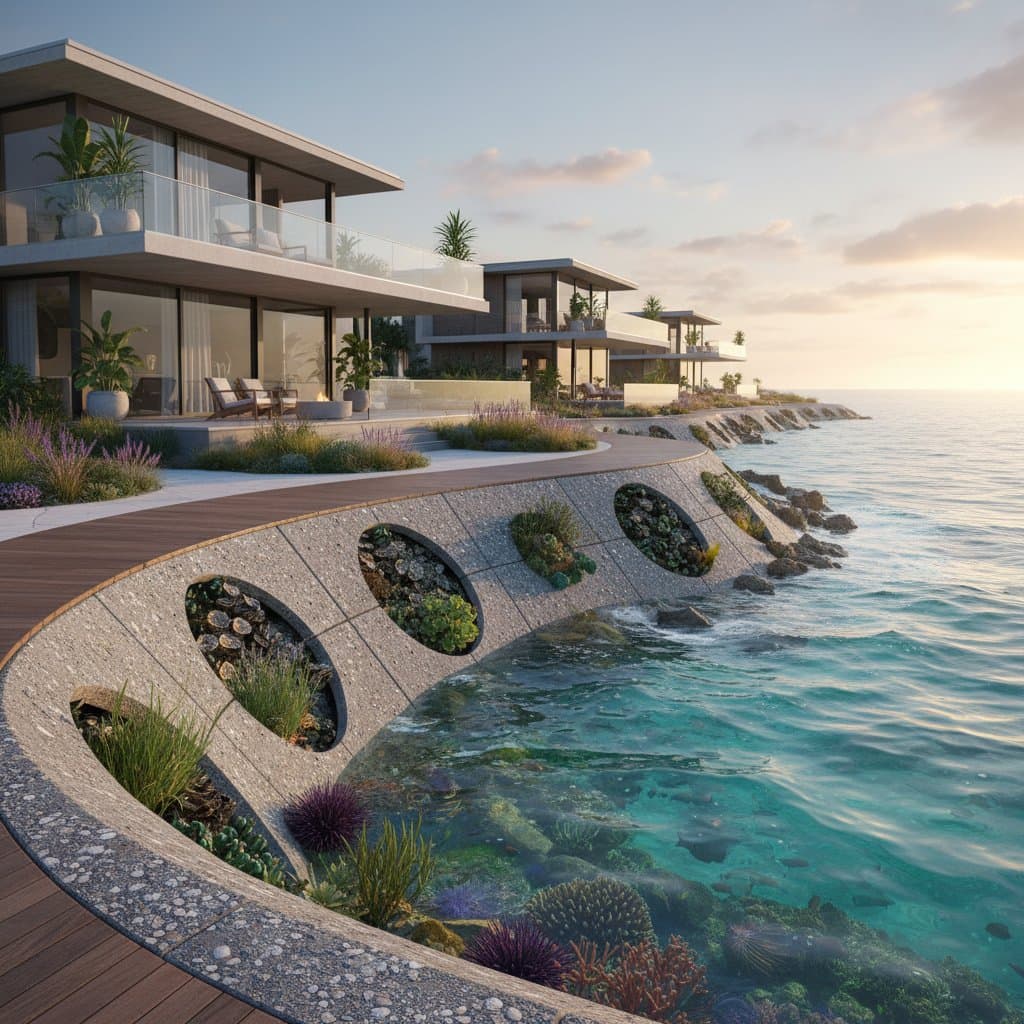
9 Living Seawall Ideas for Eco-Friendly Coastal Erosion Solutions
Coastal erosion poses a significant threat to waterfront communities worldwide. Traditional hard seawalls frequently exacerbate the issue by reflecting wave energy back toward the ocean, which accelerates beach loss and disrupts marine ecosystems. Residents along coastlines often observe that concrete barriers safeguard property but diminish the aesthetic and ecological value of shorelines. A superior, environmentally integrated option merges engineering principles with natural processes: living seawalls.
Living seawalls safeguard coastlines while fostering marine habitats. These structures incorporate modular components and indigenous vegetation to secure shorelines effectively. The outcome yields a defensive barrier that harmonizes with the environment rather than opposing it. Consider a seawall that not only halts erosion but also serves as habitat for oysters, mussels, and juvenile fish. Such designs benefit human interests and planetary health alike.
This article explores nine innovative approaches to implementing living seawalls as sustainable solutions for coastal erosion. Whether retrofitting an established concrete structure or constructing a fresh eco-conscious shoreline, these strategies encourage progressive thinking beyond conventional defenses.
Functional Design Features
1. Modular Concrete Panels with Habitat Grooves
Living seawalls frequently employ custom-engineered concrete panels featuring grooves, recesses, and protrusions. These elements replicate natural rock formations and offer refuge for diverse marine organisms. Installers secure the panels to preexisting seawalls or deploy them as standalone barriers. As time progresses, the surfaces draw algae, barnacles, and minor crustaceans, which bolster the surrounding ecosystem.
Select marine-grade concrete possessing a textured finish to accelerate organism settlement. Panels measuring 4 feet by 8 feet typically cost $500 to $800 each, depending on customization levels.
2. Oyster Reef Integration
Oyster reefs function as inherent wave attenuators, diminishing the force impacting shorelines. Secure oyster cages to the seawall base or introduce oyster spat to promote growth, thereby improving water clarity and curbing sediment movement. Oysters excel at filtering contaminants and anchoring substrates, positioning them as essential allies in living seawall systems.
Anticipate intermediate complexity for this method, as local regulations may require permits for oyster propagation. Initial setup involves sourcing certified spat from regional hatcheries and monitoring salinity levels to ensure viability.
3. Tiered Wall Structures
Tiered configurations replace singular vertical barriers with multilevel steps of graduated elevations. Each tier accommodates distinct flora and fauna, such as seagrasses in lower zones and salt-resistant shrubs higher up. This staggered profile disperses wave forces more efficiently than planar surfaces, reducing scour at the base.
Installation expenses range from $200 to $400 per linear foot, influenced by material choices and planting schemes. Engineers recommend slopes of 1:3 for stability in moderate wave environments.
Natural Enhancement Elements
4. Native Coastal Plantings
Strategic placement of indigenous vegetation on upper seawall segments captures sediments and minimizes pollutant runoff. Opt for resilient species like saltgrass, beach morning glory, or marsh cordgrass, whose extensive roots anchor soils firmly. These plantings enhance biodiversity by providing food and shelter for pollinators and birds.
Establish plants by irrigating consistently during the initial weeks to promote robust root development. Source seedlings from certified nurseries to avoid introducing invasive species, and space them 12 to 18 inches apart for optimal coverage.
5. Embedded Tide Pools
Integrate shallow depressions or basins into the seawall framework to trap tidal waters at low tide. These constructed tide pools generate microenvironments suitable for crabs, snails, and small fish, enriching local biodiversity. Property owners appreciate the added scenic appeal these features bring to waterfront areas.
This addition presents low difficulty, as prefabricated modules fit seamlessly into existing walls. Depth variations of 6 to 12 inches suffice to retain moisture without excessive stagnation.
6. Bio-Rock Materials
Bio-rock emerges from mineral accretion facilitated by low-voltage electrical fields, promoting limestone-like formations. In seawall applications, these structures lure corals and mollusks, aiding in the revival of coastal ecosystems. Their lightweight nature and flexibility suit diverse shoreline topologies.
Procurement and installation costs approximate $150 to $300 per square meter for core materials. Activate the electrical system post-submersion to initiate mineral deposition, typically within 24 hours.
Sustainable Construction and Maintenance
7. Recycled Material Use
Construct living seawalls from repurposed concrete, pulverized shells, or salvaged stone to minimize landfill contributions. Such materials impart a seamless integration with surrounding landscapes while curbing visual discord. Sourcing regionally further decreases associated carbon emissions from transport.
Pair recycled aggregates with low-carbon cement formulations to amplify environmental gains. Aggregate ratios of 70 percent recycled content maintain structural integrity comparable to virgin materials.
8. Ongoing Monitoring and Maintenance
Living seawalls develop dynamically, necessitating periodic assessments to sustain vegetation health and prevent hydraulic obstructions from marine fouling. Tasks include pruning overgrowth, removing excess algae, and replenishing oyster stocks as needed. Seasonal interventions preserve long-term functionality.
Expect easy to moderate effort, utilizing standard tools for most activities. Schedule quarterly checks during the first year, then biannually, to adapt to site-specific conditions.
9. Hybrid Living Shorelines
In areas prone to intense wave activity, pair living seawalls with supplementary natural elements like mangroves, sand dunes, or submerged reefs for comprehensive defense. This integrated methodology equates engineered resilience with biological productivity. Tailor combinations to site hydrology for peak performance.
Engage coastal engineers and ecologists for bespoke designs aligned with local dynamics. Hybrid systems often achieve 30 percent greater erosion resistance than isolated approaches.
Strategies for Successful Implementation
Begin with experimental segments to evaluate performance before full-scale deployment. Prioritize indigenous species to preserve ecological integrity. Foster community participation in surveillance and care routines. Record developments through photography to quantify habitat maturation.
Frequently Asked Questions
What distinguishes a living seawall from a traditional seawall?
A living seawall integrates protective engineering with habitat enhancement, employing textured designs and plantings rather than impenetrable concrete alone.
How long does establishment take for a living seawall?
Biological colonization commences within months, with fully developed ecosystems emerging across multiple seasons.
Do living seawalls incur higher construction costs?
Upfront expenses may exceed those of basic walls slightly, yet enduring savings in upkeep and ecological advantages frequently balance the investment.
Advancing Coastal Resilience Through Living Seawalls
Adopting living seawalls equips communities to confront erosion proactively while revitalizing marine environments. These solutions not only secure shorelines but also cultivate vibrant ecosystems that endure. By embracing such innovations, waterfront areas transition from vulnerable edges to resilient, life-sustaining frontiers.