
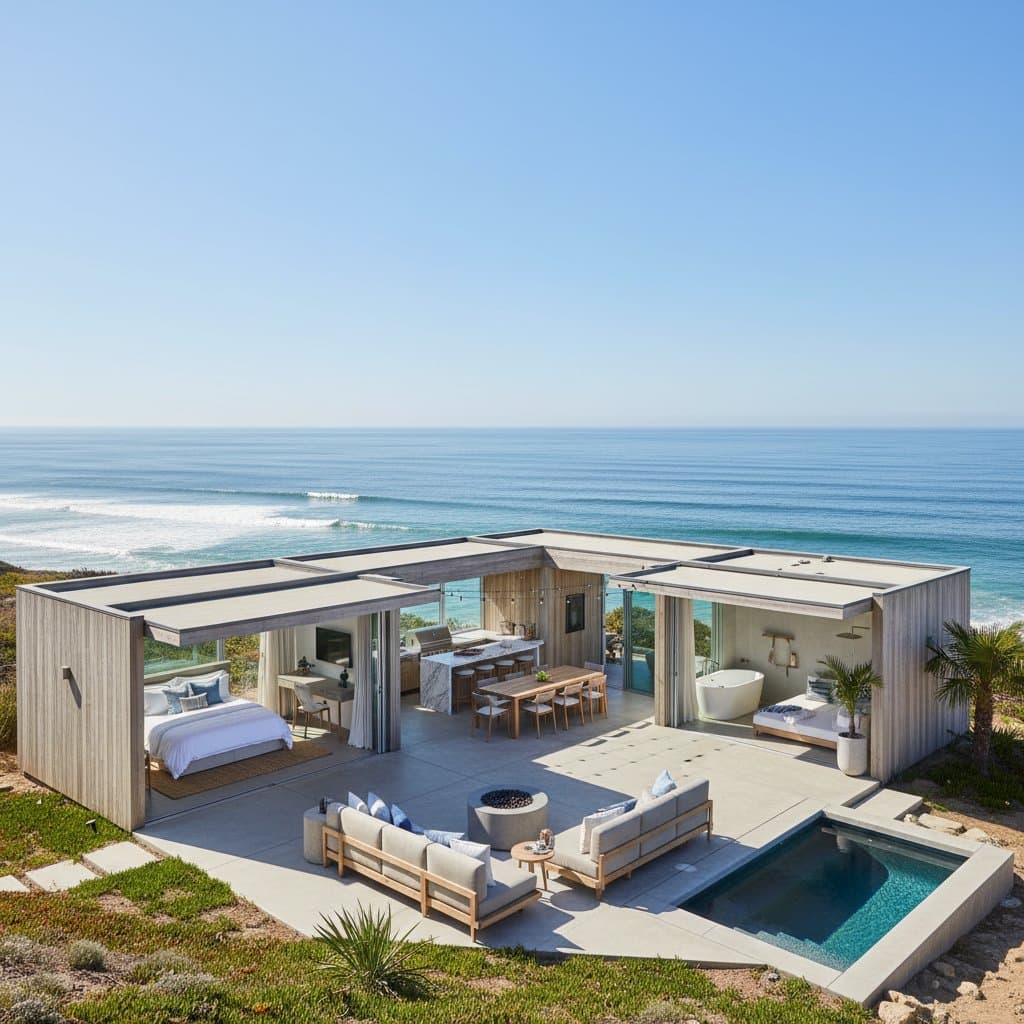
9 Modular Outdoor Room Ideas for Expanding Your Coastal Living Space
Living by the coast brings constant exposure to open air, ocean breezes, and sunshine. Many homeowners still seek additional space for relaxation, work, or gatherings while preserving that direct link to the outdoors. Modular outdoor rooms address this need by combining indoor comfort with outdoor access.
These adaptable structures suit patios and backyards that lack clear purpose. They function as guest suites, studios, kitchens, or quiet nooks. Their modular nature allows future adjustments as needs evolve. The following ideas illustrate practical ways to increase usable space at a coastal property.
Functional Additions for Everyday Living
1. Coastal Inspired Guest Suite
A modular guest suite supplies private quarters for visitors without detaching them from the main residence. Large windows or sliding glass doors maintain ocean views and natural ventilation. Position the unit near an existing pathway to simplify access for guests.
Install a compact deck with an outdoor shower to support beach routines. Select corrosion resistant siding and sealed windows to handle salt air exposure.
2. Outdoor Home Office
A modular office creates separation between work tasks and household activity while retaining coastal sounds and light. Built in desks, cable management channels, and adjustable exterior shades support focused work. Route power and internet lines through weatherproof conduits during initial setup.
This intermediate project requires basic electrical work and stable internet connectivity.
3. Creative Art Studio
Modular rooms convert readily into art studios when fitted with cleanable floors, overhead skylights, and steady climate control. Neutral wall colors and expansive windows deliver even natural light across the day. The design permits later relocation or expansion if creative needs shift.
Entertainment and Relaxation Spaces
4. Alfresco Dining Pavilion
A modular dining pavilion supports outdoor meals with retractable side panels or a pergola roof that regulates sun and wind. String lights, a communal table, and an adjacent grill station streamline hosting. Budget between 12000 and 25000 dollars for materials and basic finishes.
5. Lounge Pod with Ocean Views
A compact lounge pod offers a quiet spot for reading or wave watching. Cushioned seating, low level lighting, and a restrained color palette keep attention on the surroundings. Quick installation and future repositioning suit evolving yard layouts.
Add a compact sound system and an outdoor rated heater to extend use through cooler months.
6. Open Air Kitchen Suite
Modular outdoor kitchens incorporate durable countertops, compact appliances, and a covered seating zone. Stainless steel fixtures and stone surfaces resist coastal moisture. The layout accepts later additions such as a pizza oven. This advanced build involves plumbing and electrical planning.
Wellness and Recreational Rooms
7. Modular Yoga or Meditation Room
A simple modular structure with open sides or mesh screens promotes airflow during morning stretches. Bamboo or teak elements complement the natural setting. Floor cushions, soft lighting, and a small speaker for gentle audio complete the space.
8. Fitness Pod with Ocean Breeze
A fitness pod accommodates equipment or movement routines with mirrored walls, impact resistant flooring, and ventilation panels. Budget 15000 to 30000 dollars depending on equipment and finishes. Proper drainage beneath the floor prevents moisture accumulation.
9. Relaxation Spa Retreat
A modular spa room houses a hot tub, sauna, or massage table while preserving backyard privacy. Glass panels admit daylight without direct exposure. Position the unit on a level slab and connect utilities early to avoid future modifications.
Planning Advice for Coastal Expansion
Successful installation depends on several practical considerations. Choose aluminum frames and composite decking to resist corrosion. Ensure continuous ventilation to limit salt buildup inside enclosed areas. Verify local permit requirements before construction begins. Pier blocks or concrete slabs provide suitable foundations on typical coastal soils. Plan utility connections for power, water, and drainage at the outset.
Consult a builder experienced with marine environments to confirm long term durability.
Frequently Asked Questions
What are modular outdoor rooms made of?
Steel or aluminum frames paired with insulated panels, glass, or composite siding form most units. These materials tolerate coastal humidity and require little upkeep.
How long does installation take?
Many units reach completion within several days after foundation and utility work finish. Larger or more complex designs extend the timeline.
Are modular rooms suitable for all climates?
Customization options address varied conditions. Coastal models feature enhanced sealing, corrosion protection, and improved airflow.
Do modular outdoor rooms increase property value?
Added usable space and lifestyle features often raise appeal, particularly in scenic coastal locations.
Can I relocate a modular outdoor room later?
Smaller units move more easily. Larger installations with fixed utilities and foundations typically remain in place.
Maximizing Daily Use of Added Space
After installation, experiment with layout changes and new functions to match seasonal needs. Connecting multiple units can create larger retreats when desired. Thoughtful material choices and early utility planning keep maintenance low while supporting flexible coastal living.