
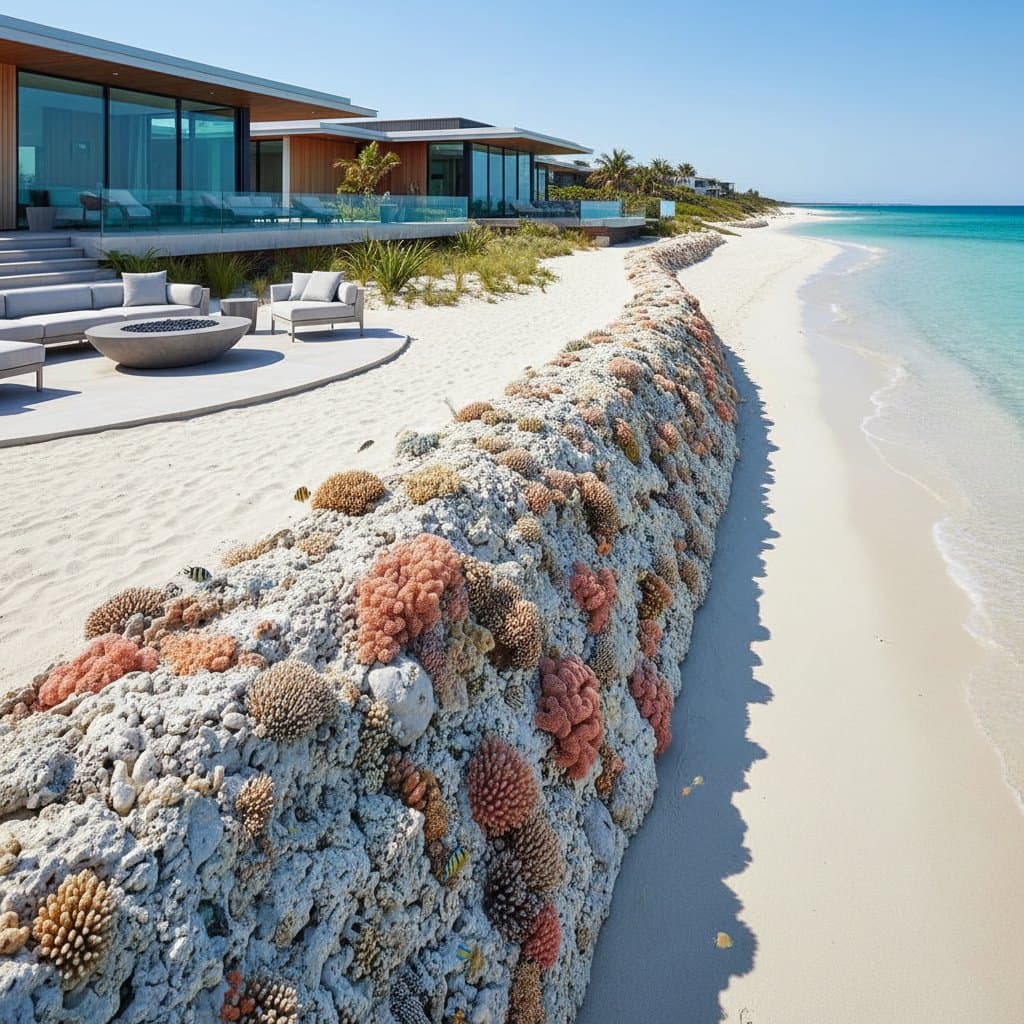
Living Coral Seawalls Shield Beach Homes from Erosion
Coastal residents often face the dual nature of the ocean: its serene beauty alongside relentless erosive power. Waves that provide relaxation also gradually diminish shorelines, endangering beachfront properties by narrowing sandy expanses into precarious edges. Fortunately, living coral seawalls represent an innovative solution that safeguards homes while fostering environmental health. These structures integrate engineering precision with biological growth to deliver enduring protection.
What Are Living Coral Seawalls?
Living coral seawalls function as hybrid barriers that combine structural engineering with ecological vitality. Rather than relying on inert concrete, they employ a conductive metal skeleton designed to support coral attachment and proliferation. This approach yields a dynamic system that gains durability as coral matures, resisting degradation far better than conventional materials.
How It Works
Central to this innovation lies biorock technology, which applies a mild electrical current to seawater. This current accelerates the deposition of minerals, creating a calcium carbonate layer akin to natural limestone. The resulting substrate proves ideal for coral polyps to settle and develop into robust colonies. As growth progresses, the framework transforms into a multifaceted reef that serves both defensive and habitat roles. In optimal conditions, such as those in tropical or subtropical waters, initial coral adhesion occurs within weeks, with significant reef formation evident after 6 to 12 months.
Photo: Coral-covered seawall protecting a beachfront property with clear turquoise water.
How Living Coral Seawalls Protect Beach Homes
These seawalls excel at mitigating wave impact through bio-mimetic design. The textured coral surface fragments incoming waves, dissipating energy across a porous network. This mechanism not only halts sediment displacement but also promotes sand accretion, effectively widening beaches over time.
Key benefits for homeowners:
- Reduced erosion: By anchoring the substrate, coral formations minimize scour around property bases, preserving foundations against undermining.
- Wave absorption: The reef's topography diffuses surge forces, shielding seaward structures like patios and gardens from hydrodynamic stress.
- Increased property value: Sustainable features appeal to environmentally aware markets, often elevating resale prices by 10 to 20 percent in coastal regions.
- Visual appeal: Vibrant coral hues and associated fauna enhance scenic vistas, turning defensive installations into aesthetic assets.
- Self-repairing nature: Coral's regenerative capacity allows damaged sections to recover through larval recruitment, reducing repair interventions.
Tip: Integrate living coral seawalls with native vegetation, such as sea oats or beach grasses, to bolster dune formation. This combination fortifies sediment retention and creates a cohesive, low-impact shoreline profile.
Designing a Coral Seawall for Your Property
Site-specific factors dictate the efficacy of any seawall installation. Seabed topography, prevailing currents, and salinity levels necessitate tailored configurations to ensure longevity and performance.
Steps to Get Started
- Assessment: Engage a certified coastal engineer or marine ecologist to conduct a site survey, analyzing erosion rates, tidal influences, and existing biodiversity.
- Design: Develop blueprints that align with property boundaries, specifying frame dimensions, anchoring depths, and electrical integration for optimal current flow.
- Permitting: Consult municipal authorities and environmental agencies to secure approvals, particularly in protected coastal zones where impact assessments are mandatory.
- Installation: Position the titanium or stainless-steel framework submerged at the desired depth, then link it to a solar-powered rectifier for consistent low-voltage supply.
- Seeding: Introduce nursery-reared coral fragments or rely on ambient plankton for settlement, selecting resilient species like branching acropora for rapid coverage.
- Monitoring: Schedule quarterly dives or use remote sensors to track growth metrics, pH levels, and structural integrity throughout the establishment phase.
Tip: Collaborate with regional nonprofits or academic institutions specializing in reef restoration. Such partnerships often provide expertise, funding grants, or volunteer support to offset costs and enhance project outcomes.
Challenges and Considerations
Although promising, living coral seawalls demand careful planning to overcome inherent limitations. Environmental variables play a pivotal role in their viability.
Challenges to anticipate:
- Water quality: Elevated nutrients or sediments from runoff can inhibit calcification, necessitating upstream pollution controls.
- Temperature sensitivity: Coral bleaching risks rise with warming trends; select heat-tolerant genotypes and incorporate shading elements where feasible.
- Initial cost: Upfront expenses, including materials and expertise, may exceed traditional seawalls by 20 to 50 percent, though lifecycle savings accrue through minimal upkeep.
- Monitoring needs: Early vigilance against biofouling or electrical faults is essential, potentially requiring annual professional evaluations.
Homeowners who address these factors typically experience substantial returns. Established systems demand little intervention, evolving into integral ecosystem components that enhance resilience against climate pressures.
Frequently Asked Questions
How long does it take for coral to grow on a seawall?
Most coral begins attaching within a few months, with noticeable growth appearing within the first year. Growth rates depend on water conditions and coral species.
Is it safe for swimmers and marine life?
Yes. The electrical current used in biorock technology is extremely low and safe. The coral reef itself becomes a haven for fish and other marine species.
Can existing seawalls be converted into living coral structures?
In some cases, yes. Metal frames can be anchored in front of existing barriers to create a hybrid system that promotes coral growth while retaining structural support.
Sustaining Coastal Harmony Through Innovation
Adopting living coral seawalls positions homeowners at the forefront of adaptive coastal management. These installations not only secure properties against erosive threats but also contribute to broader marine conservation efforts. By investing in such solutions, individuals foster resilient shorelines that benefit communities and ecosystems alike for generations.