
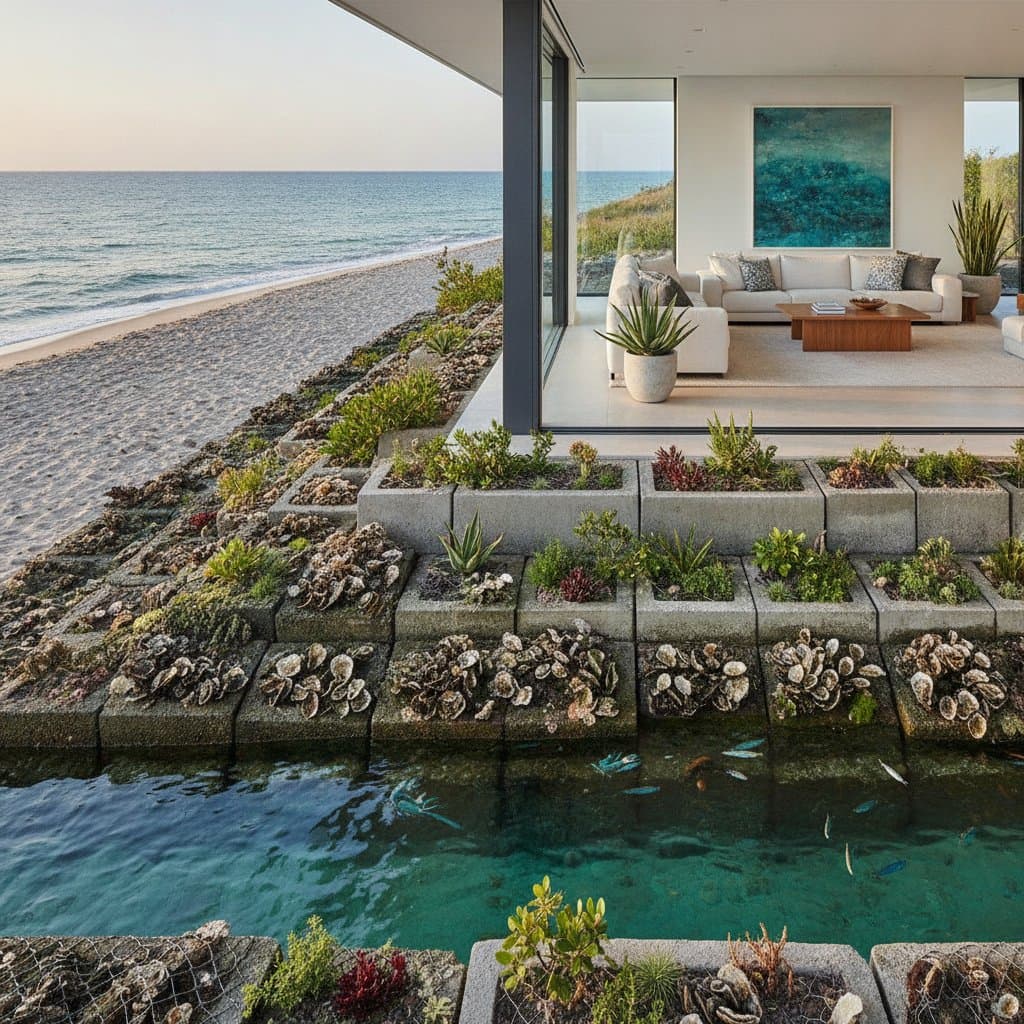
Living Seawalls: Eco Upgrade for Waterfront Homes
Waterfront living offers beauty and serenity, yet it also brings one persistent challenge: erosion. Traditional concrete seawalls have long served as the standard solution for protecting shorelines. They often harm marine ecosystems and require expensive maintenance. A new alternative, living seawalls, offers a way to safeguard property while restoring marine life and improving water quality.
If you own a coastal or bayfront home, understanding the cost, design, and benefits of living seawalls can help you make an informed decision that protects both your investment and the environment. This guide breaks down everything you need to know, from price ranges and installation options to maintenance, materials, and long-term value.
What Is a Living Seawall?
A living seawall is a hybrid coastal defense structure that combines engineered protection with ecological design. Instead of a plain, vertical concrete wall, a living seawall features textured panels, embedded habitats, or modular blocks designed to mimic natural shorelines. These structures provide shelter for oysters, seaweed, barnacles, and small fish, helping to rebuild marine biodiversity.
The concept is simple. Instead of fighting nature, you work with it. By encouraging marine growth, the seawall becomes stronger over time as organisms colonize the surface, naturally stabilizing the shoreline and filtering the surrounding water.
Average Cost of a Living Seawall
The average cost of a living seawall ranges from $650 to $1,200 per linear foot, depending on materials, location, and site conditions. For a standard residential property with 80 linear feet of shoreline, you can expect a total cost between $52,000 and $96,000.
By comparison, a traditional concrete seawall often costs $500 to $1,000 per linear foot. Although a living seawall may have a slightly higher upfront price, the long-term savings in maintenance and environmental impact make it a more sustainable investment.
| Project Type | Average Cost per Linear Foot | Typical Total for 80 ft Shoreline | Key Benefit |
|---|---|---|---|
| Basic Concrete Seawall | $500 - $1,000 | $40,000 - $80,000 | Strong structural barrier |
| Living Seawall (Hybrid) | $650 - $1,200 | $52,000 - $96,000 | Eco-friendly, habitat creation |
| Full Ecological Seawall with Reef Modules | $900 - $1,500 | $72,000 - $120,000 | Maximum biodiversity and water filtration |
These costs include design, engineering, materials, and installation but do not account for permits or specialized site preparation, which can add another 10 to 15 percent to the total.
Cost by Material Type
Material choice influences both price and ecological performance. The table below outlines common materials used in living seawalls and their relative costs and benefits.
| Material | Cost per Linear Foot | Durability | Ecological Value | Maintenance Level |
|---|---|---|---|---|
| Precast Textured Concrete Panels | $650 - $900 | High | Moderate | Low |
| Recycled Concrete with Habitat Inserts | $700 - $1,000 | High | High | Low |
| Natural Limestone or Granite Blocks | $800 - $1,200 | Very High | High | Moderate |
| Oyster Reef Modules (Add-On) | $200 - $400 | Medium | Very High | Low |
Precast panels are the most common choice for residential applications because they are cost-effective and easy to install. Limestone and granite offer a more natural aesthetic and longer lifespan but require more labor to fit and align. Oyster reef modules are often added in front of or within the wall to enhance biodiversity and wave attenuation.
Labor Costs and Installation
Labor costs typically account for 30 to 40 percent of the total project. Professional marine contractors charge between $75 and $125 per hour, depending on expertise and regional demand.
The installation process includes:
- Site assessment and design to evaluate erosion, tidal range, and substrate stability.
- Permit acquisition, which can take several weeks and may involve local environmental reviews.
- Wall foundation preparation, where old structures are removed and the shoreline is graded.
- Installation of panels or modules, either from land or water using specialized equipment.
- Finishing and ecological planting, such as adding seagrass or mangrove roots to promote habitat growth.
Total installation time ranges from two to four weeks, depending on weather and site complexity.
Factors That Influence Total Cost
Several variables affect the final cost of a living seawall project. Shoreline length and accessibility matter because remote or steep areas require more equipment and time. Water depth and tidal range determine foundation strength. Material selection affects both durability and expense. Permit requirements add time and fees. Existing damage increases labor costs. Design complexity raises pricing. Local labor rates vary significantly across coastal regions.
How to Save Money on a Living Seawall
Although living seawalls are a premium option, there are several ways to reduce expenses without compromising results.
- Combine materials strategically. Use precast concrete for structural sections and natural rock or reef modules only in visible or high-erosion zones.
- Partner with local conservation programs. Some municipalities offer incentives or partial funding for eco-friendly shoreline protection.
- Plan during low-demand seasons. Contractors often offer lower rates outside peak building months.
- Reuse existing materials. Recycled concrete rubble or boulders can serve as substrate for new habitat zones.
- Simplify the design. Reducing custom shapes or finishes can lower both material and labor costs.
- Group projects with neighbors. Shared seawall segments or connected habitat areas reduce per-foot expenses.
Smart planning and collaboration can trim costs by as much as 15 to 25 percent.
DIY vs. Hiring a Professional
DIY Approach
A small-scale living shoreline or reef garden can be installed by a homeowner with basic marine construction skills. DIY options include installing oyster bags or reef balls along a private dock, planting native marsh grasses or mangrove seedlings to stabilize soil, and using modular habitat blocks that interlock without heavy machinery. Typical DIY costs fall between $150 and $400 per linear foot, but these solutions are best for low-energy shorelines with minimal erosion.
Professional Installation
For most waterfront homes, hiring a professional is essential. Marine construction involves tidal engineering, structural load testing, and permit compliance that exceed typical homeowner capability. Contractors also ensure the wall meets safety standards and will not fail during storm events. Professional-built systems can last 40 to 70 years with minimal upkeep, while DIY projects often need replacement within 10 to 15 years. The higher upfront cost is balanced by lower long-term maintenance and superior shoreline stability.
Environmental and Property Benefits
Living seawalls provide both ecological restoration and economic value. Key benefits include erosion control through textured surfaces that slow wave energy and prevent soil loss. Microhabitats support crabs, oysters, and small fish, improving local ecosystems. Oyster colonies can filter thousands of gallons of water daily, improving clarity. Naturalized walls blend with the surrounding landscape and increase property charm. Eco-enhanced designs may qualify for faster permitting or local environmental credits. Eco-friendly shoreline protection can boost resale value by 5 to 10 percent, particularly in environmentally conscious communities. Over time, as marine life colonizes the wall, its strength and ecological value continue to grow.
Common Mistakes to Avoid
Many homeowners make avoidable errors when planning their first living seawall. Avoid ignoring permits, as installing without proper authorization can result in fines or forced removal. Do not use incompatible materials, since plain concrete without texture provides little ecological benefit. Do not underestimate wave energy, as an undersized wall may fail during strong tides or storms. Schedule annual checks to identify early signs of erosion or cracking. Always use regional vegetation suited to tidal conditions rather than overplanting non-native species. A thorough site assessment and consultation with a qualified marine engineer prevent costly mistakes.
Planning Your Living Seawall Project
Start with a professional site evaluation to match design choices to local conditions. Review permit options early to identify any incentives for habitat-enhancing features. Select materials that balance structural needs with ecological goals. Schedule regular inspections to maintain performance over decades. These steps help ensure the installation delivers lasting protection and added property value.