
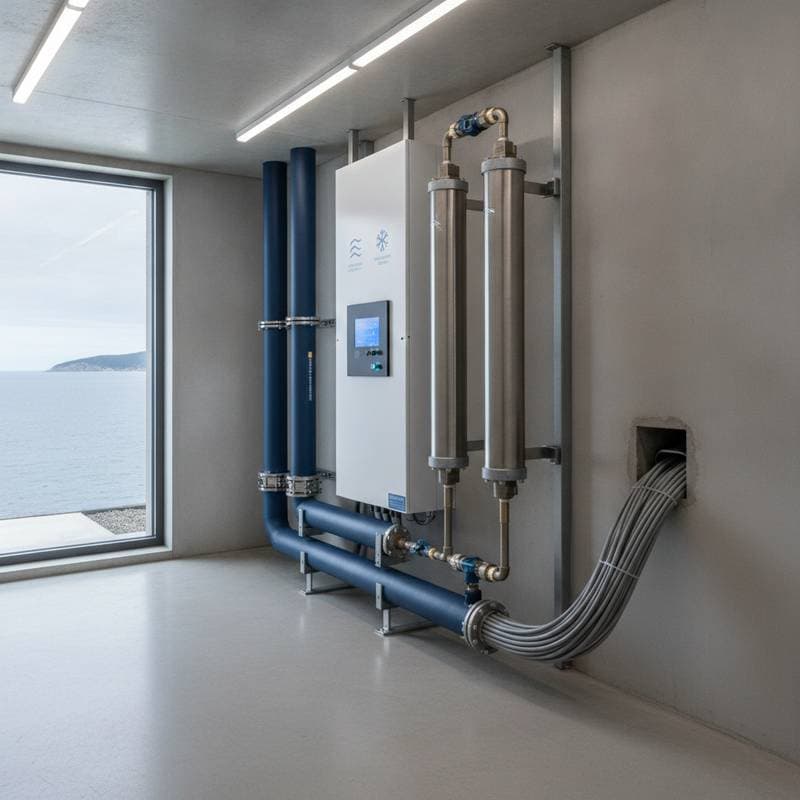
Seawater AC Systems Cool Coastal Homes for 60 Percent Less
Coastal homeowners are discovering a new way to stay cool while cutting costs. Seawater air conditioning, often called ocean-source cooling, uses the natural temperature of the ocean to chill homes and buildings. The result is an energy-efficient system that can reduce cooling costs by up to 60 percent compared to traditional air conditioning. For homes along the San Diego coast, this innovative approach could redefine what it means to live comfortably by the sea.
How Seawater Air Conditioning Works
Seawater air conditioning draws cold ocean water from deep offshore to cool a closed-loop system inside a home. The process transfers heat from the indoor air to the seawater through a heat exchanger, then returns the slightly warmer seawater back to the ocean. This cycle eliminates the need for energy-hungry compressors used in conventional HVAC units.
Key Components
- Intake pipe draws cold seawater from deep offshore zones.
- Heat exchanger transfers heat between the building chilled water loop and the seawater.
- Distribution loop circulates cooled water through the home air handlers or fan coils.
- Return outlet sends the warmed seawater back to the ocean at a safe depth.
This method takes advantage of the ocean stable temperature, which remains cooler than the air even during the hottest months.
Cost Breakdown
The initial setup for seawater cooling costs more than a conventional HVAC system, yet the long-term savings prove substantial. The table below shows a general comparison of costs.
| System Type | Installation Cost | Annual Energy Cost | Maintenance | Estimated Savings |
|---|---|---|---|---|
| Standard HVAC | $8,000 - $15,000 | $1,800 - $2,500 | Moderate | |
| Seawater AC | $20,000 - $35,000 | $600 - $1,000 | Low | Up to 60 percent reduction |
While upfront costs can reach double the price of standard systems, lower utility bills and minimal maintenance often balance the investment within a few years. In multi-unit properties or resort-style developments, the savings multiply quickly.
Benefits for Coastal Homeowners
For homeowners near the ocean, seawater cooling offers a mix of comfort, economy, and sustainability.
Major Advantages
- Energy efficiency uses naturally cold seawater instead of electricity-driven compressors.
- Lower operational costs reduce energy consumption by more than half.
- Quiet operation results from fewer moving parts.
- Low maintenance requires fewer mechanical repairs and filter changes.
- Eco-friendly performance decreases greenhouse gas emissions and uses no harmful refrigerants.
Environmental Considerations
Seawater systems protect marine life and water quality. The temperature difference between intake and return water stays small, keeping the system environmentally balanced. Proper engineering ensures that each installation meets local environmental standards and minimizes ecological disruption.
Factors Influencing Feasibility
Not every coastal home can install seawater cooling easily. Several factors determine whether the approach is practical or cost-effective.
- Proximity to deep water favors homes near steep coastal shelves.
- Property size allows larger homes to justify the setup cost more readily.
- Local regulations govern permits for underwater pipelines and intake systems.
- Soil and rock composition affects the cost of trenching and installation.
- Existing HVAC infrastructure makes retrofitting more complex than new construction.
When site conditions fit, seawater cooling becomes one of the most efficient HVAC solutions available.
Planning and Installation Tips
Homeowners interested in seawater AC should begin with a feasibility study conducted by a licensed marine HVAC engineer. The study estimates pipe length, depth, and expected efficiency. Practical steps for success include obtaining multiple quotes from specialists familiar with coastal installations, checking environmental compliance early, budgeting for excavation and pipe-laying, considering hybrid systems that combine seawater cooling with solar energy, and scheduling regular inspections to keep the intake and heat exchanger free from marine buildup.
Return on Investment and Long-Term Value
Seawater AC systems deliver attractive long-term returns. The savings on electricity often recover the initial investment within several years. In addition, these systems enhance property value, especially in high-end coastal neighborhoods where sustainable features attract premium buyers.
| Metric | Typical Value |
|---|---|
| Payback period | 5 - 8 years |
| Energy savings | 50 percent - 60 percent |
| ROI on resale | 10 percent - 15 percent increase |
These figures vary based on system size, local energy rates, and installation conditions, yet the trend remains consistent.
Common Questions
How much does seawater AC cost to install? Expect a range of $20,000 to $35,000 for a single-family coastal home.
Can it work for existing homes? Yes, but retrofitting costs rise due to excavation and connection challenges.
Next Steps for Coastal Homeowners
Homeowners ready to explore seawater cooling can contact a qualified marine HVAC specialist to assess site conditions and begin the feasibility process.