
Coastal Solar Tiles Reduce Energy Costs by 60 Percent or More
Homeowners along coastal regions are discovering a powerful way to reduce energy expenses while maintaining beautiful, weather-resistant roofs. On average, coastal homes with solar roof tiles cut energy bills by up to 60 percent. These integrated solar roofing systems combine the durability of high-end tiles with the clean power of solar energy.
In a typical mid-sized coastal city, installing solar tiles can reduce monthly energy costs from around 250 dollars to 100 dollars. The upgrade pays for itself in energy savings within several years while increasing property value.
Average Costs and Savings
The cost of installing solar roof tiles depends on roof size, design complexity, and local labor rates. On average, homeowners can expect to pay between 25,000 and 50,000 dollars for a full solar tile installation.
Cost and Savings Breakdown
| Home Size | Typical Installation Cost | Estimated Energy Savings | Average ROI |
|---|---|---|---|
| Small (under 1,500 sq ft) | 18,000 - 28,000 dollars | 40 - 55 percent | 65 percent |
| Medium (1,500 - 2,500 sq ft) | 25,000 - 45,000 dollars | 50 - 60 percent | 75 percent |
| Large (over 2,500 sq ft) | 40,000 - 65,000 dollars | 55 - 65 percent | 80 percent |
In coastal locations with strong sunlight, solar tiles can produce enough energy to power most household needs. The return on investment is boosted by reduced cooling costs since solar tiles reflect heat more effectively than darker roofing materials.

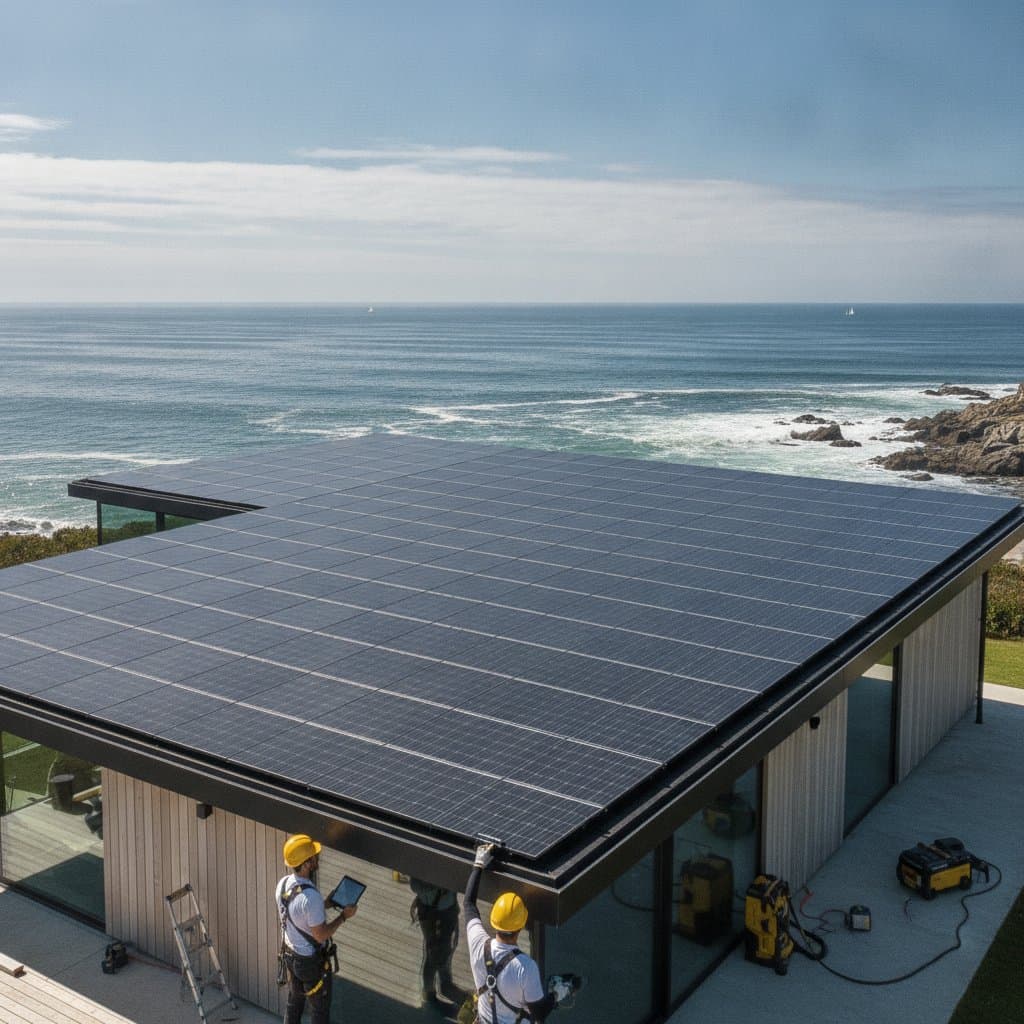
Installation of solar tiles designed for coastal durability and energy performance.
Factors Influencing Solar Tile Efficiency
The performance of solar roof tiles depends on several environmental and design factors.
Location and Sun Exposure
Homes with unobstructed southern or western roof exposure generate the most electricity. Shading from trees or nearby buildings can lower efficiency by 10 to 25 percent.
Roof Pitch and Orientation
A moderate roof slope captures optimal sunlight. Shallow or steep roofs may require customized tile placement for maximum efficiency.
Material and Manufacturer Quality
Premium tiles typically have higher energy conversion rates and longer warranties. Choosing high-quality components ensures consistent performance despite harsh coastal conditions.
Energy Consumption Patterns
Households that use more electricity during daylight hours benefit most from direct solar generation. Others may save more by adding battery storage.
Budgeting and Planning Tips
Investing in solar roof tiles requires thoughtful planning. Homeowners should evaluate energy usage, roof condition, and long-term goals before installation.
Smart Planning Steps
- Obtain multiple quotes from certified solar roofing contractors with coastal experience.
- Inspect the roof to confirm it can support new tile structures.
- Estimate future energy needs to size the system properly.
- Include a contingency budget of 10 to 15 percent for unexpected costs.
- Ask about warranties covering both roofing and solar performance.
While upfront costs are higher than traditional roofing, the long-term savings often justify the investment. Many homeowners offset installation costs through energy rebates or property tax incentives.
DIY and Low-Cost Alternatives
For homeowners not ready for a full solar roof conversion, hybrid solutions can still deliver energy savings.
- Partial solar tile installations on sun-facing sections of the roof.
- Solar panel and tile combinations for flexible design and cost control.
- Solar awnings or pergolas for outdoor energy collection.
- Energy-efficient roofing materials with reflective coatings to reduce heat absorption.
Each option can reduce energy use while providing a pathway toward future full integration.
Return on Investment and Long-Term Benefits
Solar roof tiles not only cut energy bills but also increase property value. Studies show homes with integrated solar systems sell faster and at higher prices. For coastal homeowners, the added durability also means fewer maintenance costs due to weather damage.
Average ROI for solar tile roofing ranges from 65 to 85 percent, depending on energy prices and local conditions. Over time, the combination of lower utility bills, improved efficiency, and enhanced curb appeal makes it one of the most cost-effective upgrades available.
FAQs
| Question | Answer |
|---|---|
| How long do solar roof tiles last? | Most solar tiles last 25 to 30 years with minimal maintenance. |
| Can solar tiles withstand coastal weather? | Yes, they are designed to resist corrosion, wind, and salt exposure common in coastal environments. |
| Do solar tiles require cleaning? | Occasional rinsing removes salt or dust buildup, keeping performance steady. |
| How much maintenance is needed? | Very little. Periodic inspections ensure optimal energy generation. |
| Can I install solar tiles on an existing roof? | Some systems allow retrofitting, but full replacement provides the best efficiency and appearance. |
Maximizing Benefits from Solar Roofing
Switching to solar roof tiles transforms a coastal home into a self-sustaining energy hub. With lower utility costs, improved comfort, and a sleek design that resists coastal wear, it is an upgrade that delivers daily benefits. Whether you choose a full solar tile system or start with a partial installation, each step toward integrated solar roofing brings lasting value and energy independence.