
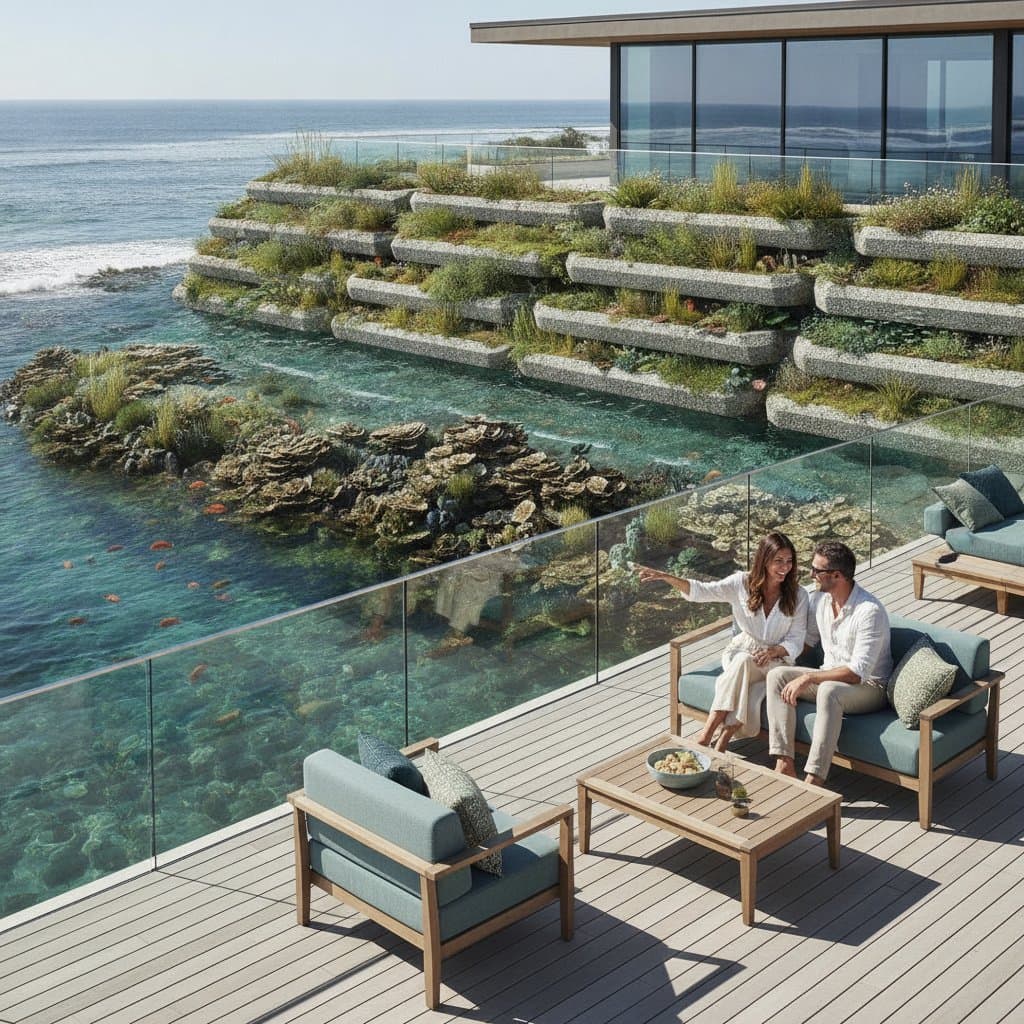
Living Seawalls Offer Eco-Friendly Coastal Erosion Control
Living seawalls transform shoreline protection by integrating engineered structures with natural systems. These barriers stabilize coastlines and create habitats for marine organisms. Coastal communities such as those in San Diego gain durable erosion control along with measurable gains in water quality and species diversity.
Definition and Core Design
A living seawall functions as a shoreline barrier that reduces erosion and supports marine growth. Textured panels, modular blocks, and natural materials replace the flat surfaces of conventional walls. Oysters, barnacles, and seaweed colonize these surfaces and add strength as the structure matures.
Direct answer: Living seawalls are engineered coastal barriers that combine biological and structural elements to protect shorelines and promote marine life.
Essential Components
- Textured surfaces supply microhabitats that encourage attachment by sessile organisms.
- Oyster reef layers absorb wave energy and create shelter for fish and invertebrates.
- Salt-tolerant vegetation anchors soil and reduces nutrient runoff.
- Interlocking modules permit adjustments to site-specific contours and tidal ranges.
Limitations of Conventional Seawalls
Traditional concrete walls reflect wave energy and accelerate erosion at their bases. Smooth vertical faces eliminate intertidal zones and lower local biodiversity. Maintenance expenses rise over time as storms intensify and structural fatigue appears.
Living seawalls dissipate energy across irregular surfaces and trap sediment. The resulting ecological functions offset many drawbacks of rigid barriers.
Installation Costs and Variables
Project costs typically range from 500 to 1200 dollars per linear foot. This range covers foundation work, panels, biological seeding, and labor. Initial outlays exceed those of basic concrete walls, yet reduced annual upkeep and ecosystem services improve net returns.
Component Cost Ranges
| Component | Typical Cost Range | Primary Function |
|---|---|---|
| Structural foundation | 250 to 400 | Base stability |
| Textured panels | 150 to 300 | Attachment surface |
| Oyster or shell layer | 50 to 150 | Wave buffer and habitat |
| Vegetation planting | 25 to 75 | Soil retention and filtration |
| Annual monitoring | 25 to 50 | Performance tracking |
Site-Specific Cost Drivers
High wave exposure demands deeper foundations. Permitting processes extend timelines in regulated coastal zones. Local material sourcing lowers transport expenses. Greater species diversity increases early-stage setup costs.
Ecological Performance Gains
Living seawalls deliver habitat and filtration functions absent from concrete structures. Textured surfaces and oyster colonies support up to 30 percent more species than plain walls. Filter-feeding bivalves remove suspended particles and excess nutrients from the water column.
Vegetation sequesters carbon and moderates nearshore temperatures. These combined effects strengthen food webs and improve conditions for recreation and fisheries.
Project Planning Sequence
- Conduct a site assessment of wave energy, substrate, and tidal amplitude.
- Select materials compatible with regional marine communities.
- Install pilot sections to verify performance before full deployment.
- Involve local residents in planting and periodic observation.
Annual inspections focus on vegetation condition, oyster density, and any signs of undercutting. Avoid chemical cleaners that could harm colonizing organisms.
Long-Term Economic Comparison
| Seawall Type | Installation Cost | Annual Maintenance | Lifespan | Estimated ROI |
|---|---|---|---|---|
| Concrete | 400 to 900 | 75 to 150 | 25 to 40 years | 40 to 55% |
| Living | 500 to 1200 | 25 to 50 | 40 to 60 years | 60 to 80% |
Biological growth reinforces the structure and lowers repair frequency. Property owners therefore realize higher cumulative value over the service life of a living seawall.
Common Questions
What is the primary purpose of a living seawall? It protects shorelines from erosion while creating marine habitat.
How long do living seawalls remain functional? Properly designed installations often exceed 40 years with routine observation.
Are living seawalls appropriate for every coastline? They perform best in areas of moderate wave exposure.
Do installations require permits? Most jurisdictions mandate environmental review before construction.
Can residential owners install smaller versions? Yes, with engineering guidance and local approvals.
Steps for Property Owners
Property owners begin by consulting coastal engineers and marine ecologists familiar with regional conditions. Pilot installations allow performance data to guide larger projects. Consistent monitoring sustains both structural integrity and ecological benefits. Communities that adopt these systems secure shorelines while restoring productive marine environments.