
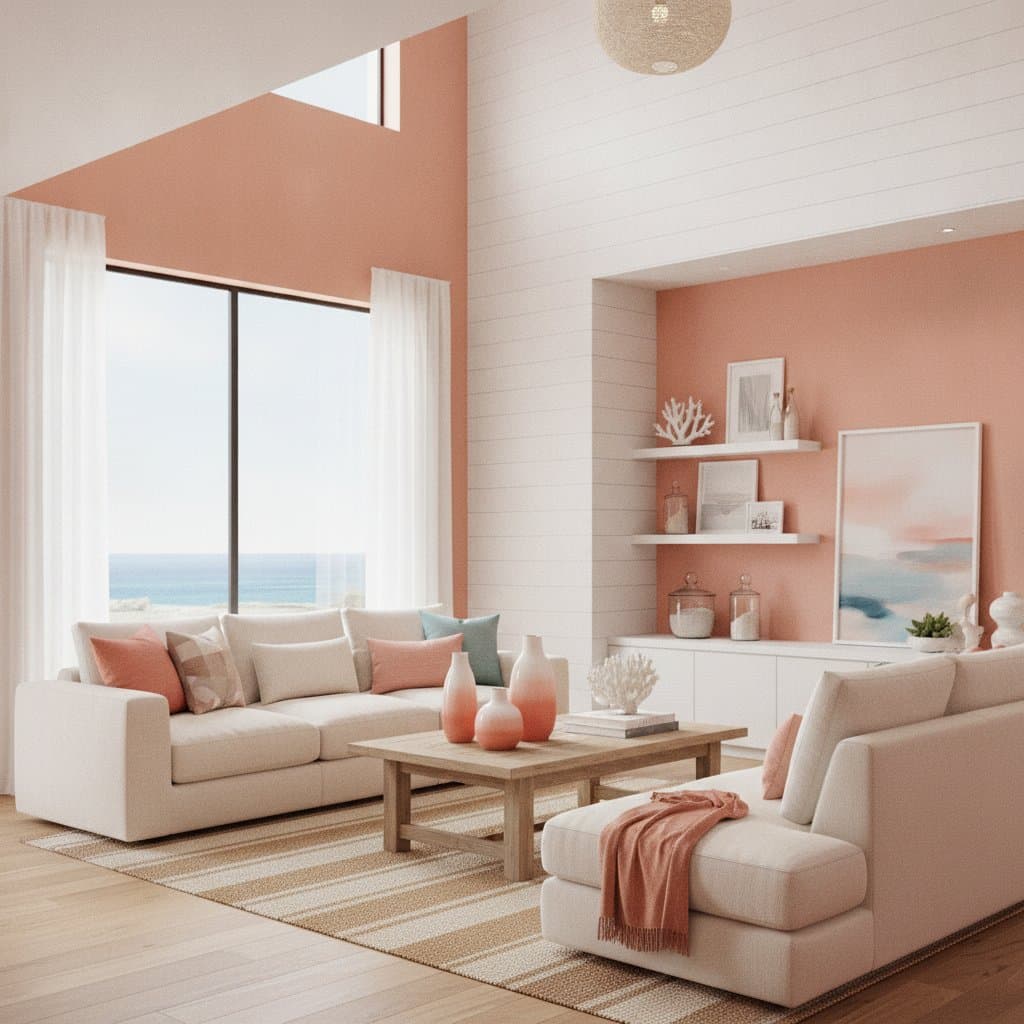
Coral Tones Trending in Modern Coastal Home Remodels
Imagine a sunlit living room where soft coral walls reflect the hues of a seaside sunset. Creamy whites and sandy neutrals ground the space. The result feels calm yet lively, much like waves meeting the shore. Coral tones deliver this effect in coastal remodels by adding depth and natural energy to contemporary rooms.
This guide examines practical applications of coral in coastal design. Readers will find specific color pairings, placement strategies, and balancing techniques. These details support both full remodels and smaller updates.
Why Coral Works in Coastal Spaces
Coral occupies a position between pink, orange, and peach. It supplies warmth and subtle energy that suits beach settings. Designers value it as a connector between classic coastal blues and current neutral schemes. The tone softens white surfaces, enhances wood grains, and complements jute or rattan weaves.
Natural light interacts favorably with coral. Sunlight passing through a coral-accented room distributes gentle warmth. This quality suits living rooms, kitchens, and bedrooms that require both cheer and relaxation.
Best Coral Color Pairings
Successful coral use depends on the surrounding palette. The following combinations produce a modern coastal appearance:
- Coral and white produces a clean, bright foundation that reduces intensity.
- Coral and soft gray introduces sophistication suitable for minimalist coastal condos.
- Coral and seafoam green mirrors reef environments and performs well in bathrooms.
- Coral and driftwood tones, including beige and weathered wood, evoke cottage charm.
- Coral and navy creates contrast when navy covers larger areas and coral serves as an accent.
Accent pieces such as throw pillows, ceramic vases, or woven rugs introduce coral without commitment. A single muted coral wall or patterned textiles on neutral furniture offers a restrained option.
Where to Use Coral in Your Remodel
Coral adapts to multiple spaces when applied with attention to scale.
Living rooms benefit from an accent wall behind a neutral sofa or from coral artwork that draws focus without dominance. Kitchens gain energy from coral backsplashes or barstools paired with white cabinetry and brass fixtures. Bedrooms receive warmth from a soft coral headboard or bedding layered with linen curtains and natural-fiber rugs. Bathrooms incorporate coral towels, vanities, or tile accents to achieve a spa atmosphere. Outdoor patios extend the palette through coral cushions or planters that echo sunset tones.
Comparing DIY and Professional Approaches
Confident homeowners can paint coral walls or refinish small furniture pieces over a weekend. Careful taping and multiple lighting tests on swatches prevent later adjustments. Larger tasks involving cabinetry, stucco, or exterior surfaces warrant professional application. Coral shifts noticeably under different light conditions, and experienced painters achieve consistent tone and finish.
Cost-Effective Methods for Coral Updates
Several approaches limit expense while introducing coral:
- Begin with portable items such as pillows, art, or lamps to evaluate the color.
- Apply coral chalk paint to existing furniture rather than purchasing replacements.
- Exchange dated drapes or rugs for coral-patterned versions.
- Limit application to a backsplash or single feature wall for greater visual return.
- Combine affordable textiles with select higher-quality elements such as brass hardware.
Selecting Coral Shades for Lasting Results
Soft, muted corals with peach or blush undertones align best with coastal neutrals. Pale versions enlarge small rooms when paired with white trim and reflective surfaces. Coral balances cool blues to form an energetic yet calm seaside scheme. Neutral materials including white oak, linen, and soft gray prevent boldness. The hue maintains relevance because it connects directly to natural coastal elements and adapts to both contemporary and traditional interiors.