
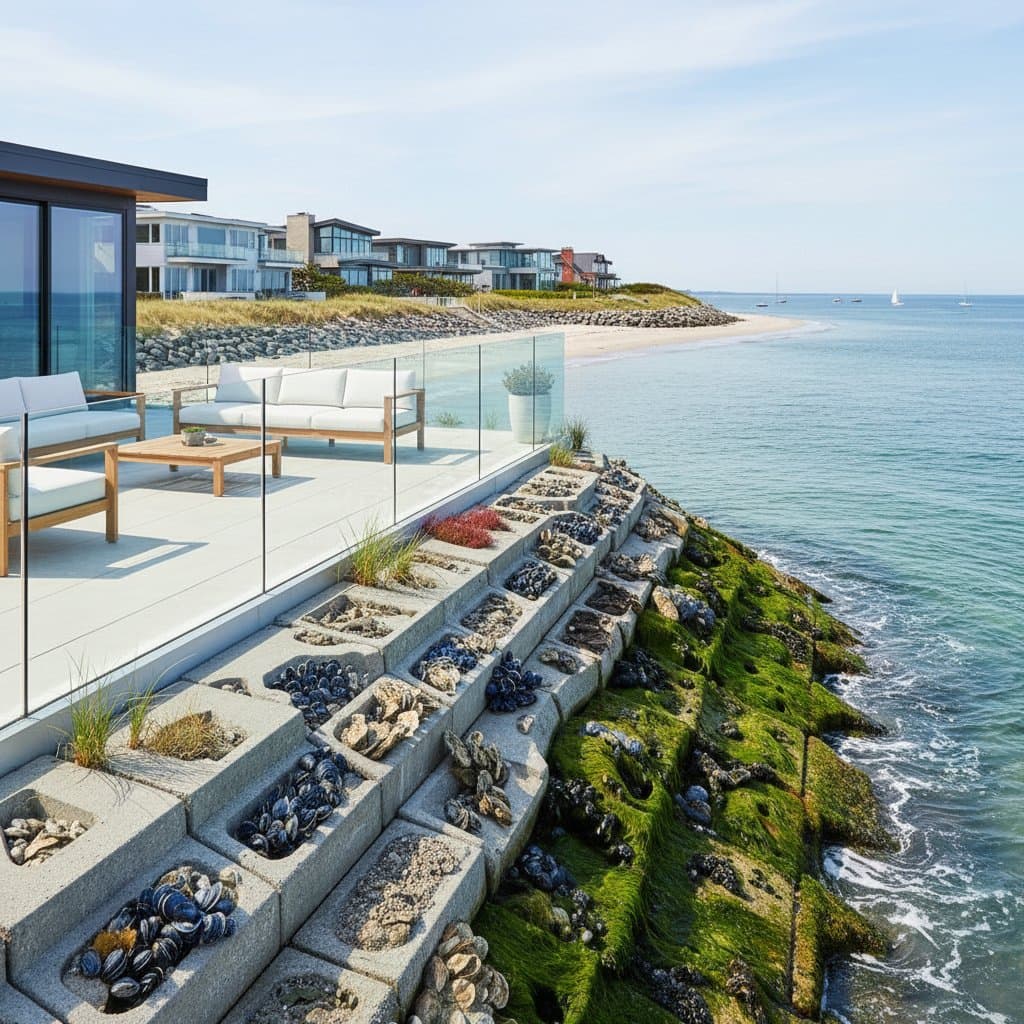
The Eco Shift: Living Seawalls for Waterfront Homes
Waterfront living offers beauty, relaxation, and a direct connection to nature. Coastal homeowners, however, confront erosion and habitat loss. Traditional concrete seawalls hold back waves effectively but often exacerbate environmental damage over time. Living seawalls emerge as a superior alternative, integrating bioengineered elements to stabilize shorelines while nurturing marine ecosystems.
For owners of waterfront properties, grasping the mechanics of living seawalls, their costs, and their dual benefits for property and environment supports informed, sustainable decisions.
What Is a Living Seawall?
A living seawall merges robust structural components with ecological features. Rather than a smooth concrete barrier, it incorporates textured panels, rock reefs, and vegetated areas to replicate natural coastal environments. This design delivers erosion control comparable to conventional walls and promotes the development of oysters, seaweed, and diverse marine species that enhance water quality.
Standard bulkheads reflect wave energy, intensifying base scouring. Living seawalls, by contrast, absorb and dissipate this energy, bolstering shoreline resilience against storms.
Average Cost of a Living Seawall
Installation of a living seawall generally ranges from $450 to $1,200 per linear foot, influenced by materials, site specifics, and design intricacies. A conventional concrete wall costs $300 to $900 per linear foot, rendering the living option initially more expensive. Long-term maintenance reductions and ecological advantages, though, recoup the premium within several years.
| Type of Seawall | Average Cost per Linear Foot | Maintenance Level | Environmental Benefit |
|---|---|---|---|
| Traditional Concrete | $300 - $900 | Moderate to High | Low |
| Vinyl or Composite | $350 - $950 | Low | Low |
| Living Seawall | $450 - $1,200 | Low | High |
Cost by Project Scope
Project expenses scale with shoreline length and complexity. For a small residential shoreline under 100 feet, budgets span $45,000 to $100,000. Mid-size properties from 100 to 250 feet require $90,000 to $250,000. Large waterfront estates exceeding 250 feet demand $250,000 to $600,000 or more.
These estimates encompass materials, labor, and integrations like reef structures or mangrove plantings, ensuring comprehensive habitat enhancement.
Labor and Design Costs
Labor constitutes 40 to 60 percent of overall expenses. Crafting a living seawall demands input from marine engineers and ecological specialists who evaluate tidal patterns, sediment profiles, and species suitability.
Design and permitting fees typically fall between $3,000 and $15,000, varying with project scale and regulatory demands.
Factors That Influence Total Cost
Multiple elements shape the final expenditure:
- Water depth and prevailing wave intensity at the site
- Soil stability and sediment characteristics
- Permitting stipulations from coastal authorities
- Equipment access for construction
- Tailored additions, such as oyster habitats, coral units, or indigenous vegetation
Assessing these upfront minimizes surprises and optimizes budgeting.
Strategies to Reduce Living Seawall Expenses
Homeowners can lower costs through deliberate choices:
- Select local materials, including reclaimed stone or area-sourced composites, to cut transportation fees.
- Integrate natural buffers, like vegetated slopes ahead of a reduced-height wall, for hybrid efficiency.
- Collaborate with regional restoration initiatives that provide funding or subsidies.
- Initiate planning promptly; alignment with environmental bodies streamlines approvals and averts redesign expenses.
- Conduct routine vegetation upkeep to mitigate early erosion risks.
These approaches balance affordability with ecological integrity.
Professional Installation Versus DIY Efforts
Living seawalls defy do-it-yourself approaches due to their technical demands, including engineering precision, permit navigation, and tidal evaluations. Owners may manage minor upkeep, such as seeding native plants or clearing habitat surfaces, yet core construction requires expert handling.
Errors carry steep consequences: faulty slopes, unsuitable materials, or offset panels accelerate erosion and invite regulatory fines. Engaging certified marine contractors guarantees adherence to standards and enduring performance.
Pitfalls to Sidestep in Living Seawall Projects
Avoid these frequent oversights to safeguard success:
- Selecting materials incompatible with regional marine organisms
- Overlooking tidal variations across seasons in planning
- Proceeding without obtaining necessary permits
- Opting for overly rigid or slick surfaces that hinder biodiversity
- Skipping post-storm assessments and repairs
Vigilance in these areas preserves both investment and ecosystem health.
Frequently Asked Questions About Living Seawalls
Do I need a permit for a living seawall?
Yes, coastal regulations mandate environmental and building permits. These verify alignment with protection standards and restoration objectives.
How long does a living seawall last?
Proper maintenance extends lifespan to 30 to 50 years or beyond. Biological elements strengthen progressively, surpassing the degradation seen in concrete structures.
What materials are used in living seawalls?
Common choices encompass marine-grade concrete, recycled composites, limestone aggregates, and vegetated sections. Textured finishes encourage attachment of marine growth.
Can I convert my existing seawall into a living one?
Retrofitting proves feasible in numerous instances. This entails affixing habitat modules, introducing native flora, and refining base hydraulics for improved flow.
Sustaining Your Living Seawall for Lasting Value
Regular inspections after weather events detect issues early. Prune overgrowth to maintain access, and monitor marine colonization to gauge effectiveness. These practices ensure the seawall endures as a resilient guardian of both property and habitat, delivering sustained environmental and financial returns.