
2026 Plumbing Codes for Beach Outdoor Showers: Essential Guidance for Homeowners
Residing near the coast offers unique opportunities for enhancing property features, and an outdoor shower ranks among the most appealing additions. This installation allows individuals to wash away sand following ocean activities or to refresh during warm weather. However, compliance with the 2026 plumbing codes for beach outdoor showers proves crucial before initiating any work. These regulations govern water distribution, drainage, and conservation in sensitive coastal areas, enabling property owners to construct durable systems that meet legal standards.
This resource explains the implications of the updated codes, their impact on construction projects, and strategies to secure approval during inspections, thereby preventing expensive modifications.
Key Provisions of the 2026 Codes
The 2026 plumbing codes introduce targeted updates for coastal installations, focusing on environmental protection and resource efficiency.
- Updated requirements address drainage methods, backflow prevention devices, and conservation measures for properties adjacent to shorelines.
- Installations proximate to beaches necessitate certified graywater systems or controlled drainage paths to minimize pollutant introduction into waterways.
- All components must adhere to low-flow criteria and incorporate materials resistant to corrosion from saline exposure.
- Property owners bear the duty of obtaining permits and scheduling inspections prior to integration with public or on-site water supplies.
- Thoughtful planning facilitates adherence to standards while developing an aesthetically pleasing and easily maintained area.
Strategies for Code-Compliant Planning
Incorporating regulatory considerations from the outset streamlines the building process and fosters a reliable setup. Begin by evaluating site specifics and material options to align with both functionality and legal mandates.
Selecting an Optimal Site
Identify a position that provides seclusion, accessibility, and effective water management. Opt for terrain that directs flow away from structural foundations and ensures connection to current water lines. Steer clear of zones where excess water might affect adjacent lots or enter beach zones directly.
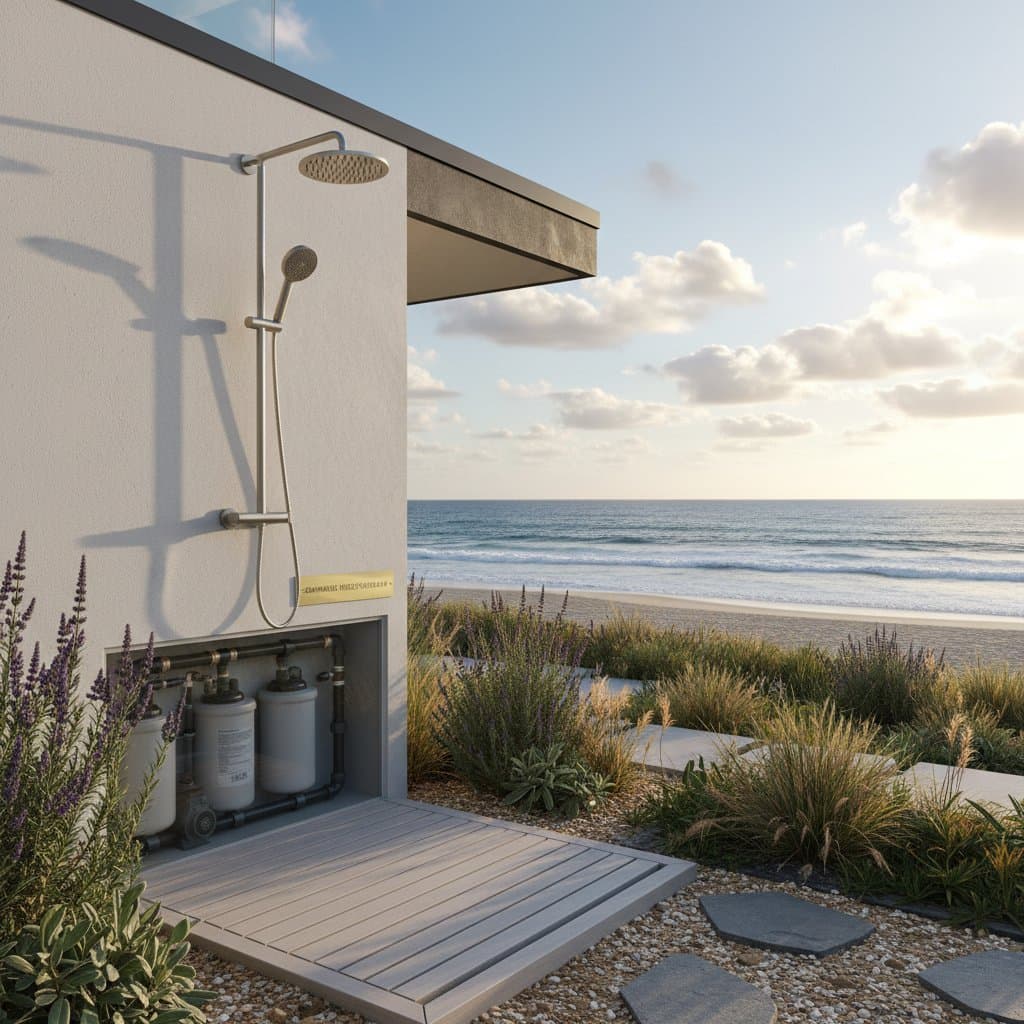
Image description: A cedar-framed outdoor shower positioned next to a seaside residence, bordered by indigenous dune vegetation.
Choosing Resilient and Approved Components
Exposure to marine conditions demands selections that withstand degradation over time.
Recommended options include:
- Fixtures crafted from stainless steel or marine-grade brass
- Underground or visible piping made from PVC or PEX
- Shower bases constructed from composite materials or natural stone
- Sealants designed for outdoor durability and siding impervious to moisture
Prohibited choices encompass untreated lumber, unprotected galvanized metals, or uncoated copper lines, as these succumb rapidly to environmental stresses.
Designing Effective Drainage and Reuse Systems
The 2026 standards promote graywater diversion, permitting treated shower effluent for landscape irrigation. Local approvals may validate basic setups like gravel-filled trenches or infiltration basins as filtration mechanisms.
| Drainage Method | Alignment with Codes | Upkeep Requirements | Ecological Advantages |
|---|---|---|---|
| Connection to graywater storage unit | Strong | Medium | Superior |
| Filtration via gravel or sand layers | Acceptable | Minimal | Beneficial |
| Discharge into stormwater systems | Prohibited | Not applicable | Detrimental |
Budgeting for a Compliant Installation
Expenses vary based on scope, connectivity, and outflow configurations. The following estimates provide a framework for financial preparation.
| Installation Category | Estimated Expenses | Additional Details |
|---|---|---|
| Elementary cold-water setup | $800 to $1,500 | Relies on hose attachment for basic rinsing |
| Comprehensive hot and cold unit | $2,000 to $5,000 | Features temperature control, graywater handling, and fixed lines |
| Premium tiled enclosure with illumination | $6,000 to $10,000 or more | Demands expert labor and regulatory review |
Influential elements encompass:
- Proximity to primary water sources
- Complexity of outflow arrangements, such as tanks or subsurface beds
- Selections for hardware and surrounding structures
- Charges for approvals and evaluations
- Regional contractor pricing
Allocate an additional 15 to 20 percent of the total for contingencies, including undetected piping issues or post-review alterations.
Aesthetic Concepts Aligned with Coastal Regulations
Regulatory adherence need not compromise visual appeal. Strategic elements merge utility with elegance in shoreline settings.
Image description: A bamboo partition concealing a stainless-steel pipe assembly atop a pebble foundation.
Prevailing Design Approaches
- Natural Integration: Incorporate river rocks, reclaimed wood elements, and local flora to echo the surrounding seascape.
- Contemporary Simplicity: Employ polished metal hardware and slab paving with concealed conduits.
- Exotic Escape: Install woven roofing and tropical plantings to evoke vacation settings.
- Maritime Tradition: Pair paneled walls in neutral tones with bold color highlights and overhead spray fixtures.
Practical Enhancements for Regulatory and Visual Harmony
- Embed seating or preliminary rinsing areas to improve usability.
- Select traction-enhancing surfaces that facilitate rapid drying.
- Conceal conduits within latticework or panels, ensuring inspector access.
- Integrate solar thermal units to minimize power consumption and support sustainability.
Sustaining Long-Term Performance
Post-installation care preserves the structure's integrity and operational efficiency.
Conduct routine assessments:
- Examine connections and surfaces for deterioration biannually.
- Clear graywater pathways to avoid residue accumulation.
- Descale spray heads using mild acidic solutions.
- Refresh protective coatings on permeable materials yearly.
After usage, apply fresh water to components to eliminate saline deposits, thereby prolonging system longevity.
Common Inquiries Addressed
Is professional plumbing expertise required for construction? Basic framing and screening tasks fall within homeowner capabilities, yet water line integrations demand licensed oversight or verification to satisfy standards.
Does approval necessitate heated water provisions? Systems limited to ambient temperatures qualify provided they incorporate proper safeguards against reverse flow and manage drainage adequately. Heated options require compliant conduits and regulators if included.
Is landscape application of shower water permissible? Affirmative, upon implementation of validated graywater protocols. The 2026 provisions support such recycling for non-edible plants, assuming absence of toxic additives in cleansing agents.
What follows a failed evaluation? Authorities issue a directive specifying necessary amendments. Upon rectification, rescheduling occurs without permit renewal.
What setbacks apply to beach proximity? Municipal ordinances typically enforce buffers from tidal boundaries or protected sands. Consult shoreline regulatory bodies prior to proceeding.
Maximizing Benefits from Your Coastal Addition
A well-executed outdoor shower elevates daily routines while safeguarding environmental integrity. By adhering to the 2026 codes, property owners secure enduring value, seamless approvals, and contributions to shoreline preservation. Proceed with informed steps to realize this enhancement fully.