
Maintenance and Longevity
Wooden pergolas demand annual treatments to combat weathering and pests, while metal versions require rust-preventive coatings. Shade sails simplify care with a gentle hose-down or soft brush cleaning every few months.
Premium fabrics feature UV inhibitors and antimicrobial treatments, lasting 8 to 12 years in moderate climates. Individual panels detach easily for replacement, avoiding full-structure overhauls.
Design Options and Aesthetic Range
Available in forms like equilateral triangles for compact coverage or expansive rectangles for patios, shade sails adapt to diverse tastes. They suit minimalist urban gardens or beachside retreats, unlike the more fixed, vine-friendly style of pergolas that aligns with cottage or villa motifs.
Structural and Functional Differences
Pergolas function as enduring fixtures, ideal for hanging swings or growing vines. Shade sails prioritize portability, enabling removal for winter storage or reconfiguration to shade play areas in summer. This adaptability suits dynamic lifestyles and evolving yard needs.
How to Plan a Shade Sail Installation
Effective shade sail projects balance engineering precision with creative vision to maximize enjoyment.
Step 1: Define Your Shaded Area
Map out the target zone by observing sunlight patterns from morning to evening. Factor in furniture arrangements and traffic flow. Temporary markers like garden hoses help visualize coverage without permanent commitments.
Step 2: Choose Fabric and Color
Opt for knitted HDPE fabrics certified for 90 percent plus UV blockage and breathability. Light shades like beige or white maximize light diffusion and heat reflection; deeper tones such as navy offer denser coverage. Match selections to your home's palette for cohesive appeal.
Step 3: Determine Anchor Points
Secure each sail edge to robust supports spaced 8 to 12 feet apart, with height differences of 1 to 3 feet for natural curvature. Use galvanized steel posts buried 2 to 3 feet deep or wall-mounted brackets rated for 500 pounds of tension per point.
Step 4: Measure and Order the Right Size
Calculate distances between anchors, adding 6 to 12 inches per side for hardware allowance. Custom orders from reputable suppliers ensure taut fits; standard sizes work for simple rectangular sails over 10 by 10 feet areas.
Step 5: Install and Adjust
Connect corners with D-shackles and adjustable turnbuckles, then gradually tighten in a crisscross pattern. Aim for a drum-like tautness that allows slight billowing in breezes. Test stability by applying gentle pulls before full use.
Key Considerations for Long-Term Use
Weather and Durability
These structures endure winds up to 50 mph when properly installed, but detach sails in forecasts exceeding 40 mph or during snowfalls over 4 inches. Select options with seam reinforcements and marine-grade fittings to withstand coastal salt or inland humidity.
Local Regulations and Permits
Many areas classify shade sails under temporary structures, exempting them from permits if under 200 square feet. Review zoning rules or HOA guidelines early; larger or commercial installations may need engineering approvals.
Safety and Structural Integrity
Verify anchors withstand at least twice the sail's weight in tension. Professional assessments prevent hazards like fabric tears or pole shifts. Regular inspections every six months catch wear on ropes or fittings.
Design Inspiration: Making Shade Sails the Star of Your Backyard
Elevate shade sails beyond utility by integrating them into broader landscapes.
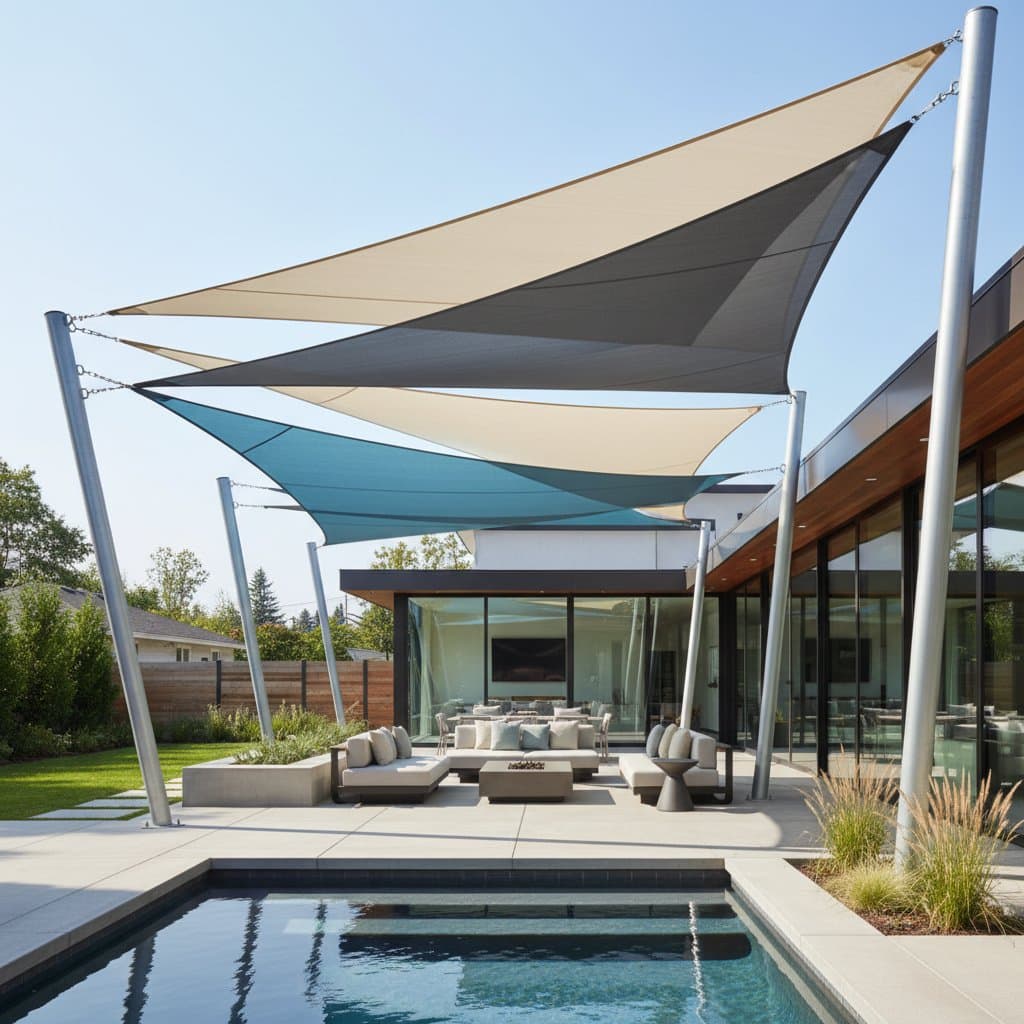
- Overlap multiple sails in gradient colors for a cascading waterfall effect over pools.
- Suspend linear sails above dining tables, pairing with solar lanterns for dusk gatherings.
- Angle triangular sails to frame play zones, using soft neutrals that harmonize with grass and stone.
- Introduce vibrant accents like teal over neutral decks to energize minimalist setups.
- Hybrid approaches, such as sails atop low pergola bases, blend legacy charm with fresh adaptability.
Tailor designs to activities: ample headroom for entertaining, lower profiles for reading nooks. Strategic placement enhances privacy and extends usable hours from dawn to dusk.
Frequently Asked Questions
What makes shade sails better than pergolas for modern backyards?
Shade sails provide unmatched adaptability, quicker setups under a day, and savings up to 50 percent on initial costs. They deliver consistent UV shielding and demand little ongoing effort, ideal for busy households seeking effortless elegance.
How long do shade sails typically last?
Durable models endure 10 to 15 years with proper care, varying by exposure to sun and storms. Routine inspections and seasonal storage preserve fabric integrity against environmental wear.
Can shade sails handle strong winds?
Secure installations resist gusts to 60 mph, but loosen or remove them ahead of severe weather. Reinforced edges and quality tensioning minimize flapping and stress.
Do I need a permit to install a shade sail?
Requirements differ by locale; small residential units often bypass permits, but confirm with authorities for setups over 100 square feet or near property lines.
Can shade sails be customized to fit any space?
Yes, manufacturers tailor shapes, sizes, and curves to precise measurements, accommodating irregular yards or multi-level patios for optimal coverage.
What materials are best for shade sails?
High-density polyethylene (HDPE) knits offer the best balance of strength, UV resistance, and airflow. Avoid thin polyesters, which fade faster; prioritize commercial-grade options with warranties.
Are shade sails waterproof?
They repel light rain through breathable weaves but are not fully watertight. Sloped installations promote drainage, keeping surfaces dry during showers.
Transform Your Outdoor Space with Shade Sails
Transitioning to shade sails from pergolas unlocks versatile, low-effort ways to enhance backyard living. Their blend of protective function, customizable style, and straightforward setup empowers homeowners to create personalized retreats. Invest time in site assessment and quality components for enduring satisfaction and elevated outdoor experiences.