
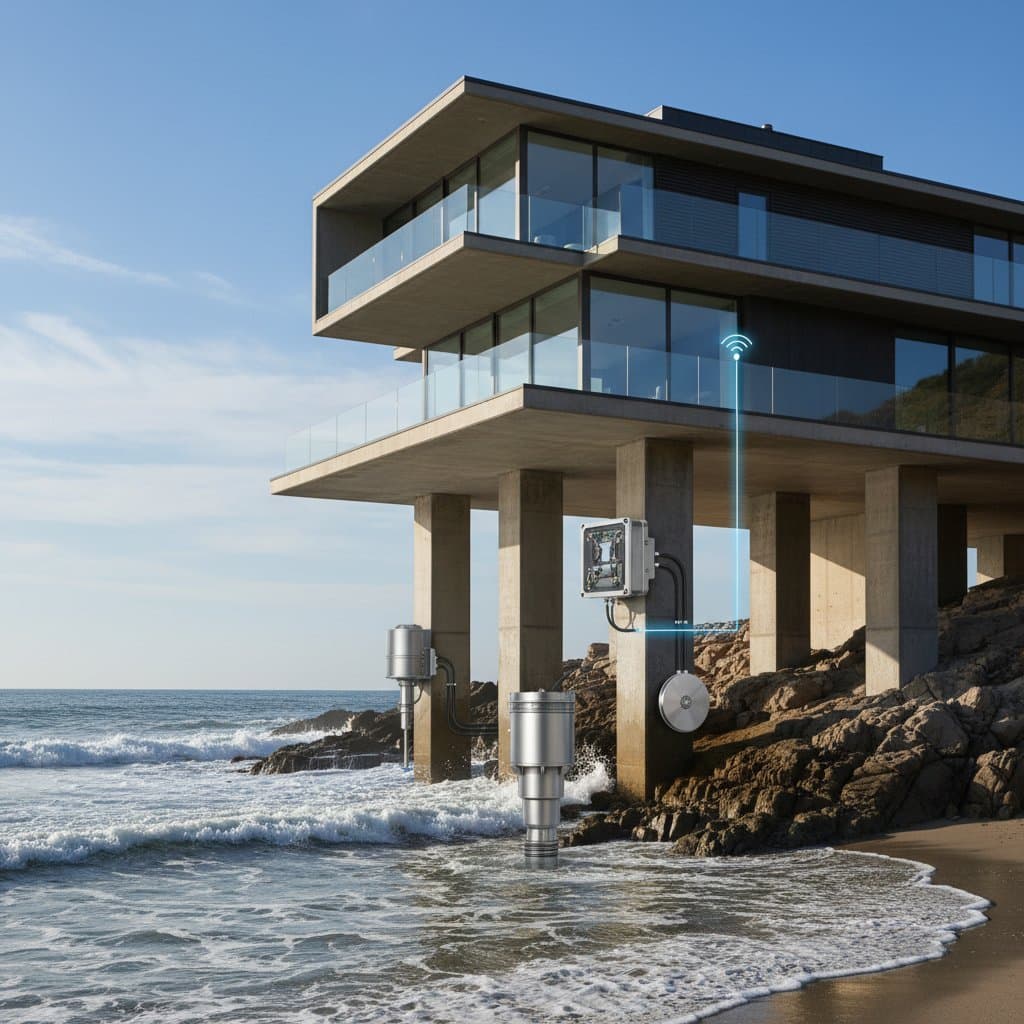
Tidal Sensors: Shielding Coastal Foundations
Coastal living provides stunning vistas, invigorating breezes, and a profound link to the natural world. However, this idyllic setting presents ongoing challenges for homeowners, particularly in safeguarding foundations against the persistent effects of tides, saltwater, and unstable soils. Tidal sensors emerge as a crucial technology for those seeking to protect their properties and uphold structural integrity in seaside locations.
Understanding How Tides Affect Foundations
Tides extend beyond mere fluctuations in water height. They generate nuanced yet significant pressure variations within the soil adjacent to foundations. Repeated cycles contribute to erosion, settlement, and potential cracking in structures. Where freshwater aquifers intersect with seawater, these movements facilitate saltwater intrusion, which degrades steel reinforcements and compromises concrete durability.
The Hidden Damage of Unmonitored Water Movement
Coastal foundations encounter diverse threats:
- Hydrostatic pressure accumulating against basement or crawl space walls
- Soil displacement resulting from cyclic tidal wetting and drying
- Corrosion of metal elements exposed to saline conditions
- Moisture penetration fostering mold growth, wood decay, and elevated indoor humidity
Absent ongoing surveillance, such problems advance undetected, culminating in expensive remediation efforts.
What Tidal Sensors Do
A tidal sensor system captures variations in water elevation, pressure, and occasionally salinity around or under the property. Through real-time tracking of these metrics, property owners and engineers detect initial indicators of foundation strain or erosion.
Contemporary setups incorporate:
- Pressure transducers to gauge water depth and soil moisture levels
- Temperature and conductivity detectors to identify saltwater penetration
- Wireless transmitters that relay information to a centralized dashboard for evaluation
These insights reveal how foundations respond to tidal patterns and severe weather occurrences.
Average Cost of Installing Tidal Sensors
Expenses for a residential tidal sensor installation depend on site dimensions and monitoring sophistication. A fundamental system generally ranges from 1,200 to 2,500 dollars, whereas an advanced smart network may total 4,000 to 6,000 dollars, encompassing setup and adjustment.
| System Type | Description | Typical Cost Range | Maintenance |
|---|---|---|---|
| Basic Analog | Single-point sensor with manual data collection | 1,200 - 2,000 dollars | Low |
| Mid-Range Digital | Multi-sensor setup with wireless data logging | 2,500 - 4,000 dollars | Moderate |
| Smart Network | Internet-connected system with analytics and alerts | 4,000 - 6,000 dollars | Moderate to High |
Although initial outlays appear substantial, preempting foundation issues averts repair bills that frequently surpass 20,000 dollars.
Labor and Installation Considerations
Tidal sensor deployment usually entails:
- Site evaluation to pinpoint water entry points and foundation weak spots.
- Strategic sensor positioning below ground level or adjacent to seawalls for precise measurements.
- Adjustment and connectivity verification to guarantee dependable performance.
Labor constitutes 25 to 40 percent of overall expenses, influenced by terrain and access challenges. Experts advise professional involvement, since improper positioning distorts readings and shortens equipment durability.
Factors That Influence the Total Cost
Multiple elements shape the ultimate expenditure:
- Foundation configuration, such as slab, pier, or basement types
- Distance from tidal waters and intensity of fluctuations
- Frequency of data capture and archival approach
- Compatibility with existing home automation frameworks
- Ongoing service agreements for expert oversight
Property owners ought to allocate funds for periodic recalibration, particularly following intense storms or coastal alterations.
How to Save Money on Tidal Sensor Systems
- Integrate sensor installation with complementary projects, like sump pump monitors or flood detection devices.
- Select scalable components that permit future upgrades without replacing the entire array.
- Utilize cloud storage solutions over pricier local servers.
- Handle routine cleaning and visual checks personally to minimize service charges.
- Evaluate offerings from multiple regional providers prior to selection.
DIY vs. Hiring a Professional: A Cost-Benefit Analysis
Skilled individuals may install elementary tidal sensors independently, yet expert deployment secures precision and endurance.
| Approach | Estimated Cost | Advantages | Risks |
|---|---|---|---|
| DIY Installation | 800 - 1,200 dollars | Reduced upfront expenses, direct control over data | Inaccurate setup, potential warranty invalidation |
| Professional Installation | 2,500 - 6,000 dollars | Reliable measurements, included guarantees, ongoing assistance | Elevated initial investment |
For sites in dynamic tidal areas with variable water boundaries, professional guidance proves essential.
Common Mistakes to Avoid
- Positioning sensors beyond the effective tidal impact area
- Overlooking irregular data patterns indicative of emerging stress
- Neglecting sensor decontamination after sediment accumulation
- Omitting yearly adjustments
- Depending exclusively on ocular assessments rather than quantitative evaluations
Steering clear of these errors promotes dependable surveillance and sustained safeguarding.
Frequently Asked Questions About Tidal Sensors
Do I need a permit to install tidal sensors near my home?
In most residential zones, compact monitoring installations bypass permitting requirements. Nevertheless, projects entailing ground disturbance near seawalls or protected wetlands often necessitate regulatory clearance.
How long do tidal sensors last?
Premium sensors endure 5 to 10 years, contingent on environmental exposure, upkeep routines, and adjustment intervals. Opting for salt-resistant materials prolongs operational life.
Can tidal sensors prevent flooding?
These devices do not halt inundation, but they furnish timely notifications enabling preparatory actions prior to water escalation.
How often should I check sensor data?
Weekly examinations suit high-activity regions. Automated systems typically issue notifications upon threshold breaches.
What adds the most value to a tidal monitoring setup?
Integration with predictive analytics and remote alerts maximizes utility, allowing proactive interventions that enhance foundation resilience and property assurance.
Are tidal sensors affected by storms?
Intense weather may temporarily disrupt signals or damage units, yet robust models feature weatherproofing and backup protocols to maintain functionality during and after events.
Sustaining Long-Term Foundation Protection
Regular maintenance forms the cornerstone of effective tidal monitoring. Schedule professional inspections biannually to verify sensor accuracy and address any corrosion or connectivity issues. Pair this with homeowner-led practices, such as clearing debris from access points and reviewing dashboard reports promptly. By committing to these steps, coastal residents fortify their homes against environmental pressures, preserving both structural soundness and peace of mind.