
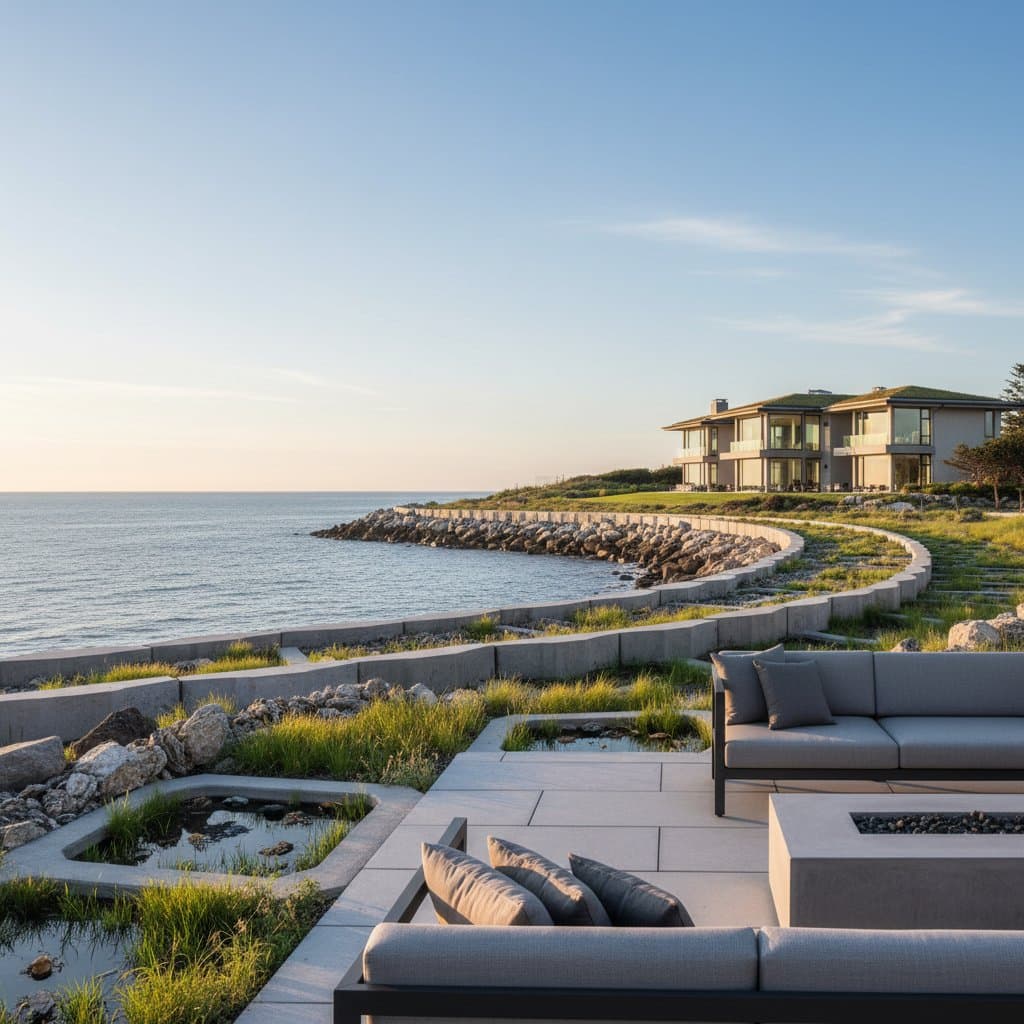
- Duration: Two to four weeks for modest segments.
- Essential Equipment: Compact excavators, corrosion-resistant anchors, formwork, protective gear.
- Potential Hazards: Uneven foundations, hydraulic breaches, instability, regulatory infractions.
Independent projects work best for non-tidal, ornamental features on private land. Avoid self-managed work in active water zones to prevent safety and legal issues.
Professional Installation
Specialized contractors deliver precise engineering, secure execution, and adherence to coastal statutes. They utilize advanced tools, including submersible cranes and precision surveying for optimal alignment.
Standard fees range from $350 to $1,200 per linear foot, encompassing planning, materials, and fieldwork. Timelines span three to eight weeks, adjusted for project scope and seasonal factors. Seek providers with proven ecological portfolios; request site visits and compliance documentation to confirm alignment with regional guidelines.
Strategies to Reduce Expenses
Implementing cost-saving measures allows access to living seawalls without excessive financial strain. Focus on efficient planning and phased development to maximize value.
Select scalable designs that match your immediate needs, such as starting with 20 to 30 linear feet and expanding later. This approach cuts upfront costs by 15 to 25 percent while testing performance. Opt for locally sourced materials like regional stone to avoid transport fees, potentially saving $50 to $100 per linear foot.
Leverage incentives from environmental programs. Many coastal authorities offer grants or tax credits for green infrastructure, reducing net expenses by up to 30 percent. Collaborate with certified installers who qualify for bulk material discounts through industry networks.
Prioritize low-maintenance types like modular panels, which minimize ongoing costs compared to vegetation-heavy systems. Conduct preliminary site assessments yourself using free erosion mapping tools from government resources to refine bids and avoid over-engineering.
Maintenance and Long-Term Care
These structures adapt over time as organisms establish footholds, demanding attentive yet straightforward upkeep to sustain functionality.
Key activities involve post-storm evaluations for shifts or fractures. Eliminate non-native plants that disrupt balance. Dislodge accumulated sediment to maintain water circulation. Restore plant cover where exposure occurs. Monitor hardware for degradation from saltwater exposure.
Diligent routines extend service life beyond traditional barriers, amplifying ecological and protective benefits.
FAQs
How durable are living seawalls?
Well-engineered units endure for decades. Biological accretion often reinforces integrity as the structure matures.
Do living seawalls draw problematic animals?
They host advantageous marine life such as filter-feeding mollusks and forage fish. Such populations rarely interfere with residential use.
Can living seawalls withstand severe weather?
Appropriate configurations disperse impact forces effectively. Flexible components absorb stress, averting total collapse.
What does upkeep entail?
Tasks center on periodic checks and minor clearances. Natural processes aid in self-healing, unlike rigid alternatives prone to deterioration.
Are permits required?
Shoreline alterations demand approvals from oversight bodies. Experts streamline applications to ensure compliance.
Advancing Your Shoreline Protection
Adopting a living seawall represents a forward-thinking commitment to durable coastal stewardship. This fusion of technology and nature safeguards assets while enriching surrounding waters. For sites vulnerable to advancing tides, engage marine engineers to tailor solutions. Through strategic design, your property gains enduring security and contributes to healthier oceans.