
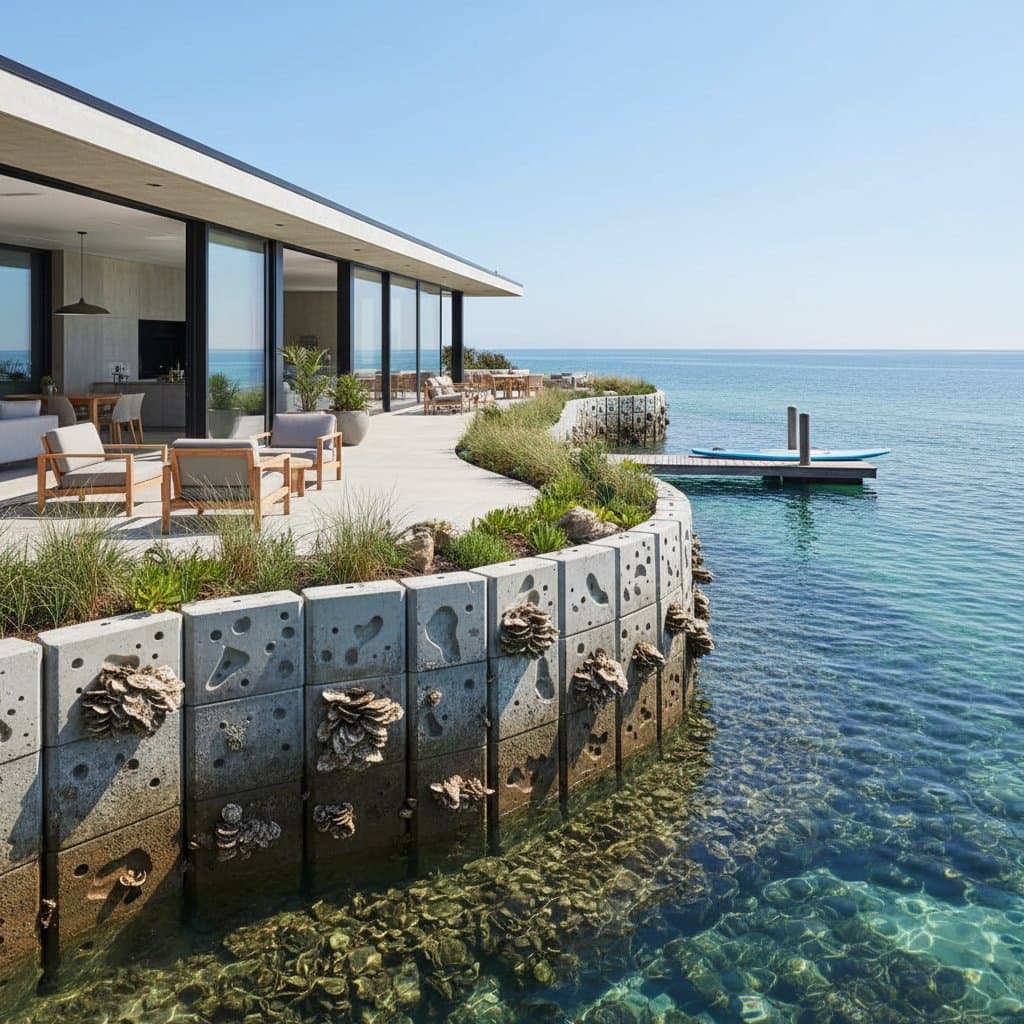
Coastal Remodels That Foster Oyster Habitats and Strengthen Shorelines
Coastal property owners confront persistent threats from saltwater intrusion, relentless waves, and intense storms that erode shorelines and undermine structures. Conventional seawalls deliver temporary defense but frequently harm surrounding marine environments and exacerbate erosion in adjacent areas. An emerging approach in shoreline engineering emphasizes living seawalls and oyster-compatible remodels, which defend assets while revitalizing aquatic ecosystems. This article details how such remodels cultivate oyster habitats, fortify coastal defenses, and promote enduring environmental health.
The Fundamentals of Living Seawalls
A living seawall functions as an engineered barrier that harmonizes with natural processes. Rather than relying on featureless concrete slabs, these installations feature roughened surfaces, embedded crevices, and modular components that facilitate attachment by oysters, mussels, and algae. As these species colonize the structure, they form a biological armor that bolsters durability and purifies surrounding waters through filtration.
The Critical Role of Oysters in Coastal Ecosystems
Oysters serve as powerhouse filters, with each adult capable of processing up to 50 gallons of water per day to extract sediments, excess nutrients, and toxins. This filtration supports clearer waters that benefit seagrasses, fish populations, and overall biodiversity. Beyond purification, oyster reefs dissipate wave energy, curb sediment loss, and shield inland properties from storm surges, effectively turning natural processes into allies for coastal stability.
Advantages for Coastal Property Owners
Opting for oyster-integrated seawalls yields multifaceted returns beyond environmental gains. These installations:
- Lower long-term upkeep expenses by leveraging natural stabilization from oyster growth and root systems of attached vegetation
- Elevate aesthetic appeal through improved water transparency and vibrant marine activity visible from the property
- Boost real estate worth by incorporating certified sustainable features that appeal to eco-conscious buyers
- Foster a dynamic habitat that attracts birds, fish, and other wildlife, enriching the outdoor experience
Steps to Integrate Oyster Habitats into Your Coastal Remodel
Developing a living seawall or enhancing an existing one demands strategic foresight and input from marine specialists, ecologists, and certified builders. Follow these structured steps to initiate the process.
1. Conduct a Comprehensive Shoreline Evaluation
Engage a coastal engineer for an in-depth analysis of your site's topography, sediment composition, tidal fluctuations, and current ecological conditions. This assessment identifies optimal configurations, such as blending vegetated slopes with reinforced panels, to suit local dynamics and regulatory standards.
2. Engineer Features for Marine Colonization
Prioritize elements that invite oyster settlement and growth. Effective options include:
- Rough-cast concrete panels etched with wave-like patterns to provide grip for larval attachment
- Stackable, porous blocks that replicate subtidal rock formations and allow water flow
- Shallow recesses or baffles that trap organic matter and create microhabitats during low tides
3. Select Durable, Eco-Compatible Materials
Focus on components engineered for longevity in saline environments while promoting biodiversity. Recommended choices encompass low-alkalinity concrete mixes that avoid harming shellfish, aggregates from recycled glass or oyster shells, and non-toxic stainless steel reinforcements that resist biofouling without chemical additives.
4. Navigate Permitting and Regulatory Compliance
Shoreline projects typically necessitate approvals from environmental agencies and local authorities. Partner with contractors versed in guidelines from bodies like the Coastal Zone Management Act; they can submit impact studies demonstrating how the design enhances rather than impairs habitats, expediting approvals.
5. Collaborate with Specialized Construction Teams
Select firms with proven expertise in bio-engineered coastal defenses. Request portfolios of similar installations, confirm adherence to standards from organizations like the American Society of Civil Engineers, and ensure comprehensive coverage for liability and environmental restoration.
Sustaining Your Living Seawall Over Time
Essential Maintenance Practices
Preserve structural integrity and ecological function through proactive measures:
- Inspect for fissures, sediment buildup, or dislodged sections biannually, especially post-storm
- Steer clear of detergents or pesticides within 50 feet of the water to safeguard settling larvae
- Arrange expert dives or sonar surveys every two to three years to monitor oyster density and wall condition
- Mitigate pollution by installing rain gardens or permeable pavements to reduce nutrient-laden runoff into the bay
Frequently Asked Questions
What Defines a Living Seawall?
A living seawall incorporates deliberate surface irregularities and niches to support epifaunal growth, such as oysters and encrusting algae. It balances erosion prevention with biodiversity enhancement, outperforming inert barriers in resilience and habitat value.
In What Ways Do Oysters Bolster Shoreline Defense?
Oyster clusters create interlocking reefs that break up incoming waves, trap sediments, and bind loose soils. This natural reinforcement complements artificial structures, often extending their lifespan by distributing hydrodynamic forces more evenly.
Do Living Seawalls Carry a Higher Upfront Cost Than Conventional Options?
Installation expenses can exceed traditional walls by 10 to 20 percent due to specialized materials and design. However, reduced erosion risks and minimal repairs frequently offset this within five years, with total ownership costs proving lower in dynamic coastal zones.
Is It Feasible to Adapt an Existing Seawall for Oyster Support?
Absolutely; retrofitting involves affixing habitat tiles, grout-filled meshes, or bio-rock substrates to current surfaces. A structural audit confirms load-bearing capacity and identifies areas for targeted enhancements without full replacement.
What Timeline Applies to Oyster Establishment?
Initial larval recruitment occurs in weeks to months in nutrient-rich, warm waters, with visible clusters forming in the first year. Mature, self-sustaining reefs typically emerge after three to five years, influenced by seasonal spawning cycles and predator presence.
Are Environmental Permits Essential for Living Seawall Projects?
In most coastal regions, yes; permits address wetland impacts and species protection. Experts handle applications by highlighting restoration benefits, often qualifying projects for incentives like grants for green infrastructure.
Might a Living Seawall Draw Invasive Species?
It can host a range of organisms, but native oysters and associated fauna generally dominate in balanced systems. Monitoring and selective removal protocols, guided by local extension services, manage any non-native introductions effectively.
Realizing the Full Potential of Your Enhanced Waterfront
With a living seawall in place, observe as your shoreline transforms into a vibrant nexus of protection and productivity. Homeowners report not only fortified defenses but also a deeper connection to the sea, where daily tides reveal evolving ecosystems. To maximize these outcomes, integrate complementary features like native plant buffers or community reef programs, ensuring your property contributes to broader coastal vitality.