
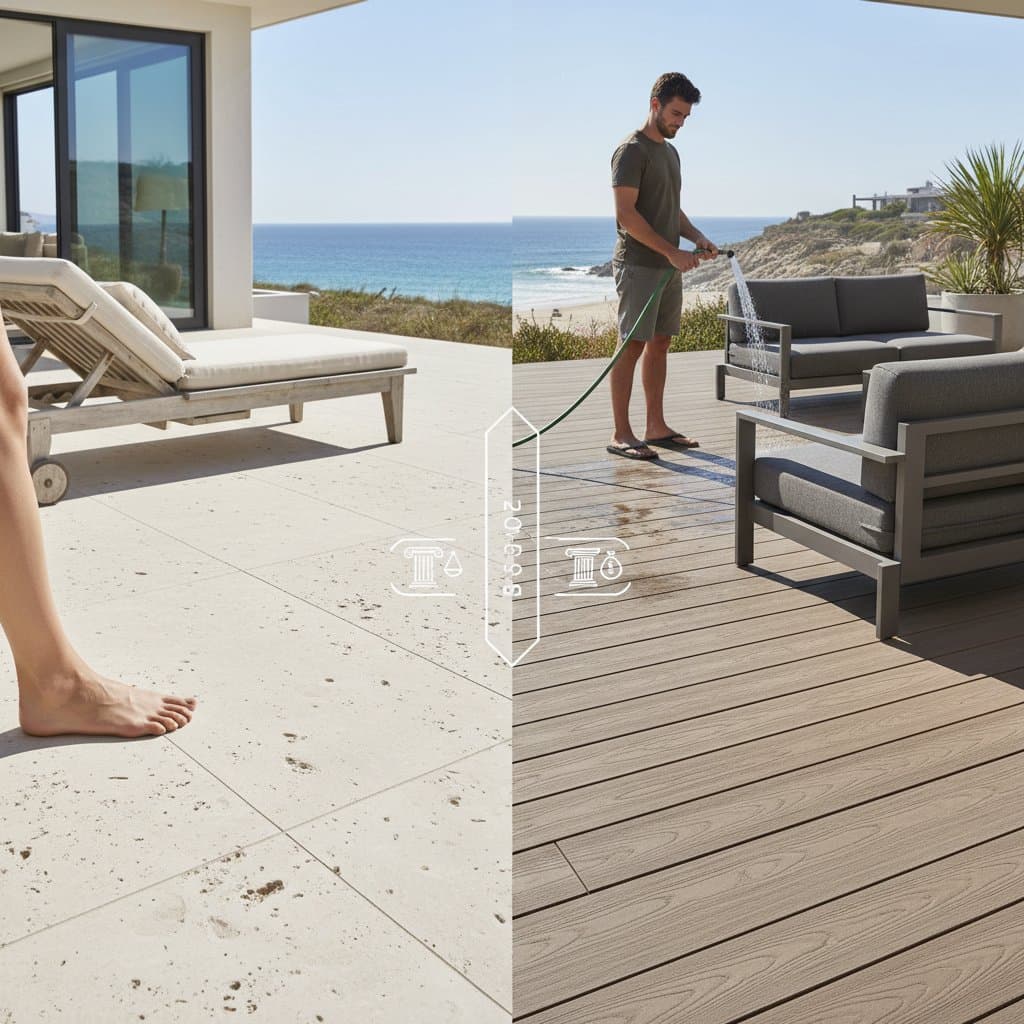
Limestone vs Composite: Coastal Deck Winner in 2026
Imagine stepping onto a breezy coastal deck with waves crashing nearby and salt air filling the atmosphere. The deck surface influences comfort and longevity, particularly in environments exposed to salt, moisture, and intense sunlight. Selecting between limestone and composite decking requires consideration of these coastal challenges. Both options perform well when matched to specific needs.
This guide examines costs, performance, and maintenance requirements. Limestone decking costs range from $15 to $45 per square foot, while composite decking falls between $10 and $30 per square foot. Limestone provides enduring aesthetic appeal, and composite emphasizes reduced upkeep. For those avoiding do-it-yourself efforts, obtain estimates from experienced professionals in coastal deck building.
Cost Factors
Coastal deck construction extends beyond material choice. Expenses arise from material selection, labor, foundational preparation, and finishing elements.
Limestone decking prices span $15 to $45 per square foot, averaging $28. Premium options, such as thicker or imported varieties, increase expenses. Installation involves a concrete foundation and accurate stone cutting, which elevates labor costs. Sealing protects against moisture and requires application every one to two years.
Composite decking costs $10 to $30 per square foot, with an average of $20. Variations depend on board grade, surface texture, and hue. Labor proves straightforward, as boards attach to conventional framing without specialized equipment. Many products feature concealed fasteners for a seamless appearance.
Key cost considerations include:
- Material density and grade: Higher-quality limestone or composite endures longer but demands greater investment.
- Installation demands: Stone requires cutting and concrete work, adding time and fees.
- Protective treatments: Limestone needs periodic sealing; composite typically requires only routine cleaning.
- Environmental influences: Salt and humidity impact durability and may influence selections.
- Regulatory approvals: Coastal regulations often mandate waterproofing and structural reinforcements.
DIY vs Professional Installation
Limestone installation qualifies as advanced, professional work. It involves substantial lifting, exact placement, and a stable concrete substructure to avoid movement. Essential tools encompass stone saws, leveling devices, and grout. Experienced masonry enthusiasts may manage modest projects, but professionals guarantee safety and longevity for expansive or raised decks.
Composite decking suits do-it-yourself approaches for individuals familiar with power tools and precise measurements. The lightweight boards cut easily with standard equipment. Required items include a circular saw, drill, and secure fastening method. A team of two can complete 200 to 300 square feet over a weekend. Verify local regulations regarding railings and load capacities, given prevalent coastal winds.
Strategies for Cost Savings
- Research suppliers in advance. Regional pricing for limestone and composite varies; direct purchases from nearby sources minimize shipping expenses.
- Opt for mid-range options. These materials satisfy durability needs without extravagant features.
- Schedule work during quieter periods. Contractors frequently reduce rates outside peak construction seasons.
- Integrate materials thoughtfully. Employ limestone for focal points like stairs or edges, paired with composite for primary areas.
- Allocate funds for ongoing care. Proactive sealing or cleaning averts costly repairs.
Frequently Asked Questions
How durable is a limestone deck in coastal environments?
Proper sealing and upkeep enable limestone decks to endure 30 to 50 years. Routine cleaning and avoidance of corrosive substances maintain the surface integrity.
Does composite decking become slippery in wet conditions?
Contemporary composite boards incorporate textured patterns or channels for enhanced footing. Additional non-slip treatments or placements suit high-traffic zones near water.
Which option remains cooler during sunny exposure?
Limestone, particularly in pale tones, absorbs less heat for comfortable footing. Composite warms more readily; select lighter shades or provide shade to mitigate this.
Are permits required for coastal decks?
Coastal jurisdictions typically enforce permitting for environmental and safety compliance. Consult local authorities prior to commencement.
Is it feasible to blend limestone and composite in a single deck?
Homeowners frequently combine these for aesthetic and functional benefits, such as limestone accents with composite bases.
Selecting and Building Your Ideal Deck
The optimal material aligns with daily routines and maintenance willingness. Limestone suits those seeking refined, natural textures with periodic care. Composite appeals to preferences for effortless, contemporary surfaces.
For hands-on enthusiasts pursuing economical results, composite stands out. Those prioritizing artisanal quality find limestone offers enduring value. Consult experts to tailor the design to your coastal home.