
9 Bioengineered Seawall Ideas for Shielding Coasts Naturally
Coastal living offers beauty and tranquility, yet it presents significant challenges to landscapes. Erosion, storm surges, and rising sea levels continually endanger waterfront properties, beaches, and habitats. Traditional concrete seawalls serve as a standard defense, but they frequently exacerbate issues by reflecting wave energy, hastening adjacent erosion, and disrupting natural ecosystems. Consider an alternative approach that safeguards coastlines while fostering their vitality.
Bioengineered seawalls emerge as a superior solution. These structures integrate engineering principles with ecological elements to defend against waves and promote marine biodiversity. They collaborate with natural processes, employing materials and configurations that replicate environmental systems. For homeowners, communities, and coastal managers, bioengineered seawalls provide an intelligent, sustainable method to preserve vulnerable shorelines.
This guide explores nine practical bioengineered seawall concepts, design strategies, and implementation advice. These approaches bolster property resilience, aesthetic appeal, and ecological contributions simultaneously.
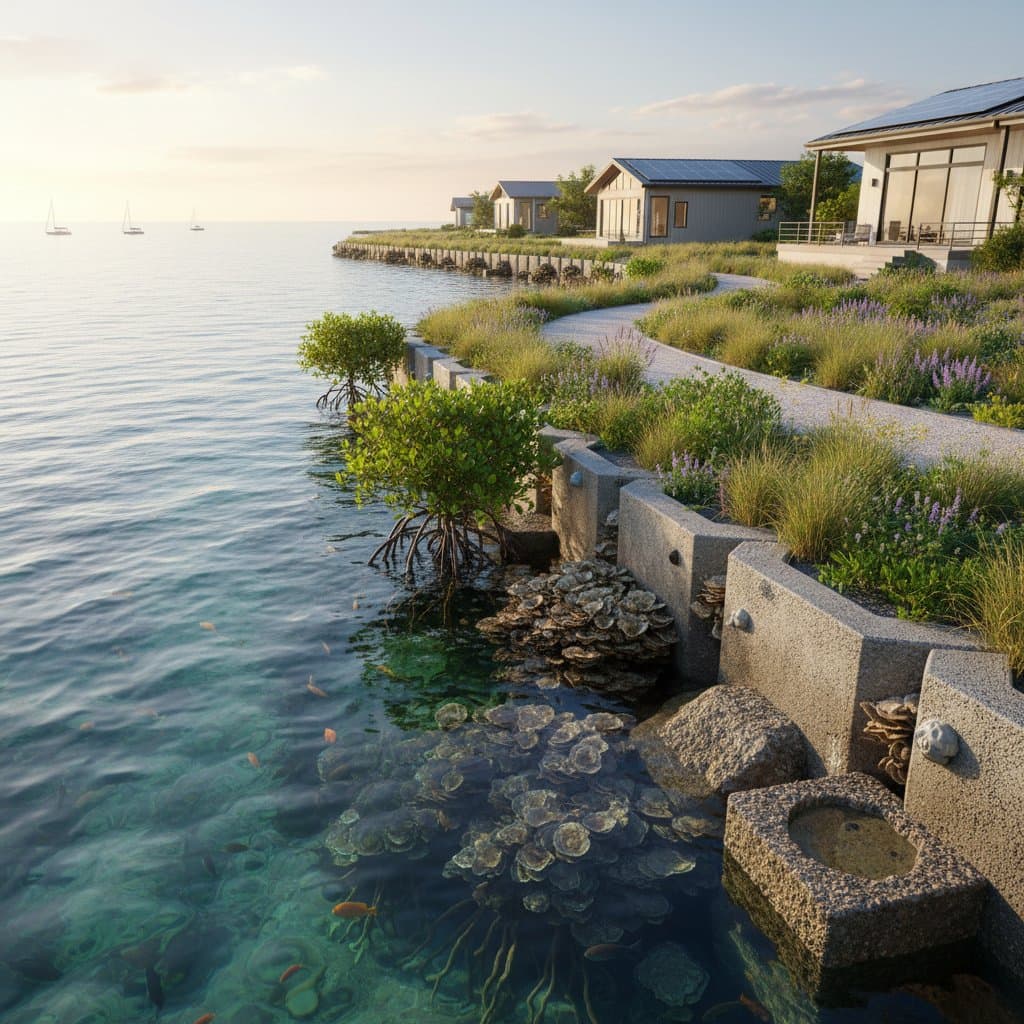
[Image: A coastal property protected by a living seawall with tidal vegetation and habitat modules]
Innovative Bioengineered Seawall Concepts
1. Living Concrete Panels
Living concrete panels represent a foundational bioengineered innovation. These precast units contain embedded textures and pores that facilitate attachment by algae, barnacles, and shellfish. Over time, the panels evolve into artificial reefs, enhancing habitat complexity without compromising structural integrity.
Installation involves securing panels to existing walls or foundations. Select panels with rough surfaces to maximize colonization. This method proves ideal for urban coastlines seeking subtle ecological upgrades.
Pro Tip: Integrate panels during initial construction for seamless bonding and durability.
2. Oyster Reef Structures
Oyster reefs form dynamic barriers that attenuate waves while filtering water and supporting fisheries. Bioengineered versions use mesh bags filled with oyster shells or cultch material, placed along seawall bases to mimic natural reefs.
Construct reefs in layers, starting with a stable substrate and adding successive tiers for height. Oysters recruit naturally, creating self-sustaining ecosystems that reduce sedimentation and improve water quality.
Approximate Cost: Moderate, with community volunteer programs often offsetting expenses.
3. Vegetated Berms
Vegetated berms combine earthen mounds with native plants to absorb wave energy softly. These sloped features, reinforced with biodegradable geotextiles, prevent scour and promote sediment deposition.
Build berms by shaping soil into gentle inclines and planting salt-tolerant species like cordgrass or mangroves. The root systems stabilize soil, while foliage dissipates energy from incoming waves.
Difficulty Level: Beginner-friendly for smaller sites, scalable for larger applications.
4. Curved and Stepped Seawall Profiles
Vertical walls reflect waves aggressively, intensifying nearby erosion. Curved or stepped profiles dissipate energy through gradual deflection, fostering sediment buildup and forming tide pools for marine organisms.
Fabricate curves using modular concrete blocks or contoured rock armoring. The undulating design guides water flow naturally, minimizing structural wear and prolonging service life.
Pro Tip: Incorporate varied stone dimensions to achieve a rugged, naturalistic look and enhanced stability.
5. Eco-Friendly Materials and Additives
Eco-concrete formulations incorporate recycled aggregates, low-emission cements, and bioactive additives to lessen environmental impact. Such materials invite marine settlement while resisting degradation.
Opt for mixes with neutral pH to align with seawater conditions, avoiding toxic runoff. Certain variants embed microbial seeds to accelerate biofilm development and biodiversity.
Approximate Cost: Aligns closely with conventional concrete, offset by extended ecological advantages.
6. Permeable Foundations and Drainage Channels
Impermeable traditional seawalls trap hydrostatic pressure, risking failure. Permeable bases and integrated channels permit controlled water passage, alleviating buildup and preserving structural equilibrium.
Employ gravel infill or slotted piping within the foundation. These elements sustain subsurface hydrology, benefiting adjacent flora and preventing saltwater intrusion.
Difficulty Level: Intermediate; integrate during foundational phases for optimal efficacy.
[Image: Diagram showing drainage channels behind a bioengineered seawall]
7. Habitat Blocks and Modules
Habitat blocks, modular units with crevices and ledges, attach directly to seawalls to create microhabitats. Designed for intertidal zones, they host diverse species from anemones to small fish.
Stack or affix blocks using non-toxic adhesives. Customize shapes to local fauna needs, such as undercut ledges for crab refuges.
Pro Tip: Source blocks from certified sustainable suppliers to ensure material longevity.
8. Hybrid Soft-Hard Engineering
Hybrid systems merge rigid seawalls with flexible elements like beach nourishment or living breakwaters. This layered defense absorbs shocks resiliently, adapting to variable conditions.
Position seawalls inland, fronted by vegetated dunes or floating kelp barriers. The combination distributes energy loads, reducing individual component strain.
Approximate Cost: Variable, but grants for hybrid projects often reduce outlays.
9. Smart Monitoring and Adaptive Features
Incorporate sensors for real-time data on wave impact, erosion rates, and biological health. Adaptive features, such as adjustable panels or automated planting systems, enable responsive maintenance.
Embed IoT devices during construction, linked to mobile alerts. This technology supports predictive adjustments, ensuring long-term performance amid climate shifts.
Difficulty Level: Advanced; consult specialists for integration.
Implementation and Upkeep Strategies
- Conduct thorough site evaluations to map wave dynamics, geotechnical properties, and tidal influences prior to design.
- Prioritize indigenous vegetation for plantings to optimize adaptation and ecological harmony.
- Blend structural and vegetative techniques for comprehensive protection.
- Perform routine inspections post-storm events to address erosion, fissures, or vegetation loss promptly.
- Embrace a forward-looking perspective, recognizing that maturing ecosystems enhance seawall functionality over decades.
Frequently Asked Questions
What defines a bioengineered seawall?
A bioengineered seawall fuses constructed elements with biological components, including plants, reefs, or modular habitats, to deliver natural shoreline protection.
How does it differ from conventional seawalls?
Conventional designs depend exclusively on inert materials like concrete, whereas bioengineered options embed living features to mitigate waves and bolster biodiversity.
Do these structures incur higher costs?
Upfront expenses may match or exceed traditional builds slightly, yet reduced upkeep and environmental gains yield savings over time.
Is retrofitting possible for legacy seawalls?
Affirmative; enhancements via habitat attachments, greening, or reef additions often suffice without full demolition.
What permitting processes apply?
Coastal jurisdictions typically mandate ecological assessments, though agencies frequently endorse these initiatives for their restorative benefits.
What is their expected durability?
Proper care and ecological development enable lifespans comparable to standard seawalls, with performance often strengthening as habitats evolve.
Sustaining Resilient Coastal Edges
Adopting a bioengineered seawall transcends mere infrastructure. It embodies a dedication to harmonious coastal coexistence. Through precise engineering allied with natural fortitude, these designs secure assets, cultivate wildlife, and elevate scenic value.
Homeowners protecting private fronts or managers orchestrating public defenses alike benefit from these strategies. Diligent planning and stewardship convert rigid defenses into vibrant boundaries, preserving and enriching coastlines enduringly.