
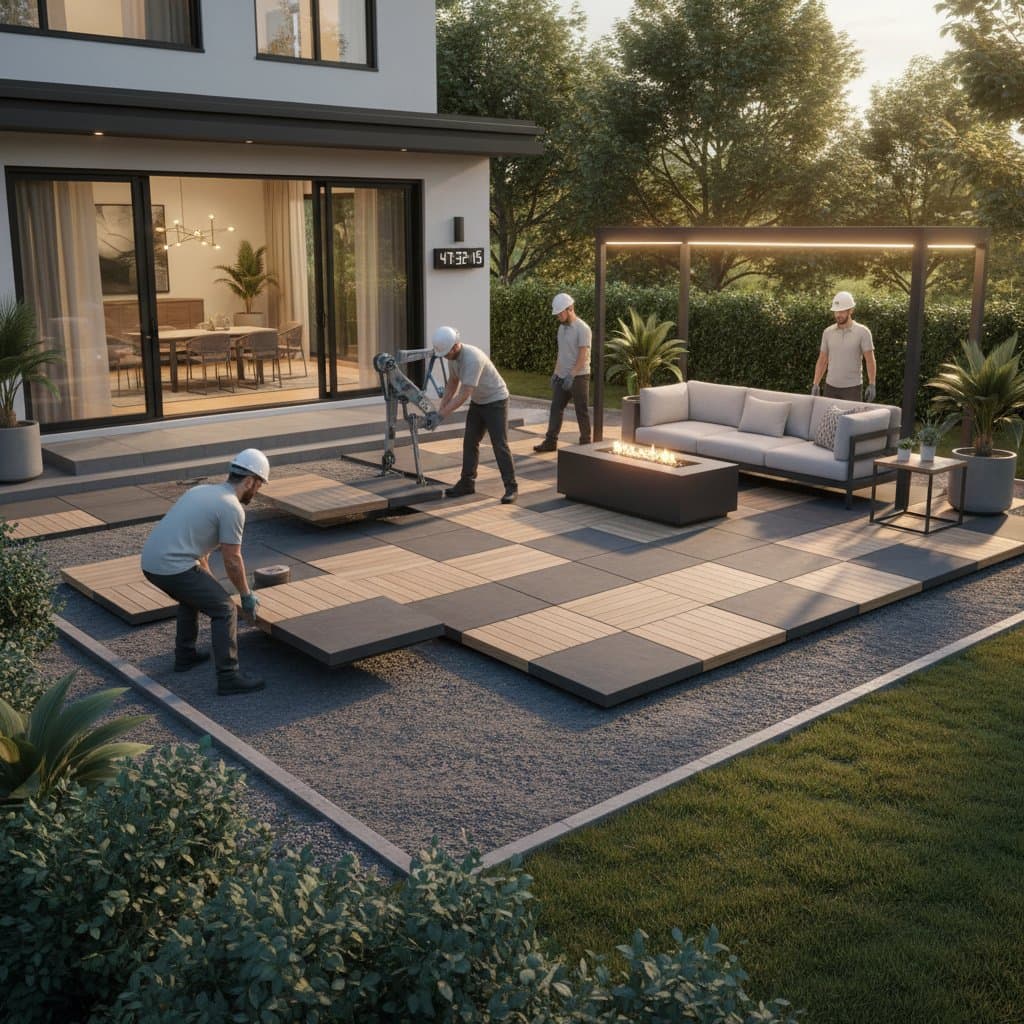
Modular Patios: Build a Stunning Space in 48 Hours
Homeowners seek beautiful outdoor retreats without enduring weeks of construction disruption. Modular patios provide a fast, efficient, and high-quality alternative. Prefabricated patio systems install in as little as 48 hours, converting a plain backyard into a functional living area almost immediately. This guide covers the essentials of modular patios, including definitions, costs, influencing factors, and design selection strategies.
What Is a Modular Patio?
A modular patio consists of a pre-engineered outdoor flooring or deck system composed of interlocking sections. Manufacturers produce these sections off-site, then deliver them for rapid on-site assembly with limited construction needs. The system typically incorporates the substructure, surface materials, and drainage features. Advanced models integrate lighting or seating elements.
Modular systems differ from poured concrete patios by eliminating curing periods. They also surpass traditional decks through pre-cut components that assemble without advanced carpentry skills. The outcome includes consistent quality, minimal waste, and significantly shortened installation timelines.
Average Cost of a Modular Patio
Modular patio costs average $40 to $90 per square foot, varying by materials, design details, and site readiness. For a standard 200-square-foot installation, the national total ranges from $8,000 to $16,000, encompassing materials, delivery, and professional labor.
| Project Scope | Size (sq. ft.) | Typical Cost Range | Average Cost |
|---|---|---|---|
| Small | 100 | $4,000 - $8,000 | $6,000 |
| Mid-Range | 200 | $8,000 - $16,000 | $12,000 |
| Large or Custom | 300+ | $12,000 - $27,000 | $18,500 |
These estimates apply to basic surfaces like composite decking or modular pavers. Adding elements such as seating, fire pits, or pergolas raises expenses by 20 to 40 percent.
Cost by Material Type
Materials determine both expense and visual appeal more than any other element. The following table outlines popular options for modular patios.
| Material | Cost per sq. ft. | Durability | Maintenance | Aesthetic Notes |
|---|---|---|---|---|
| Composite Panels | $45 - $70 | Excellent | Low | Sleek, modern appearance with wood-grain texture |
| Concrete Pavers | $40 - $60 | High | Moderate | Classic style with diverse color choices |
| Natural Stone Modules | $70 - $100 | Very High | Moderate | Elegant finish with distinctive natural patterns |
| Porcelain Tiles | $50 - $80 | High | Low | Clean lines for a modern vibe |
| Recycled Plastic Systems | $35 - $55 | Good | Very Low | Sustainable choice for cost savings |
Composite panels and porcelain tiles gain favor for swift setups due to their lightweight nature and exact-fit design. Natural stone modules command higher prices yet deliver superior elegance and longevity.
Labor Costs and Installation Timeline
Labor constitutes 25 to 35 percent of the overall project expense. Professionals charge $15 to $30 per square foot for assembly and groundwork. Ground leveling and drainage setup represent the primary time investment. With the base complete, installation proceeds in one to two days.
Prefabrication streamlines on-site work substantially. Projects avoid delays from drying materials or weather interruptions. This efficiency proves invaluable for those prioritizing minimal household disturbance.
Factors That Influence Total Cost
Multiple elements adjust the final price of a modular patio:
- Site condition: Sloped or drainage-challenged terrain demands extra preparation expenses.
- Accessibility: Restricted delivery paths for trucks or tools extend labor hours.
- Design complexity: Tiered designs, rounded borders, or embedded lighting inflate budgets.
- Material selection: High-end stone or custom finishes demand premium rates.
- Local labor rates: Regional differences and specialist fees vary widely.
- Permits and inspections: Certain areas mandate approvals for expansive or enclosed patios.
Evaluating these aspects enables accurate budgeting from the outset.
How to Save Money on a Modular Patio
Budget-conscious planning allows access to quality without excess spending:
- Select dimensions aligned with standard module sizes to eliminate custom fabrication charges.
- Opt for straightforward geometries, such as linear borders, over intricate shapes.
- Handle initial site grading and gravel placement personally if skilled in basic earthwork.
- Schedule projects in slower seasons when contractors extend promotional rates.
- Incorporate accessories like illumination or benches during the primary phase to consolidate labor fees.
- Choose balanced materials that prioritize resilience and style at moderate costs.
Strategic choices yield strong returns through efficient, durable installations.
DIY vs. Hiring a Professional
Certain modular systems accommodate self-installation by capable homeowners. The distinction hinges on project scale and required accuracy.
| Approach | Skill Level | Time to Complete | Estimated Cost Savings | Risk Factors |
|---|---|---|---|---|
| DIY | Intermediate | 2 to 4 days | 25% to 40% | Potential leveling errors or drainage failures |
| Professional Installation | None | 1 to 2 days | 0% | None; includes full warranty protection |
Small, even-surfaced areas suit DIY efforts effectively. Larger or detailed configurations benefit from expert oversight to secure stability and endurance.
Common Mistakes to Avoid
Steer clear of these errors to ensure seamless execution:
- Neglecting foundational groundwork results in shifting surfaces and fractures.
- Overlooking water management invites accumulation and accelerated deterioration.
- Mixing components from varied brands leads to mismatched joints.
- Bypassing regulatory approvals risks penalties or disassembly orders.
- Selecting subpar materials invites rapid degradation like discoloration or distortion.
Following guidelines and specifications averts expensive fixes down the line.
Frequently Asked Questions About Modular Patios
How long does a modular patio really take to install?
Full installation occurs within 48 hours after base preparation. Pre-fabricated, precision-cut parts enable this accelerated pace.
Do I need a permit for a modular patio?
Ground-level installations often bypass permitting, though locales may oversee additions like roofs or utilities. Confirm regulations with local authorities prior to commencement.
What is the best base for a modular patio?
A firmly packed gravel layer with integrated drainage forms the ideal support. Compatible systems mount over sound, level concrete slabs.
How long does a modular patio last?
Expect 20 to 30 years of service with meticulous setup and care, contingent on material type. Composites and porcelain endure beyond natural wood alternatives.
Can I move or expand my modular patio later?
Modular designs facilitate disassembly, relocation, or growth. This adaptability suits evolving property needs.
How do I maintain a modular patio?
Sweep routinely, clean periodically with gentle detergent, and clear debris swiftly to preserve condition. Refrain from abrasive cleaners that erode finishes.
What adds the most value to a modular patio?
Features such as ambient lighting, integrated benches, and harmonious plantings maximize utility and market appeal.
Maximizing Your Outdoor Investment
Modular patios blend rapid deployment with enduring aesthetics and strength. Preparation and assembly span mere days, yielding a sophisticated extension of living space. Grasping expenses, options, and processes empowers tailored planning within financial limits. The finished area supports meals, leisure, and gatherings, enhancing property allure and functionality for decades.