
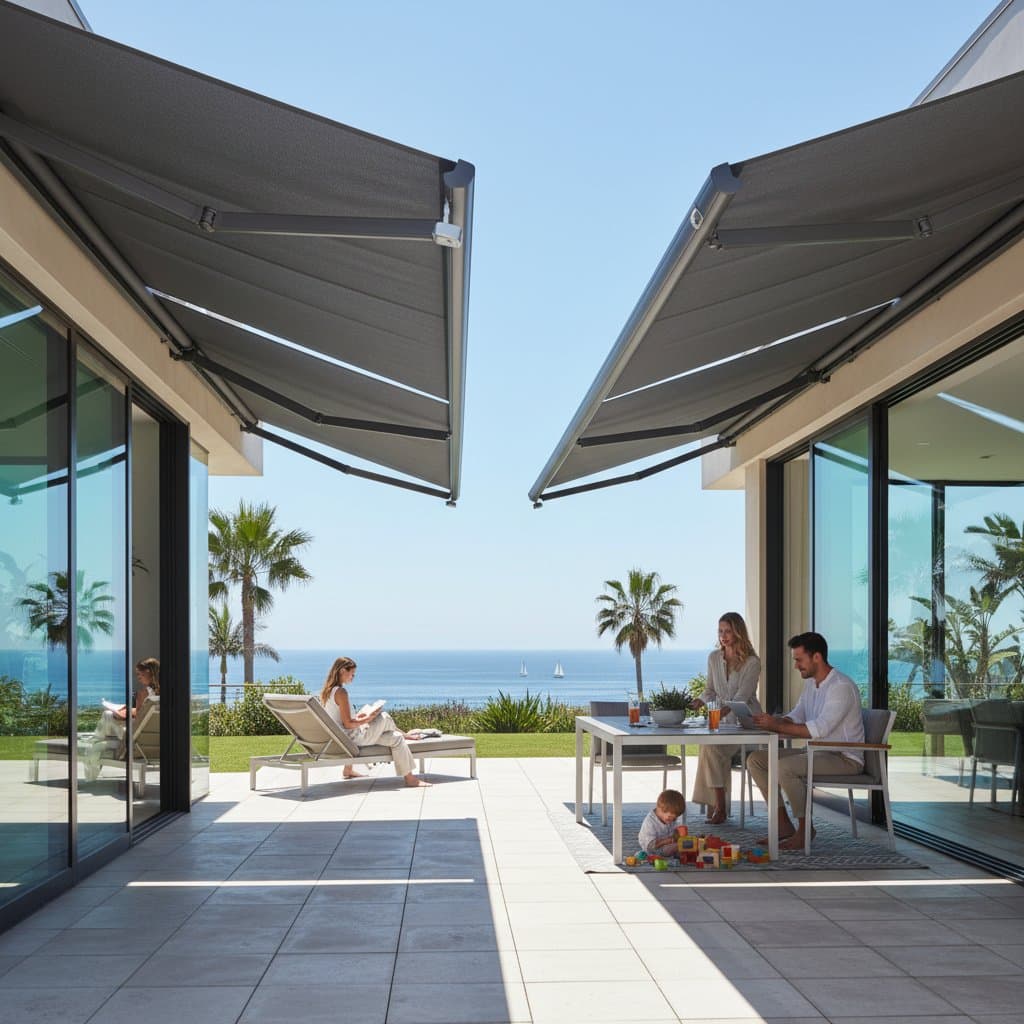
Smart Awnings Reduce Coastal AC Bills by Up to 35 Percent in 2026
Smart awnings integrate shading, automation, and energy conservation to reshape life along the coast. Residents near the sea frequently encounter elevated cooling expenses from relentless solar radiation and elevated humidity. The installation of smart awnings lowers air conditioning costs by as much as 35 percent, while elevating comfort and safeguarding exterior areas. In locations such as San Diego, these installations provide elegance and utility for consistent year-round ease.
Mechanisms for Energy Cost Reduction
Smart awnings employ automated sensors and networked interfaces to modulate shading according to solar intensity and ambient temperature. These devices obstruct direct sunlight during intense periods, thereby inhibiting heat infiltration into living areas and diminishing reliance on cooling units.
Homeowners generally achieve 25 to 35 percent savings on cooling expenses following the addition of smart awnings. This positions them among the premier enhancements for seaside properties exposed to prolonged daylight.
Principal Energy Advantages
- Reduces solar heat gain to maintain cooler interior climates without mechanical aid.
- Boosts heating, ventilation, and air conditioning system performance, thereby prolonging equipment durability.
- Strengthens thermal barriers over glazed surfaces against external warmth.
- Diminishes maximum energy consumption during midday peaks.
A smart awning decreases a seaside residence's air conditioning expenses by up to 35 percent via precise automated shading and refined energy oversight.

Pricing Overview for Smart Awnings
Smart awnings command higher prices than conventional manual or powered variants, yet their enduring financial returns frequently compensate for the upfront expenditure. Costs vary with dimensions, fabrics, technological integrations, and setup demands.
| Awning Variety | Price Spectrum | Typical Return on Investment | Energy Reduction |
|---|---|---|---|
| Manual retractable | $1,200 - $2,500 | 40% | 10-15% |
| Motorized retractable | $2,500 - $4,000 | 55% | 15-25% |
| Smart automated setup | $3,500 - $6,000 | 70% | 25-35% |
For a typical terrace or veranda, anticipate $3,500 to $6,000 for a comprehensive smart awning incorporating sensors and mobile application connectivity.
Homeowners recoup investments in three to five years via reduced energy outlays and elevated property worth.

Varieties of Smart Awnings Suited to Coastal Settings
Retractable Smart Awnings
These represent the predominant option, extending or withdrawing based on meteorological data. Movement and illumination detectors initiate changes to avert wind harm or excessive solar contact.
Stationary Smart Awnings with Solar Detectors
Incorporating photovoltaic elements to energize compact actuators or monitors, these promote sustainability. They suit casements or compact exterior zones.
Adjustable Louvered Canopy Awnings
Featuring tiltable panels for sunlight and airflow regulation, these gain favor for verandas and al fresco cooking areas in maritime zones.
Casement Awnings with Intelligent Operation
Compact units for windows program deployment during solar maxima, curbing internal warmth while preserving vistas.

Determinants of Expense and Efficacy
Multiple elements shape the effectiveness and installation expenses of smart awnings.
Fabric and Frame Durability
Aluminum structures offer lightness and resistance to corrosion, fitting maritime environments. Acrylic textiles resist fading and permit ventilation. Vinyl coverings provide economy but demand ventilation to avoid heat retention.
Site and Solar Orientation
Properties oriented westward or southward gain the greatest advantages from intelligent shading due to intensified solar incidence. Maritime breezes necessitate robust fixtures and anemometers.
Technological Integrations
Advanced detectors, mobile linkage, and climatic oversight elevate costs but yield superior efficiencies through autonomous optimization.
Upkeep Demands
Smart awnings necessitate little ongoing care. Annual or biannual cleansing and detector adjustments sustain peak operation.
Strategies for Budgeting and Implementation
- Evaluate solar incidence on your property to pinpoint high-exposure facades.
- Establish a feasible financial plan encompassing setup, wiring, and digital linkage expenses.
- Select materials resistant to corrosion, given the saline content in seaside atmospheres.
- Engage qualified specialists for installation to guarantee security and endurance.
- Incorporate thermal and photonic detectors to automate maximum energy conservation.
- Schedule periodic upkeep to preserve functionality and visual allure.

Accessible Alternatives and Self-Installation Choices
Budget-conscious residents may opt for partially automated or user-assembled awning solutions.
- Motorized enhancement packages upgrade existing manual awnings for less than $1,000.
- Photovoltaic detectors operate standalone to prompt extension or withdrawal based on illumination.
- Intelligent outlets and schedulers manage awning drives via wireless connections absent complete mechanization.
Such selections yield moderate energy reductions and ease at reduced expense compared to comprehensive systems.
Financial Returns and Supplementary Gains
Beyond utility reductions, smart awnings augment exterior attractiveness and leisure quality. In coastal settings with extended outdoor utilization, these enhancements elevate market value.
Returns average 60 to 75 percent, influenced by fabric excellence and project scale.
Additional merits include safeguarding interiors from ultraviolet degradation, broadening weather-resilient exterior areas, and refining overall property aesthetics.
Common Inquiries
How do smart awnings function?
Sensors monitor solar radiation, thermal levels, and air currents, prompting automatic extension or withdrawal to balance shading and weather resilience.
Do smart awnings withstand seaside gusts?
Affirmative; integrated anemometers initiate retraction at hazardous velocities.
Justify the expenditure on smart awnings?
In sun-drenched coastal locales, recoupment occurs in several years via diminished bills and enhanced valuation.
What upkeep applies to smart awnings?
Periodic washing, part lubrication, and detector tuning maintain dependability.
Integrate smart awnings with residence automation?
Numerous units link to intelligent ecosystems for vocal or application directives.
Operate smart awnings under overcast skies?
Sensors respond to luminosity variations, retracting when supplemental shade proves redundant to optimize interior daylight.
Sustaining Long-Term Performance
Conduct seasonal evaluations and cleanse textiles with gentle detergent solutions. Verify detector positioning and protect electrical elements from dampness. Diligent maintenance prolongs service life beyond 15 years.
Smart awnings furnish progressive shading for seaside dwellers pursuing ease, sophistication, and quantifiable energy efficiencies. Merging autonomous mechanisms with utilitarian forms, they substantially curtail cooling dependencies, fostering cooler and more ecologically sound living spaces. From elaborate setups to foundational powered units, intelligent shading advantages span interior serenity to fiscal relief.