
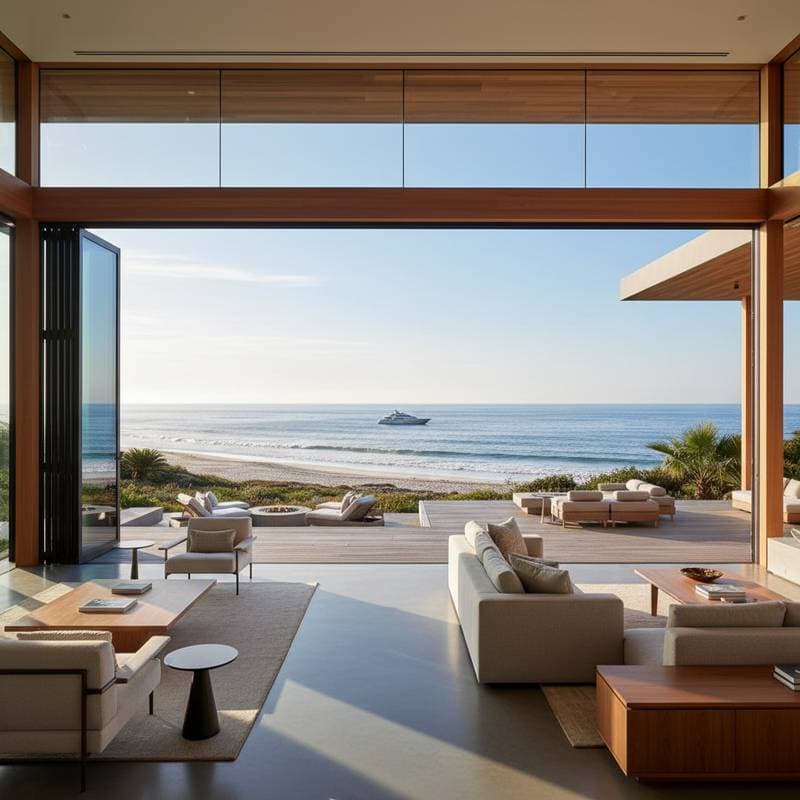
Why Glass Walls Redefine Coastal Living
Introduction
Homeowners often desire a deeper connection to their surroundings. Glass walls in coastal homes deliver this experience by dissolving barriers between interior spaces and the outdoors. Ocean breezes, abundant natural light, and expansive views become integral parts of daily life, all while preserving indoor comfort. In regions like San Diego, retractable glass walls elevate the essence of seaside residence.
Highlights
- Seamless indoor-outdoor living for year-round enjoyment
- Retractable glass walls that expand living spaces instantly
- Energy-efficient design with advanced glazing technology
- Increased home value and curb appeal
- Low-maintenance materials suited to coastal climates
This guide examines the key advantages of glass walls for coastal properties. It covers enhancements to lifestyle, energy performance, and essential considerations for installation in remodeling projects.
Why Glass Walls Are the Future of Coastal Living
Coastal residents seek unobstructed access to their scenic environments. Glass walls fulfill this need through superior transparency, illumination, and spatial integration. These installations withstand environmental challenges such as salt-laden air and humidity, ensuring lasting performance.
1. Seamless Indoor-Outdoor Connection
Retractable glass walls establish uninterrupted continuity between indoor and outdoor areas. Homeowners can slide panels aside to access decks, poolside patios, or beachfront paths with ease. Such transitions simplify gatherings and enrich routine activities.
Benefits:
- Expansion of functional living areas
- Introduction of fresh air and natural daylight
- Amplification of panoramic vistas
- Facilitation of al fresco meals and leisure
To maximize this connection, position operable panels along south-facing walls where prevailing winds enhance ventilation. Select systems with smooth gliding mechanisms that require minimal effort to operate, even for frequent use.
2. Coastal Style Meets Modern Comfort
Glass walls align seamlessly with the luminous and open character of seaside architecture. Slim profiles and broad glass surfaces emphasize external landscapes while harmonizing with elements like reclaimed wood, natural stone, and woven furnishings.
Tip: Opt for anodized aluminum frames in bronze or matte black to introduce contemporary edge, or select crisp white coatings for timeless beachfront elegance. Pair these with sheer curtains in neutral tones to soften light diffusion without obstructing views.
Photo: A coastal kitchen featuring white cabinetry and retractable glass walls that open to a deck overlooking the ocean.
3. Energy Efficiency and Comfort
Contemporary glass walls prioritize functionality alongside aesthetics. Advanced glazing minimizes solar heat buildup, filters ultraviolet radiation, and stabilizes internal temperatures.
Energy-saving features often include:
- Low-emissivity coatings that redirect infrared energy
- Double- or triple-pane configurations for superior thermal insulation
- Thermally separated frames to eliminate conductive heat loss
- Robust weather seals that block saline air and humidity
These elements contribute to reduced reliance on air conditioning, particularly during peak summer months. In coastal zones, integrate smart sensors that automate shading based on sunlight intensity, further optimizing comfort and efficiency.
Design Ideas for Coastal Homes
Glass walls provide versatile solutions for both new constructions and renovations, adapting to diverse architectural styles in seaside settings.
Open-Concept Living Rooms
Substitute fixed walls with retractable glass systems to forge a fluid progression from living areas to exterior patios. Arrange seating toward the horizon and incorporate pale upholstery to sustain an illuminated, expansive feel. Add built-in benches along the threshold to encourage lingering at the boundary of spaces.
Indoor-Outdoor Kitchens
Position a retractable wall to link the kitchen with an alfresco dining zone, streamlining preparation and socializing. Cooks remain indoors during inclement weather, yet the open configuration fosters interaction. Install counter-height pass-throughs within the glass panels for serving efficiency.
Master Suites with a View
Incorporate glass walls into primary bedrooms to evoke a luxury resort ambiance. Motorized roller shades offer on-demand privacy, while integrated audio systems extend entertainment outdoors. Frame the installation with recessed lighting to highlight evening seascapes.
Poolside Lounges
For properties with swimming pools or spas, glass walls define a sheltered lounge that frames aquatic features and distant shorelines. Use frosted lower panels for subtle seclusion during daytime relaxation. Ensure the system includes quick-drain channels to manage occasional splashes.
Photo: A modern poolside lounge enclosed by glass walls that retract to reveal a sunset vista across the ocean.
Choosing the Right Glass Wall System
Evaluate systems based on compatibility with your home's structure and daily routines before proceeding with installation.
1. Assess Your Space
Determine the precise dimensions of the wall span and overhead clearance. Analyze how opened panels will influence furniture layouts and movement patterns. Consult structural engineers if load-bearing modifications are necessary to support the weight of large glass assemblies.
2. Select the Right Glass Type
Tempered glass serves as the standard for shatter resistance and safety compliance. Laminated variants provide enhanced acoustic insulation against wave sounds or nearby traffic. In saline environments, apply specialized anti-corrosion treatments to prolong clarity and prevent etching.
3. Prioritize Weather Resistance
Seek certifications for high wind loads and water infiltration resistance to endure tropical storms. Corrosion-proof hardware, such as stainless steel tracks and hinges, guarantees reliability over time. Test samples for fade resistance under direct sunlight exposure.
4. Hire Experienced Installers
Precision engineering demands skilled labor for alignment and sealing. Engage contractors certified in coastal regulations, including seismic and hurricane standards. Request portfolios of similar projects to confirm proficiency in humid, corrosive conditions.
Tip: Verify installer warranties cover at least five years, encompassing both mechanical components and glass integrity.
Frequently Asked Questions
How do retractable glass walls handle coastal weather?
High-quality systems incorporate marine-grade components to resist wind, moisture, and salt corrosion. Prioritize models with reinforced seals and anodized finishes for enduring performance in harsh marine climates.
Are glass walls secure?
Modern designs employ tempered glass for impact safety and multi-point locks for robust security. Optional laminated or impact-rated glazing adds layers of protection against forced entry or debris during storms.
Do they increase home value?
Properties equipped with retractable glass walls appeal to discerning buyers seeking premium amenities and integrated natural settings. Appraisals often reflect uplifts of 5 to 10 percent in market value for such enhancements.
Integrating Glass Walls into Your Coastal Retreat
Retractable glass walls represent a strategic investment that merges opulence with utility. They illuminate interiors, amplify usable square footage, and honor the unique allure of seaside existence. Collaborate with specialists to tailor a solution that aligns with your vision, then anticipate a transformed living environment that captures the rhythm of the coast.