
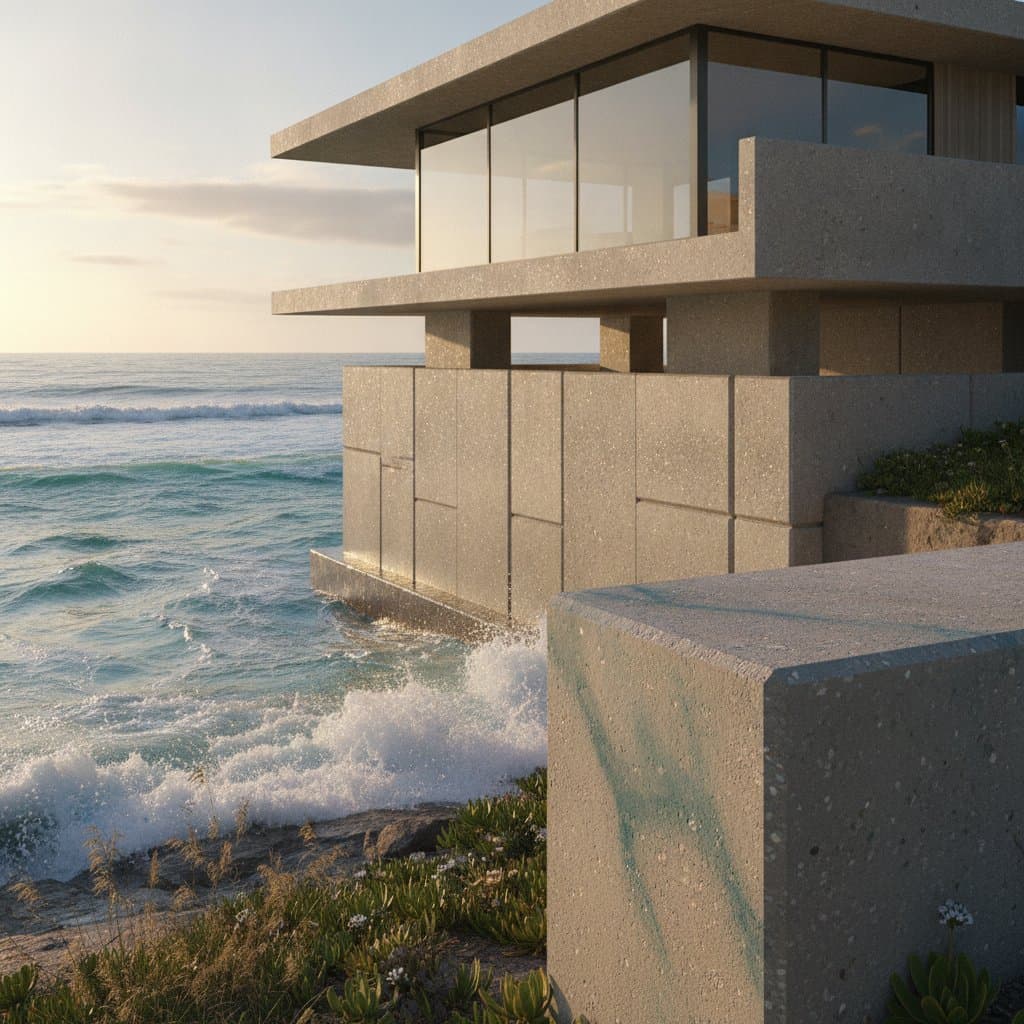
Eco-Friendly Concrete Sets New Coastal Home Standard
Eco-friendly concrete is redefining coastal home construction. Homeowners now select mixes that deliver strength, resist corrosion, and lower environmental impact at the same time. These materials cut carbon output while extending foundation life in harsh marine settings.
Composition of Low-Carbon Concrete
Green concrete replaces much of the Portland cement in standard mixes with recycled and supplementary materials. Common substitutions include fly ash from power plants, slag from steel production, crushed concrete aggregates, and silica fume. Some formulations also add carbon-sequestering compounds that continue to absorb CO₂ after placement. These changes can reduce emissions by up to 40 percent compared with conventional concrete.
Performance Advantages in Saltwater Zones
Coastal foundations encounter constant salt spray, high humidity, and occasional soil movement. Low-carbon mixes address these stresses through denser microstructures and chemical resistance. Mineral admixtures block chloride ions that normally corrode rebar. Lower heat during curing reduces shrinkage cracks that allow moisture entry.
Practical Benefits for Coastal Projects
- Greater resistance to sulfate and chloride attack extends service life to 50–70 years.
- Reduced maintenance frequency lowers lifetime ownership costs.
- Recycled content diverts waste from landfills and cuts manufacturing emissions.
- Compatible reinforcement such as epoxy-coated rebar or fiber additives further improves longevity.
Proper mix proportions, controlled curing temperatures, and corrosion-resistant reinforcement must be matched to each site’s exposure level.
Cost Comparison and Value
Initial material costs run 15–20 percent higher than traditional concrete. Long-term savings appear through fewer repairs and slower replacement cycles.
| Concrete Type | Cost per Cubic Yard | Expected Lifespan | Maintenance Needs |
|---|---|---|---|
| Traditional | $120–$160 | 30–40 years | Moderate |
| Eco-friendly | $140–$190 | 50–70 years | Low |
Site-Specific Performance Factors
Mix design ratios determine permeability and early strength. Adequate moisture retention during the first seven days prevents surface cracking. Local temperature swings and salt concentrations influence the required additive package. Builders should request trial batches tested for 28-day compressive strength and rapid chloride permeability before full-scale placement.
Integrated Sustainable Strategies
Pairing low-carbon concrete with complementary systems multiplies environmental gains. Rainwater collection reduces irrigation demand. Solar arrays offset operational energy. Permeable driveways and walkways manage stormwater on site. Natural cross-ventilation cuts cooling loads in humid coastal climates.
Measured Returns for Homeowners
Owners report lower repair frequency, improved thermal comfort, and stronger buyer interest at resale. Reduced maintenance typically recovers 80 percent of the premium within the first decade. Energy performance improvements average 60 percent relative to code-minimum construction. Resale studies show sustainable features add roughly 70 percent of their incremental cost to final sale price.
Common Questions
How does eco-friendly concrete differ from standard mixes? It substitutes recycled and supplementary binders for much of the Portland cement, lowering emissions and increasing density.
Will it hold up against constant salt exposure? Yes. The refined pore structure and supplementary materials resist chloride penetration far better than conventional concrete.
Is the higher upfront cost justified? Extended service life and minimal maintenance usually offset the difference within ten to fifteen years.
Can the material be used for patios and driveways? It performs well in high-moisture exterior applications when properly finished and sealed.
Where can homeowners locate experienced contractors? Search for firms certified in sustainable building practices or members of green construction associations.
Next Steps for Coastal Builders
Request mix designs tested for local salinity and temperature ranges. Specify corrosion-resistant reinforcement and documented curing procedures. Combine the foundation system with complementary water and energy measures to achieve full project resilience.