
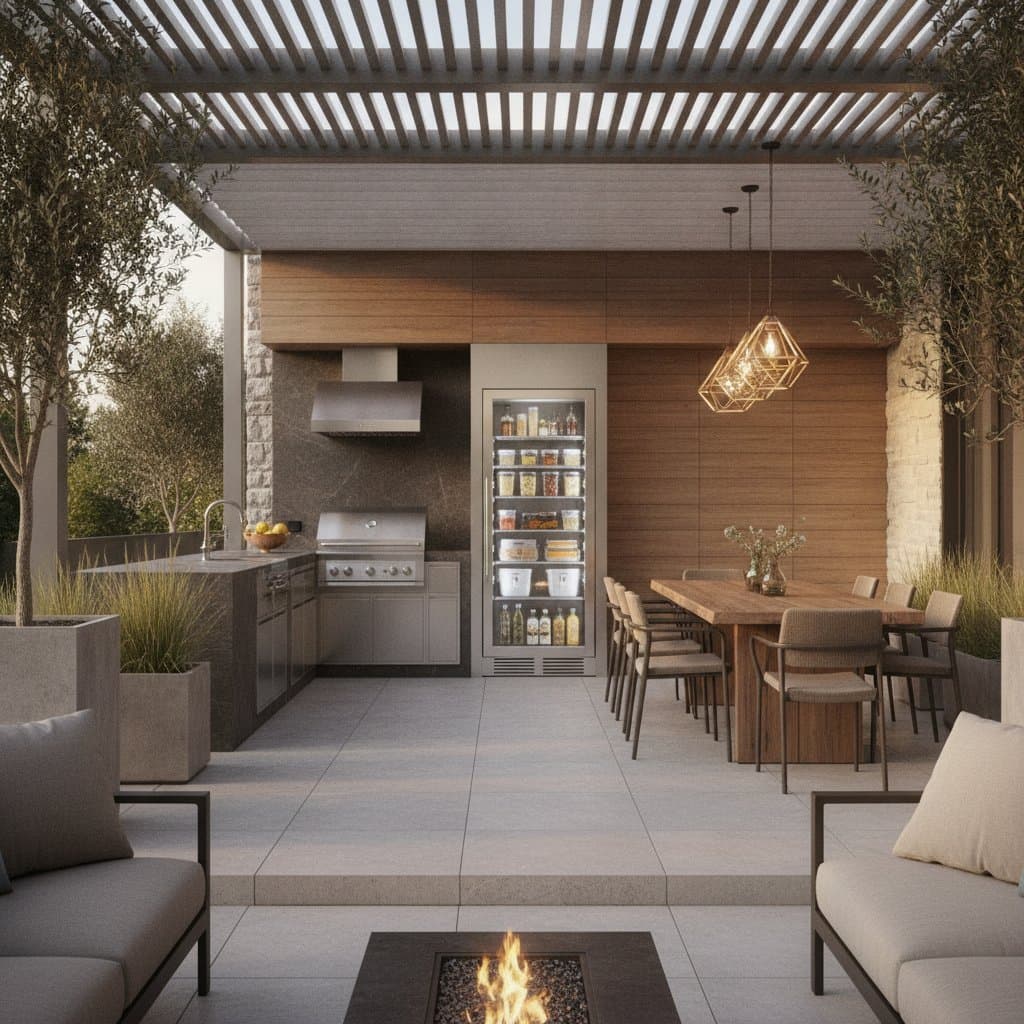
Why Walk-In Freezers Matter for Outdoor Kitchens
A sunny weekend with guests around the grill can quickly turn frustrating when refrigerator space runs out. A walk-in freezer solves this problem by providing dedicated cold storage that handles bulk ingredients, frozen desserts, and specialty meats. This addition delivers restaurant-grade capacity while keeping everything within reach of the cooking area.
Expect to invest between 6000 and 18000 dollars depending on size, materials, and features. Professional installation ensures compliance with local codes and climate demands. The result is reduced food waste, improved safety, and reliable performance across seasons.
Article Overview
- Cost considerations
- Available configurations
- Installation choices
- Cost control methods
- Ongoing care practices
Available Configurations
Outdoor walk-in freezers appear in three main forms. Selection depends on available space and how the unit will integrate with existing structures.
Modular Panel Systems
Modular units consist of interlocking insulated panels assembled on site. They suit homeowners who want future expansion or relocation options. Customization remains straightforward, and energy efficiency stays high with proper seals.
Preassembled Units
Preassembled models arrive ready for connection to power. They work well for sites with limited preparation needs and deliver quick setup. Size choices stay limited, and shipping expenses can rise.
Integrated Designs
Integrated freezers match surrounding cabinetry for a unified appearance. They increase property value through seamless aesthetics and strong insulation. Fabrication costs often range from 15000 to 20000 dollars with extended timelines.
Key Planning Factors
Climate conditions affect material choices. Coastal areas require corrosion-resistant finishes and vapor barriers to manage humidity. Energy Star compressors paired with smart thermostats reduce operating costs over time.
Durability improves with stainless steel hardware and weatherproof gaskets. Allow at least 36 inches of clearance at the door for comfortable access. Motion-activated interior lighting supports hands-free operation during busy meal prep.
Cost Reduction Strategies
- Select a 6 by 6 foot footprint to balance capacity and energy use.
- Choose a self-contained compressor to simplify wiring and lower labor expenses.
- Run defrost cycles during off-peak hours to cut electricity charges.
- Combine installation with other outdoor kitchen work to reduce contractor fees.
- Add insulation to adjacent walls to maintain consistent temperatures.
Care Practices for Extended Service Life
Clean condenser coils every three months with a soft brush or vacuum. Inspect door gaskets regularly and replace any that show wear. Use a digital thermometer to verify temperatures remain between negative 10 and 0 degrees Fahrenheit.
Schedule an annual service visit with a refrigeration technician. This step preserves warranty coverage and identifies issues early. Proper attention supports reliable operation beyond 15 years.
Common Questions
How cold should the unit stay?
Target temperatures between negative 10 and 0 degrees Fahrenheit. Settings below negative 5 degrees Fahrenheit provide optimal protection against bacterial growth and freezer burn.
Will hot weather affect performance?
Units equipped with weather-rated condensers and adequate ventilation maintain efficiency. Quality insulation offsets most increases in energy demand.
Is a foundation necessary?
A leveled concrete pad with moisture protection underneath forms the required base. Soil or decking surfaces do not provide adequate support.
What electrical service is needed?
A dedicated 220-volt circuit with a 20-amp breaker supplies most models. Consult a licensed electrician to confirm compatibility.
Can shelving and lighting be added?
Stainless steel or coated wire shelves resist corrosion. LED fixtures deliver clear visibility while minimizing power draw.
Planning Your Installation
Measure available space and verify electrical capacity before purchase. Decide between modular and integrated styles based on design goals. Contact a local refrigeration specialist when climate or code questions arise. This preparation positions the freezer as a dependable centerpiece for outdoor gatherings.