
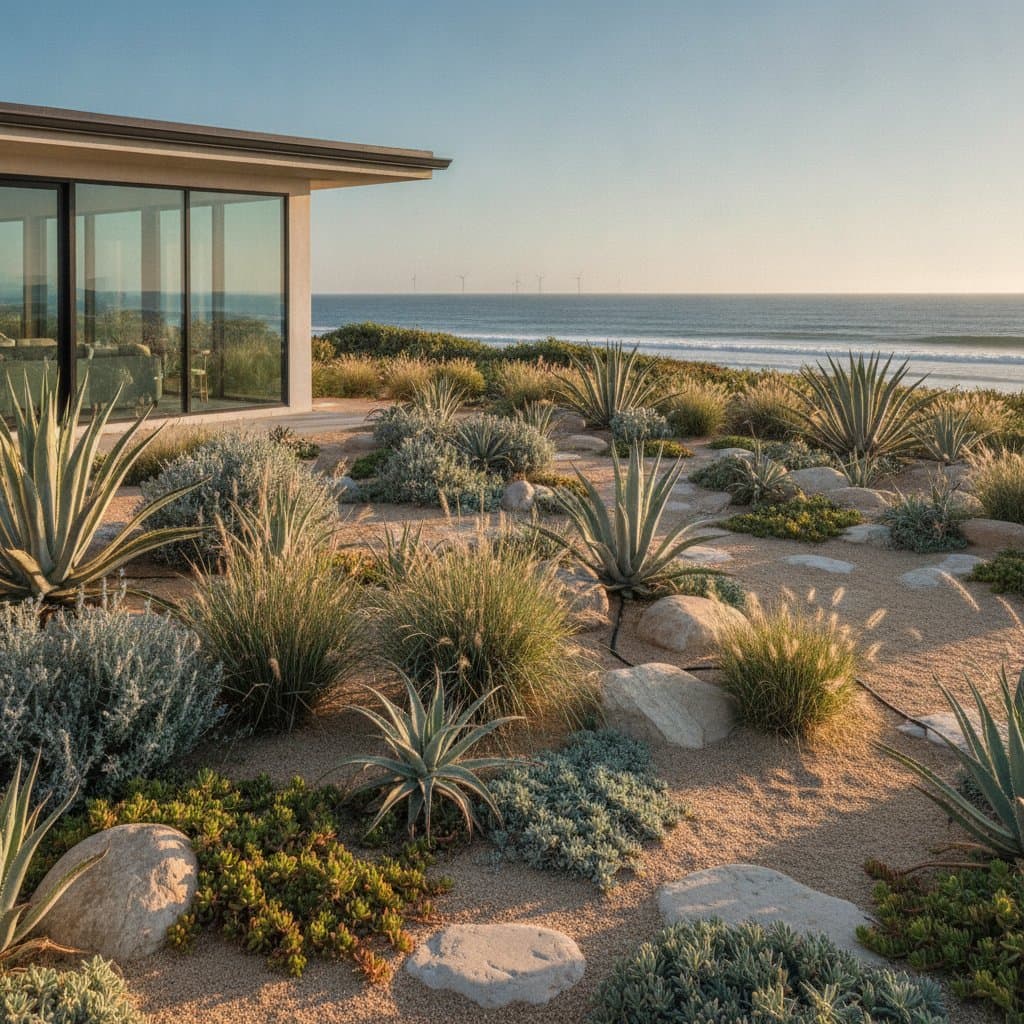
Xeriscaping Cuts Coastal Yard Water Use 60% by 2026
Coastal homeowners face unique challenges with sandy soils, salt exposure, and limited water resources. Xeriscaping offers a structured method to reduce outdoor water consumption substantially while creating attractive landscapes. This approach combines careful plant selection, soil enhancement, and targeted irrigation to achieve measurable savings.
Core Principles of Coastal Xeriscaping
Xeriscaping relies on seven core principles that adapt well to coastal environments. These include planning and design, soil analysis, appropriate plant choices, practical turf areas, efficient watering methods, mulching, and ongoing maintenance. Each principle builds on the next to minimize water demand without sacrificing visual appeal.
Homeowners begin by assessing sun exposure, wind patterns, and drainage on their specific site. This evaluation guides the placement of plants and hardscape elements. Proper planning prevents future adjustments that could increase costs or water use.
Selecting Plants for Salt and Sand Tolerance
Drought-tolerant species with deep root systems perform best in sandy, saline conditions. Examples include lantana, salvia, agave, and certain native grasses that withstand salt spray. These plants require far less supplemental water once established compared with traditional lawns or thirsty ornamentals.
Group plants by similar water needs to avoid overwatering some areas while underwatering others. This hydrozoning technique ensures each section receives only the moisture it requires. Coastal gardeners should also choose salt-resistant varieties to reduce replacement rates over time.
Improving Soil and Adding Mulch
Sandy soils drain quickly and hold few nutrients. Incorporate organic compost and aged manure to increase water retention and support root growth. A six-inch layer worked into planting beds creates a more stable foundation for new vegetation.
Apply two to three inches of organic mulch around plants to slow evaporation and moderate soil temperature. Mulch also suppresses weeds that compete for moisture. Replenish the layer annually as it breaks down.
Designing Efficient Irrigation
Drip irrigation or soaker hoses deliver water directly to root zones with minimal loss to evaporation. Install pressure regulators and filters to maintain consistent flow in sandy soils. Smart controllers that adjust schedules based on weather data further reduce unnecessary watering.
Water deeply but infrequently to encourage deep roots. Early morning cycles limit fungal issues common in humid coastal air. Homeowners should inspect systems seasonally for leaks or clogs that waste resources.
Reducing Turf and Adding Hardscape
Limit high-water turf to small functional areas such as play zones. Replace remaining lawn with ground covers, permeable pavers, or decomposed granite. These surfaces cut irrigation needs while improving drainage during heavy rains.
Incorporate boulders, gravel paths, and seating areas to define spaces and reduce planted square footage. Hardscape elements require no water yet add structure and year-round interest to the yard.
Maintenance for Long-Term Results
Monitor plant health and adjust irrigation schedules as roots establish over the first two seasons. Prune selectively to maintain shape and airflow rather than shearing, which can stress plants. Remove weeds promptly before they set seed.
Test soil every two years to guide any needed amendments. Consistent but minimal care keeps the landscape thriving with reduced inputs. By following these practices, coastal properties can reach the projected 60 percent reduction in outdoor water use by 2026.